
Garmin Forerunner 570 review: 12 weeks of Cardiff drizzle, a parkrun PB and no maps
Fifty-three runs, a parkrun PB in Bute Park and a rugby club barbecue that wrecked my readiness score. What the Forerunner 570 gets right, and who should save the money.
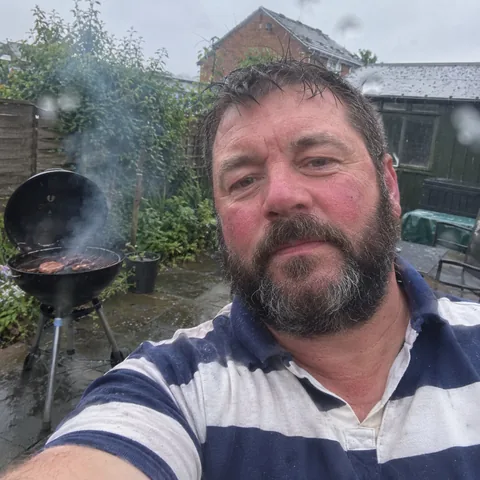 By Gareth Pennock, outdoor, barbecue and fitness tester
Tested in Cardiff · 18 August 2026 · 11 min read
- 3,200 m on the track came up as 3.21 km
- Easy-run pulse within 2 bpm of my chest strap
- Colour screen you can read in rain and sun alike
- Built-in speaker: lap beeps without earbuds, calls on the wrist
- No proper maps, just a line to follow
- No torch and no ECG
- Always-on display roughly halves the battery
- Full price is steep for a mid-range watch
Short version: accurate, easy to read and genuinely good at telling you when to back off. Pay under £420 for it, not the full RRP. If you run on hills you don't know, spend the extra on the Forerunner 970 for its maps.
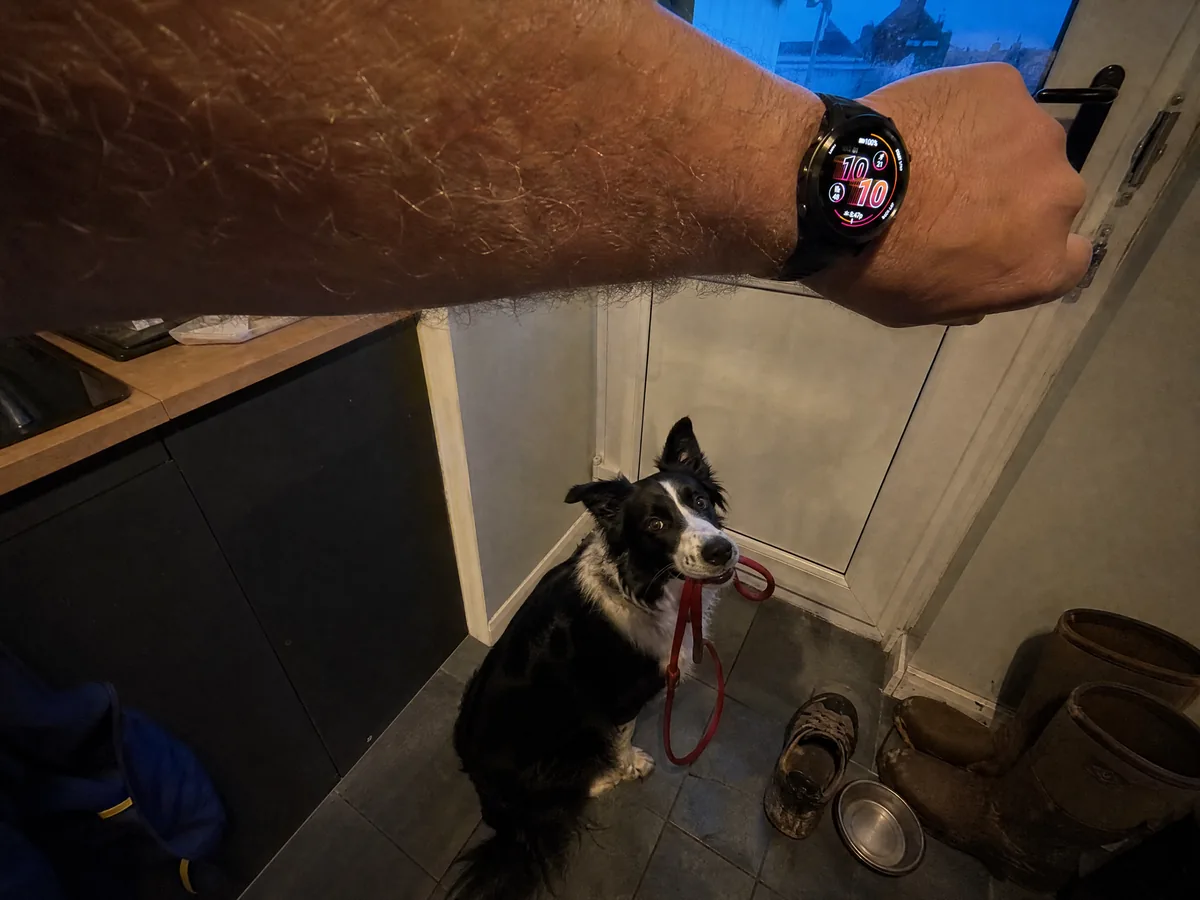
Nel knows the sound now. Nel is our collie cross, and one chirp from my wrist at six in the morning brings her skidding across the kitchen tiles to the back door with her lead in her mouth. On easy days that's lovely. On interval days, when she can't come, it's heartbreaking.
The chirp comes from the Garmin Forerunner 570, which has a built-in speaker, and which I bought in the 47 mm size in late May. It replaced a Forerunner 245 that had done six years of Welsh weather and was held together at the strap with electrical tape. Since then it's been on my wrist for 12 weeks, 53 runs and 587 km, or 365 miles for the old-school among you: the Taff Trail, Bute Park parkrun, an athletics track, a lot of Cardiff pavements and one cloudy morning in the Beacons that I'll come to later.
I also ran eleven of those sessions with a chest strap, so I could check the numbers instead of guessing. Before the numbers, though, here's what you actually get for your money.
What £459.99 buys you
Garmin launched the 570 in 2025 as the successor to the Forerunner 265, and it's still the middle of the range. Since May it has two cheaper siblings underneath, the Forerunner 70 and 170, while the 970 carries on at the top with maps and a torch.
| 42 mm | 47 mm (our test watch) | |
|---|---|---|
| Display | 1.2 in AMOLED, 390 x 390 | 1.4 in AMOLED, 454 x 454 |
| Weight | 42 g | 50 g |
| Garmin's smartwatch battery figure | 10 days | 11 days |
| Garmin's GPS figure, multi-band | 13 h | 14 h |
| Sensors | Gen 5 optical heart rate, skin temperature, Pulse Ox | |
| Also inside | Speaker and microphone, 8 GB for music, 5 ATM, Gorilla Glass 3 | |
| Missing | Maps, torch, ECG | |
The price is the same whichever size you pick. I've got wrists like a prop forward, so 47 mm was easy. Rhian borrowed the smaller one for a week and preferred it on her slimmer wrist. Same features, a day less battery.
The first thing that struck me, coming from a six-year-old watch, was the screen.
A screen you can read in the rain, and a speaker you'll use
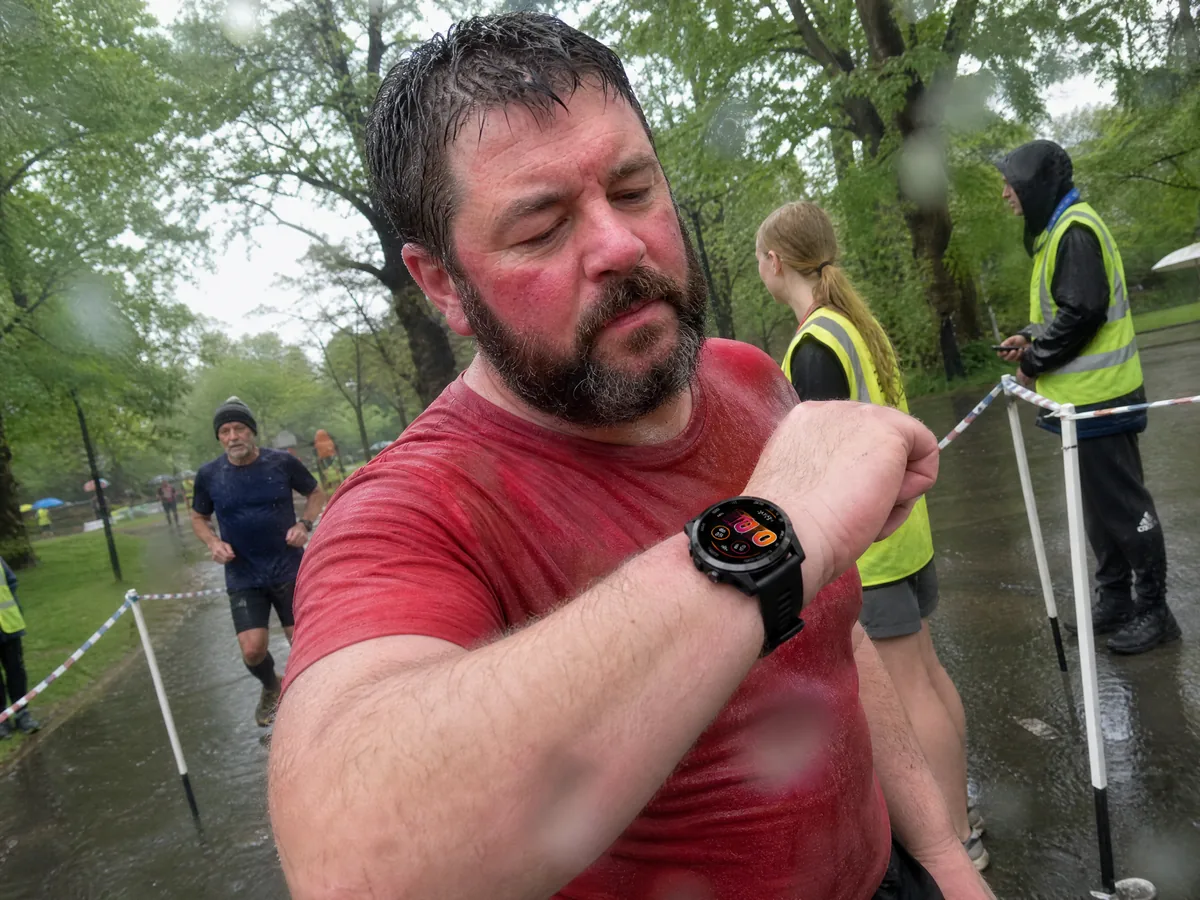
My 245 had the old matt kind of display, readable in sunshine but about as lively as a bus timetable. The 570's AMOLED is bright, sharp and properly colourful. On the one hot afternoon we had in July, pace and pulse were readable with a half-second glance. More usefully for Cardiff, it stays clear under raindrops, and on dark mornings it turns itself down, so the first lamp post isn't competing with your wrist.
I assumed I'd switch the speaker off. Instead I use it every day. Lap splits, pace alerts and interval prompts are loud enough to hear over the river and the traffic on the Taff Trail, so a structured session doesn't need headphones. With my phone in my pocket, it takes calls too, which I now keep for dog walks after answering one breathless on a hill.
Voice commands work as well, a discovery my nine-year-old made on day two. She now asks my wrist to "set a timer for ten minutes" whenever her slime needs to set, and it does, every time, with no complaints. A clear screen and a loud speaker mean little if the figures underneath are wrong, though. So I checked them.
GPS: the track, the park and the trees
For distance, you need somewhere you already know the answer. Eight laps of lane 1 on a 400-metre athletics track in Cardiff come to exactly 3,200 metres. With GPS on SatIQ, Garmin's setting that brings in multi-band only when conditions need it, the 570 logged 3.21 km. My old 245 had given me 3.27 km on the same eight laps.
Bute Park parkrun made a second check, because the course is carefully measured at 5 km. Over six Saturdays the 570 recorded between 4.99 and 5.03 km, even along the stretch under the big trees by the river, where my old watch used to wander.
The toughest test was the wooded part of the Taff Trail up towards Castell Coch. Thick cover, bends, the river right beside you. The 245 used to draw my route through the water in places, as if I'd swum a few hundred metres. The 570 kept the line on the path.
Distance: sorted. Heart rate is where wrist watches have always been weaker.
Heart rate against a chest strap
A chest strap reads the electrical signal from your heart, which makes it the reference any wrist sensor has to live up to. I wore mine alongside the 570 on eleven runs. The same strap spent part of July in Manchester, where Karen used it to check the pulse sensors in her earbuds for our AirPods Pro 3 review. It came back washed, as instructed.
- Five easy runs: never more than 2 bpm apart on average.
- Three tempo runs: a 3 bpm gap at most, and the two graphs almost laid on top of each other.
- Three interval sessions: at the start of every hard rep the watch trailed the strap by 4 to 6 seconds before catching up.
One run went wrong. On a close, sweaty evening the band slid down my wrist and the watch read about 8 bpm low for a mile, until I shoved it back up above the wrist bone. That's how wrist sensors behave when they lose contact, not a fault peculiar to this one, and it happened once in 53 runs.
For most runners, the wrist is plenty. For serious intervals, wear a strap. Numbers are one thing. What really changed my running was the advice that comes with them.
The coaching, and the rugby club barbecue
When you wake up, the 570 hands you a readiness number out of 100, built from your sleep, heart rate variability, recent training load and stress. It also suggests a session for the day and adjusts the plan as the week goes on.
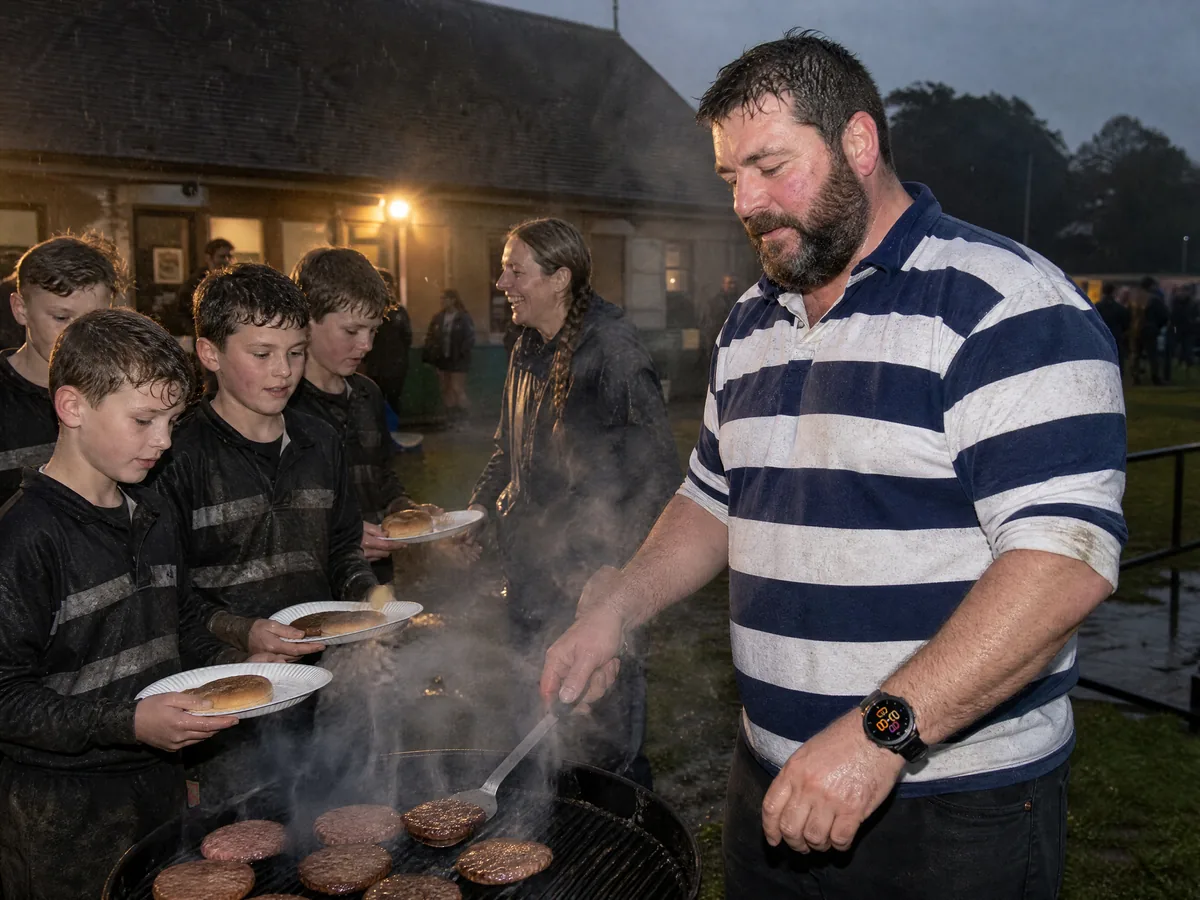
The test came in June, on the day of the junior rugby club's end-of-season barbecue. I cooked 22 burgers and a mountain of sausages for the under-12s and their parents, had two ciders I hadn't planned on, and got to bed at half twelve. On Monday morning my readiness was 29, and the watch swapped my interval session for an easy recovery run.
The old me would have ignored it. This time I jogged five easy kilometres with a very pleased Nel. On Tuesday readiness was back to 67, and I ran the best set of 800s I've managed in years. Rhian pointed out, correctly, that I'd just been told to rest by a watch and it had worked.
"So the watch is the only one you listen to now?" Rhian, as I put my trainers back in the cupboard on Monday morning
Over the 12 weeks, following the suggested sessions most days, I got about 9 seconds per kilometre quicker at the same easy heart rate. The watch predicted 21:40 for 5 km, and on the first Saturday of August I ran 21:52 at Bute Park: my first parkrun under 22 minutes, at 48, in drizzle. The half marathon prediction now says 1:39 for the Cardiff Half in October. We'll see.
Two of the fancier readouts, running economy and step speed loss, stay hidden unless you add Garmin's HRM 600 strap. And every bit of this tracking draws on the battery.
Battery in real use
Garmin's figures assume a gentle week. My log reflects my normal routine instead: five runs most weeks, the watch on in bed every night, notifications from my phone and SatIQ switched on.
| How I used it | What the 47 mm lasted |
|---|---|
| Always-on display off, about 6 h of GPS a week | 7.5 days |
| Always-on display on, same week | 4 days |
| 2 h 55 min long run on SatIQ | 18% of the battery |
| Charging from 10% to full | About 1 h 50 min |
That long run works out at roughly 16 hours of GPS from a full charge, which covers any marathon and most ultras. The always-on display is the big switch. It looks lovely, and it cost me nearly half my battery life, so it went off after a week and I use raise-to-wake instead. My old 245 managed two weeks on a charge, and part of me still misses it. Sunday night is now charging night, alongside the kids' tablets.
The battery is a trade-off I can live with. The bigger question is what the 570 leaves out.
What's missing, and when you'll notice
There are no maps. You can load a route and follow a line, and the watch will guide you back to your start, but it can't show you paths, roads or which of three tracks leads down to the car park. Around Cardiff I never missed them.
In the Beacons it was a different story. I'd loaded a 14 km loop above the reservoirs, and when the cloud came down the line on my wrist kept me on course perfectly well. What it couldn't show me was the shorter path down to the car park when the rain got heavy, so I stood in the clag with my phone out, trying to read a map with wet fingers. On a watch with maps, that's a glance.
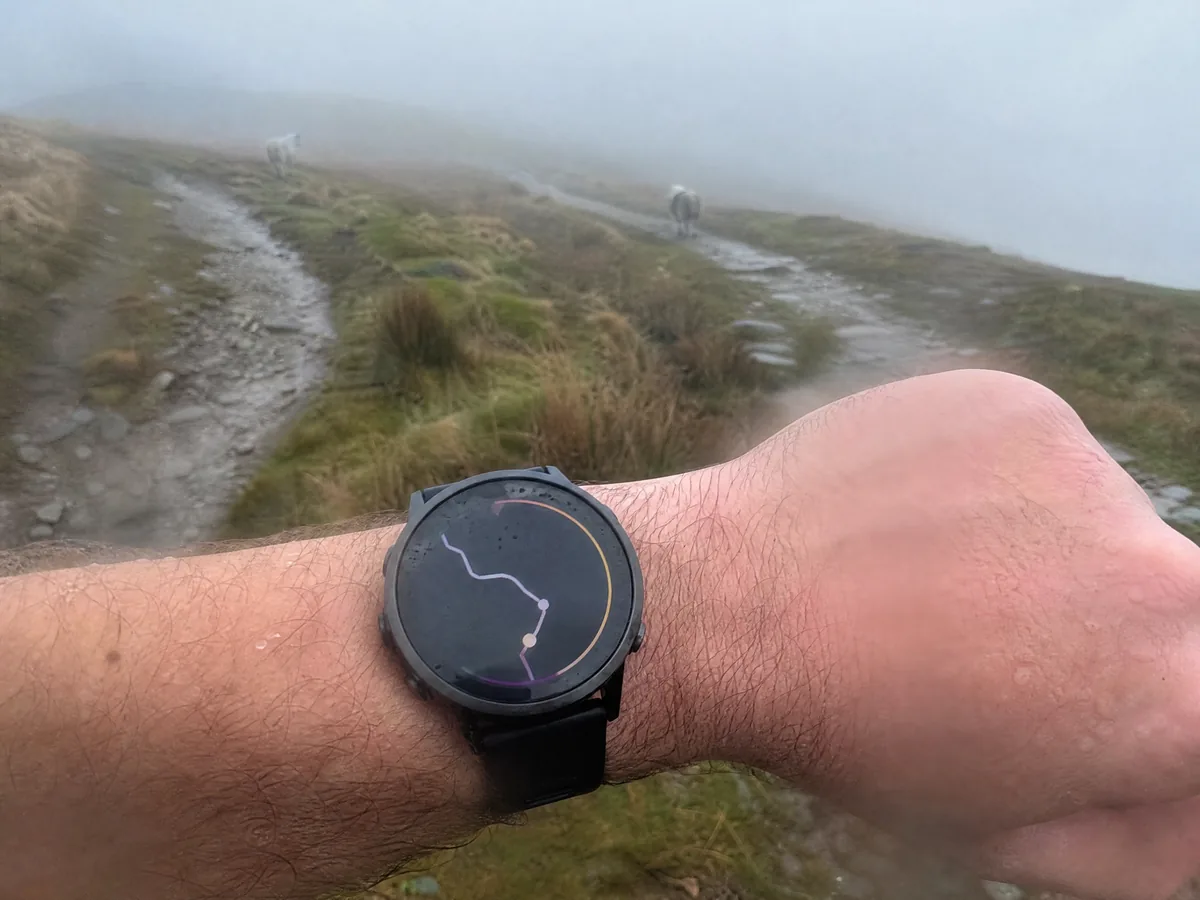
There's no torch either, which the 970 has and which I'll miss on dark December mornings. No ECG. The glass is Gorilla Glass 3, not sapphire, and after 12 weeks mine has one fine scratch where I caught it on the hinge of the barbecue lid.
If any of that matters, look one step up. If not, you're about to save a fair bit.
Is it the right watch for you?
At £459.99 it's a lot for the middle of a range. At the £399 to £415 John Lewis and running shops were asking at the time of writing, it makes much more sense, and it has dipped close to £360 this year. Garmin prices move around a lot, so give it a week before you buy.
Other watches we'd look at
- Garmin Forerunner 970 (£629.99 RRP). Maps, a torch, ECG, a sapphire lens and more battery. My pick for anyone who runs in the hills.
- Garmin Forerunner 265, if you find one reduced. It lacks the speaker and the newest sensor, yet keeps most of the coaching at a far lower price.
- Garmin Forerunner 170 (£259.99, new this spring). An AMOLED screen and much of Garmin's coaching, for newer runners.
- Coros Pace Pro. Offline maps and long battery life for less, with a plainer app and less polished coaching.
Every piece of kit we trust ends up on our blog, and the how we test page sets out the weeks of use behind every score. You can see what's on my bench right now in our tests in progress. And for the legs after a long run, Darren's Theragun PRO Plus review is the honest physio view.
And Nel? She's worked out that the long beep means interval day. She no longer comes to the door for that one. She just watches me go, which is somehow worse.
Questions readers asked us
Is the Forerunner 570 worth it over the Forerunner 265?
If you're buying from scratch, yes, ideally on offer. The 570 adds a brighter display, Garmin's latest optical sensor, a speaker with a microphone, and voice control. If your 265 still works, the step up is small.
Does the Garmin Forerunner 570 have maps?
No. You can follow a loaded route as a line and navigate back to your start, but there are no full maps. The Forerunner 970 is the one with maps.
What battery life does the Forerunner 570 get in real use?
Our 47 mm watch lasted 7.5 days with the always-on display off and around six hours of GPS a week, and 4 days with it on. On SatIQ, GPS alone works out at roughly 16 hours.
Which size should I choose, 42 mm or 47 mm?
Both cost the same and do the same things. The larger one gives you more screen and a day more battery. The 42 mm weighs 42 g and suits slimmer wrists. Choose by the size of your wrist.