
Are AirPods Pro 3 worth it? What 61 flights from Manchester taught me
A stag party on the 06:40 to Dublin, thirteen hours to Singapore and my dad's first hearing test. Ten months with AirPods Pro 3, and who should keep their Pro 2.
 By Karen Oldroyd, tech and travel tester
Tested in Manchester · 24 July 2026 · 11 min read
- Cabin chatter turns into a vague murmur
- 7 h 33 min per charge in our test, noise cancelling on
- Pulse readings close to a chest strap on steady runs
- UK-approved hearing test and hearing aid mode
- Can press on some ears after a few hours
- Six fewer hours stored in the case
- A faint hiss when everything else is silent
- On Android they're just decent Bluetooth earbuds
Short version: for iPhone owners who fly, ride trains or sit in noisy offices, nothing we've tried blocks the world out better. Happy with your Pro 2 and they still last the journey? Wait. Whatever you do, test the fit properly while you can still return them.
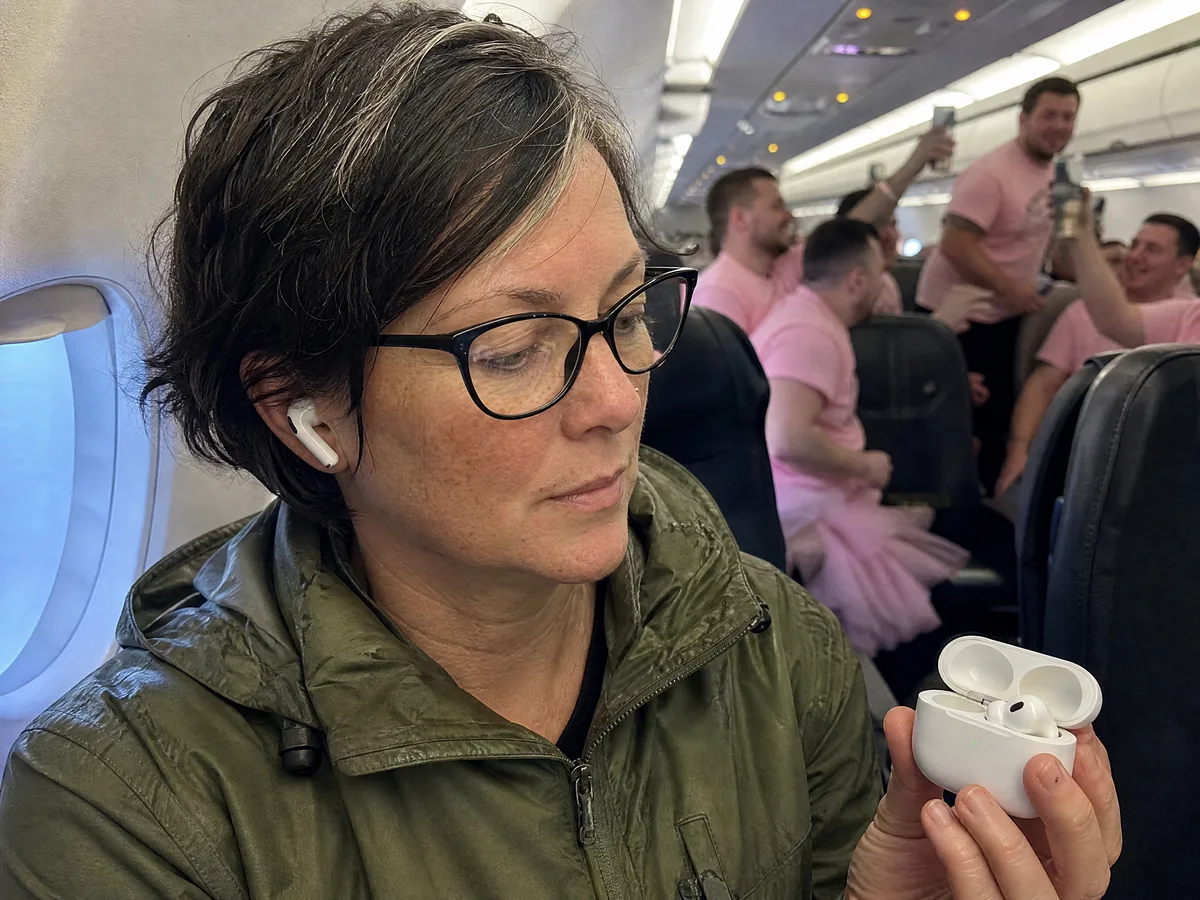
The stag party had started on the lager at 5 a.m. By the time the 06:40 to Dublin pushed back, rows 18 to 22 were singing, and the groom was wearing a pink tutu over his jeans.
I put my AirPods Pro 3 in, switched on noise cancelling and pressed play on a podcast. Somewhere over Anglesey I realised I'd lost track of the singing. Not the laughter, not completely, but the words had gone. For a woman who flies most weeks, that's the whole job description of a pair of earbuds.
That was flight 23. I bought them on release day, 19 September 2025, and they've since done 61 flights with me, mostly short hops from Manchester to Dublin, Amsterdam and Frankfurt, plus one very long trip to Singapore. Add a daily tram, the gym and far too many video calls. My previous pair, the AirPods Pro 2, stayed in a drawer for comparison, because every friend who spots the new ones asks me whether their old pair is still good enough.
Ten months in, here's my answer. Most things got better, one got worse, and one might rule them out for you before anything else matters.
What changed since the Pro 2
The price didn't: £219, same as before. Here's what did:
- Stronger noise cancelling. Apple's claim is double what the Pro 2 manage.
- New tips with a foam centre wrapped in silicone, and a fifth size, XXS, below the usual four.
- Longer listening, smaller reserve. Up to 8 hours in the ear with noise cancelling, two more than before, but the case now stores roughly 24 hours in total rather than 30.
- Pulse sensors in both earbuds that feed your workouts.
- Live Translation for conversations in person, if your iPhone is recent enough.
- IP57 protection against dust and water, case included.
You still get USB-C, a built-in speaker so the case can squeak when you lose it, Precision Finding, and charging on MagSafe or any Qi pad. The little lanyard loop didn't survive. I never used it, but Tracey from our kitchen team clips everything to her bag and took the news badly.
Noise cancelling is what Apple shouted loudest about, so that's where I started.
Noise cancelling: the tram test and the plane test
On three flights I swapped between the Pro 3 and my Pro 2 every half hour, same podcast, same volume. A sound meter app put the cabin at 80 to 84 dB at cruise, louder in the back rows.
Both pairs flatten the low engine drone. The gap opens in the middle of the range, where voices, trolley rattles and crying toddlers sit. Wearing the Pro 2, I could follow every word of the couple behind me arguing about the car park at Terminal 3. Wearing the Pro 3, they were a mumble with no sentences in it, which was better for everyone.
The tram was the second test. Anyone who rides the Metrolink knows the squeal it makes on the tight bends into town. The old pair let it slice straight through my music every morning. The new pair turn it into a faint whistle I only notice if I'm waiting for it.
"Are you ignoring me or can you genuinely not hear me?" Jo, my partner, standing right next to me on the platform at Chorlton
Twice as quiet? I've no way of proving a number like that, and neither has an app. The practical sign is my volume: podcasts on a plane used to need 65%, and now 45% does the job. Over a two-hour hop that's kinder to your ears, and I land without the usual fuzzy head.
Every bit of that relies on the tips sealing properly. And the seal is down to the shape of your ears, which is where it gets less simple.
Fit: fine for me, wrong for Jo
The Pro 3 are shaped differently. They sit a touch deeper and the body is a little bigger. The medium tips suited both my ears straight away, and the fit check in the iPhone's settings gave both sides a pass.
Comfort was a longer story. On short flights I forget I'm wearing them. On the 13-hour flight to Singapore, I felt a dull pressure in my left ear after about three hours and started taking them out for ten minutes each time the meal trolley came round. That never happened with the Pro 2.
Jo had a worse time. She tried all five tip sizes over a fortnight, and the right earbud crept out every time she talked. She's back on the Pro 2 and perfectly happy. Forum threads tell the same story: the new shape suits most people as well or better, and a minority can't get on with it at all.
If they fit, the next thing you'll notice is how they sound.
Sound, and the hiss at 2 a.m.
Compared with the Pro 2, there's more weight low down and voices come through cleaner. I use a folk album recorded in a church and a dance track with a heavy bassline for every pair of earbuds I test, and on both the drums hit rounder while the singer stepped a little closer. Spoken word stays clear at a lower volume, which is exactly what I want at 36,000 feet.
Hi-fi fans won't swoon. The tuning is warm and relaxed rather than finely detailed, and if most of your listening is classical in a quiet living room, Sony's best earbuds leave more space around the orchestra.
One oddity. With noise cancelling running and no audio playing, a truly silent room reveals a faint hiss. Streets, trains and planes drown it completely. At 2 a.m. in a Frankfurt hotel, hoping they'd help me sleep, I heard it. For sleep, foam earplugs from the chemist are cheaper and kinder to your ears.
Long nights lead nicely to the battery, where there's a trade-off hiding.
Battery: thirteen hours to Singapore
Four full drains, noise cancelling on, podcasts and music at 45%: the earbuds averaged 7 hours 33 minutes. Wearing them for a workout, with the pulse sensor busy, the figure dropped to 6 hours 44 minutes.
My Pro 2, at today's battery health, give up more than two and a half hours earlier. On most of my flights I simply never think about charge any more. A five-minute stop in the case bought me 54 minutes of listening, which has rescued more than one morning after I forgot to charge them overnight.
The case is where Apple took something back: around 24 hours of stored listening, six fewer than before. Singapore showed me what that means. One case top-up on the way out, and on the way back, with a case I'd forgotten to charge at the hotel, I plugged it into my power bank on the tray table somewhere over India. On long-haul, keep a short USB-C cable handy.

| What we timed | Pro 3 | Our Pro 2, bought late 2023 |
|---|---|---|
| Full charge, noise cancelling on | 7 h 33 min | 4 h 48 min |
| Full charge during workouts | 6 h 44 min | No pulse sensor |
| Five minutes in the case gives | 54 min | About 50 min |
| Apple's figure including the case | 24 h | 30 h |
Battery is the sensible reason to upgrade. The pulse sensors are the playful one, and they were the part I trusted least.
Heart rate, checked against Gareth's chest strap
Each earbud reads your pulse from inside the ear, and the Fitness app on your iPhone logs it while a workout is running. Without a smartwatch on my wrist, that gave my phone its first real idea of how hard I push on a run.
For a reference I needed Gareth's chest strap. Our outdoor and fitness tester posted it up from Cardiff with a note saying "wash it before you send it back". I did seven 25-minute treadmill runs at my gym and three steady runs along the Bridgewater Canal towpath wearing both. On the steady efforts the earbuds never strayed more than 3 beats per minute from the strap. On sprints they trailed by a few seconds as my pulse climbed, then caught up.
For everyday workouts that's genuinely useful. For hard interval sessions, a strap still wins, and Gareth would like his back.
The feature I expected least from turned out to be the one I talk about most.
Live Translation and the bladder plasters
You'll need an iPhone 15 Pro or later with Apple Intelligence turned on. Someone speaks to you in their language, the earbuds give it to you in English, and your answer appears on the phone screen or is read out in theirs.
In Frankfurt I had a blister the size of a 50p from new shoes, so I went into a pharmacy and tried it on the pharmacist. He was patient, kind and very clear. The translation in my ear offered me "bladder plasters", because in German the same word covers a blister and a bladder. I stood there for a long second. He pointed at his heel, I pointed at mine, and we both laughed. I left with exactly the right plasters.
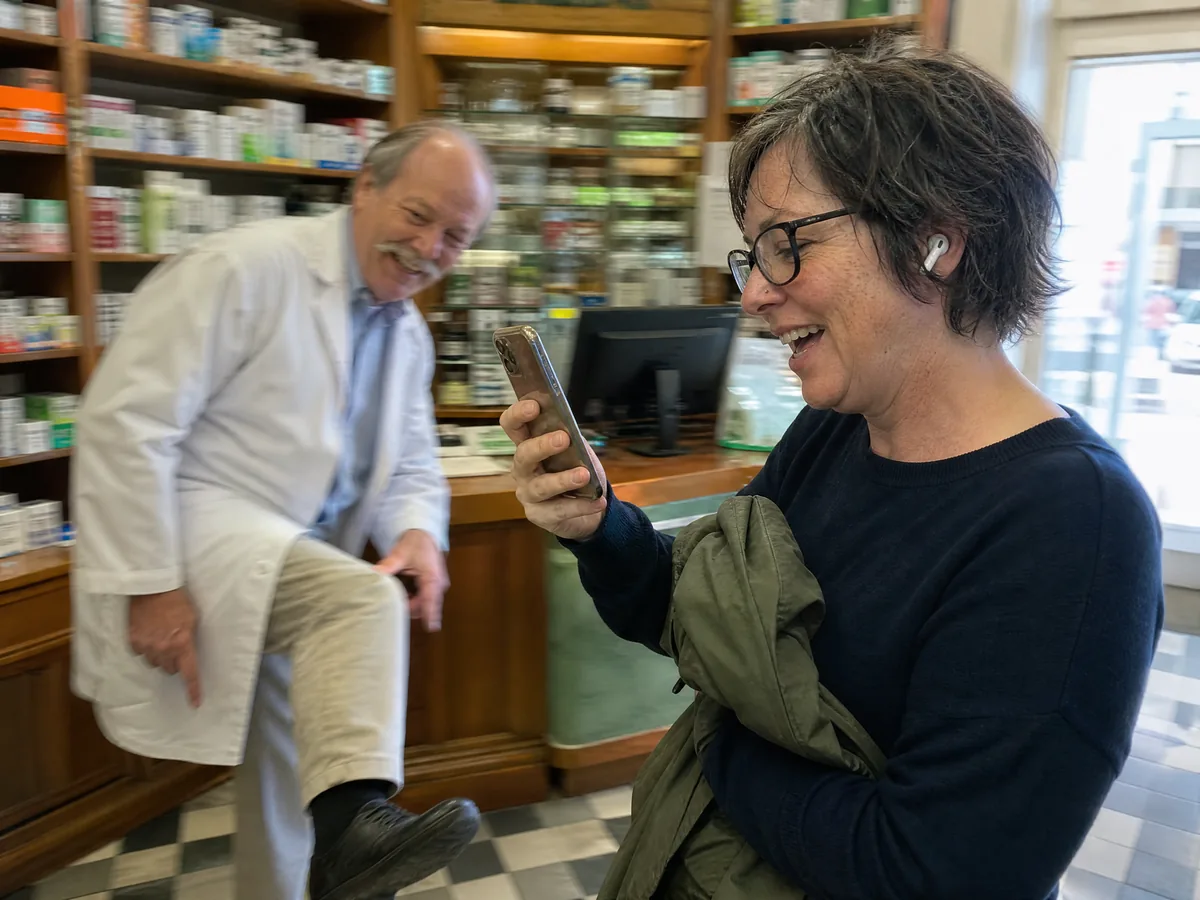
It works, mostly, and it's quicker than typing into a translation app. Keep your sense of humour switched on too. The feature I'd call the most valuable, though, is the one my dad now relies on every Sunday.
The week my dad borrowed them
My dad is 74 and has told us for years that his hearing is "perfectly fine, thank you". Last autumn he borrowed my old Pro 2 for a week so he could follow the cricket on his tablet without the telly blaring through the whole house in Stockport.
At the end of the week he agreed, mainly to prove me wrong, to sit the five-minute hearing check built into the iPhone. It found mild loss on both sides, a bit more on the left. That result got him to book a proper appointment, which confirmed it. Apple's hearing aid feature, cleared for use in the UK since early 2025, now makes the Pro 2 his Sunday carvery earbuds, and he now follows the chat at the far end of the table, which he hadn't managed in years.
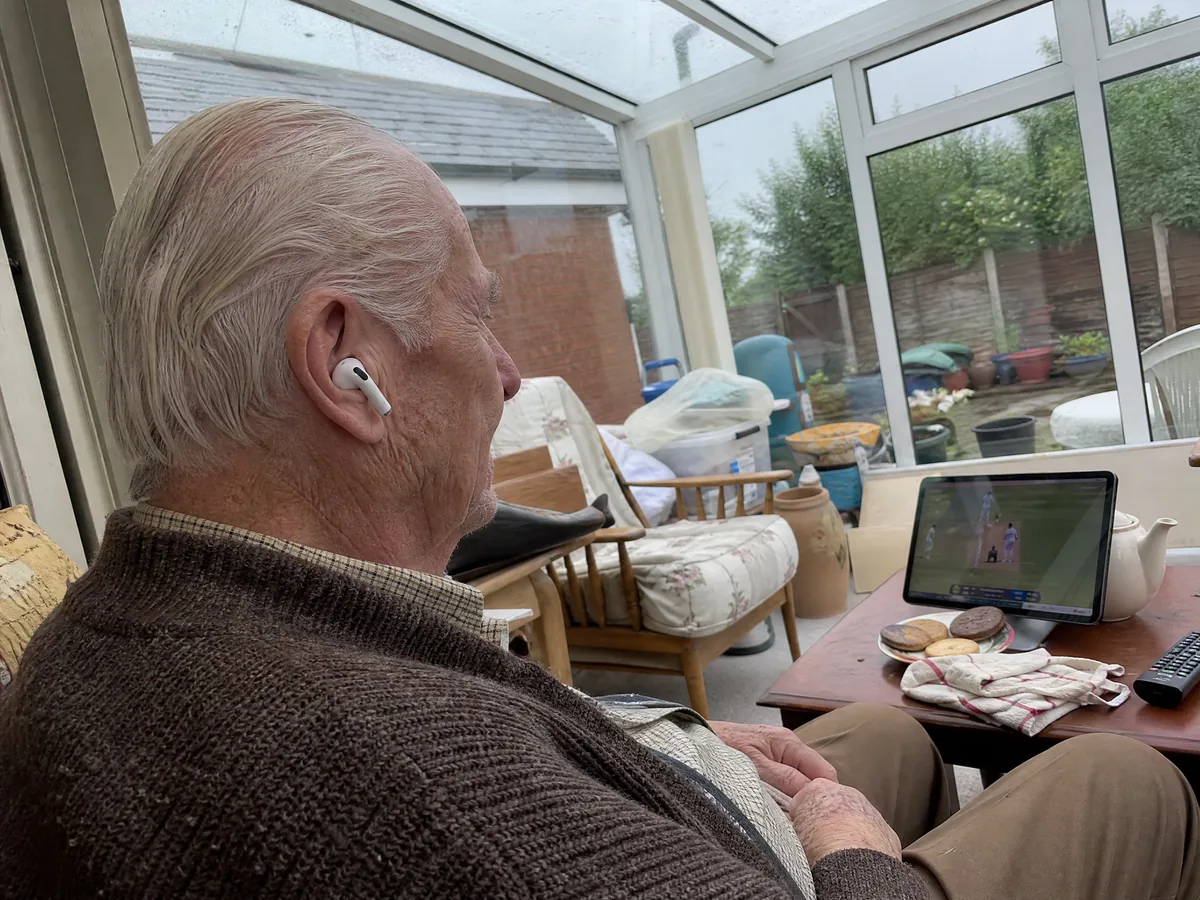
An audiologist is still the real answer, and Apple makes that clear too. As a gentle push for a stubborn parent, though, it did more than I could.
The spec sheet
| AirPods Pro 3 | |
|---|---|
| Processor | H2 |
| Listening per charge | Apple says up to 8 h with noise cancelling, we got 7 h 33 min |
| Total with the case | About 24 h |
| Tip sizes | XXS, XS, S, M, L, foam centre |
| Sensors | Pulse, skin detection, motion |
| Protection | IP57 for earbuds and case |
| Case charging | USB-C, MagSafe, Qi, with speaker and Precision Finding |
| UK price | £219 list, frequently £170 to £195 |
Should you buy them?
At £219 they're fairly priced for what they do. At the £170 to £195 we've seen at Amazon.co.uk, Currys and John Lewis this year, they're an easy recommendation. Apple earbuds don't stay at full price for long, so waiting a week or two usually saves you something.
Other earbuds we'd consider
- AirPods Pro 2, while stock lasts at a discount. Less noise cancelling and a shorter battery, but a shape some people prefer, Jo among them.
- AirPods 4 with Active Noise Cancellation, around £179. Nothing goes into your ear canal, which some people need. The cost is much weaker noise cancelling.
- Bose QuietComfort Ultra Earbuds. At least as quiet, held in by little fins, but chunkier, and they won't hop between your Apple devices on their own.
- Sony or Samsung earbuds if you're on Android. Considering a switch of phone too? My Galaxy S26 Ultra review covers the Samsung I lived with this spring.
You'll find everything we've tested on our blog, and our how we test page shows how we check battery claims like these.
As for the stag party, I saw them again at passport control on the way home. The groom had lost the tutu and gained a traffic cone. I had a full battery and a very quiet flight.
Questions readers asked us
Is it worth upgrading from AirPods Pro 2 to AirPods Pro 3?
If your Pro 2 battery is tired, you fly often or you'd use pulse tracking, yes. The noise cancelling and battery are a clear step up. If your Pro 2 are still comfortable and outlast your longest day, they remain excellent earbuds, and some people find their shape more comfortable.
Why do my AirPods Pro 3 hurt after a few hours?
They sit deeper in the ear than the Pro 2. Drop one tip size on the side that aches and repeat the fit check. If it still hurts after a week of trying, the shape may simply not suit you, which is why testing them early matters.
Can I use the AirPods hearing aid feature in the UK?
Yes, since early 2025. The built-in hearing check and hearing aid mode are meant for adults with mild to moderate hearing loss. They're a useful first step, not a substitute for seeing an audiologist.
Do AirPods Pro 3 work with an Android phone?
They pair as ordinary Bluetooth earbuds and keep noise cancelling and transparency. Automatic switching, the fit check, pulse tracking, Live Translation, the hearing tools and most settings are iPhone only.