
Eight Sleep Pod 5 UK review: 88 nights in a hot bedroom with no air con
No air con, a husband who snores and a back bedroom that hit 27°C. Our sleep tester spent 88 nights on the Eight Sleep Pod 5. Here's what it fixed, and what it didn't.
 By Denise Tolley, sleep tester, former night-shift nurse
Tested in Nottingham · 22 September 2026 · 12 min read
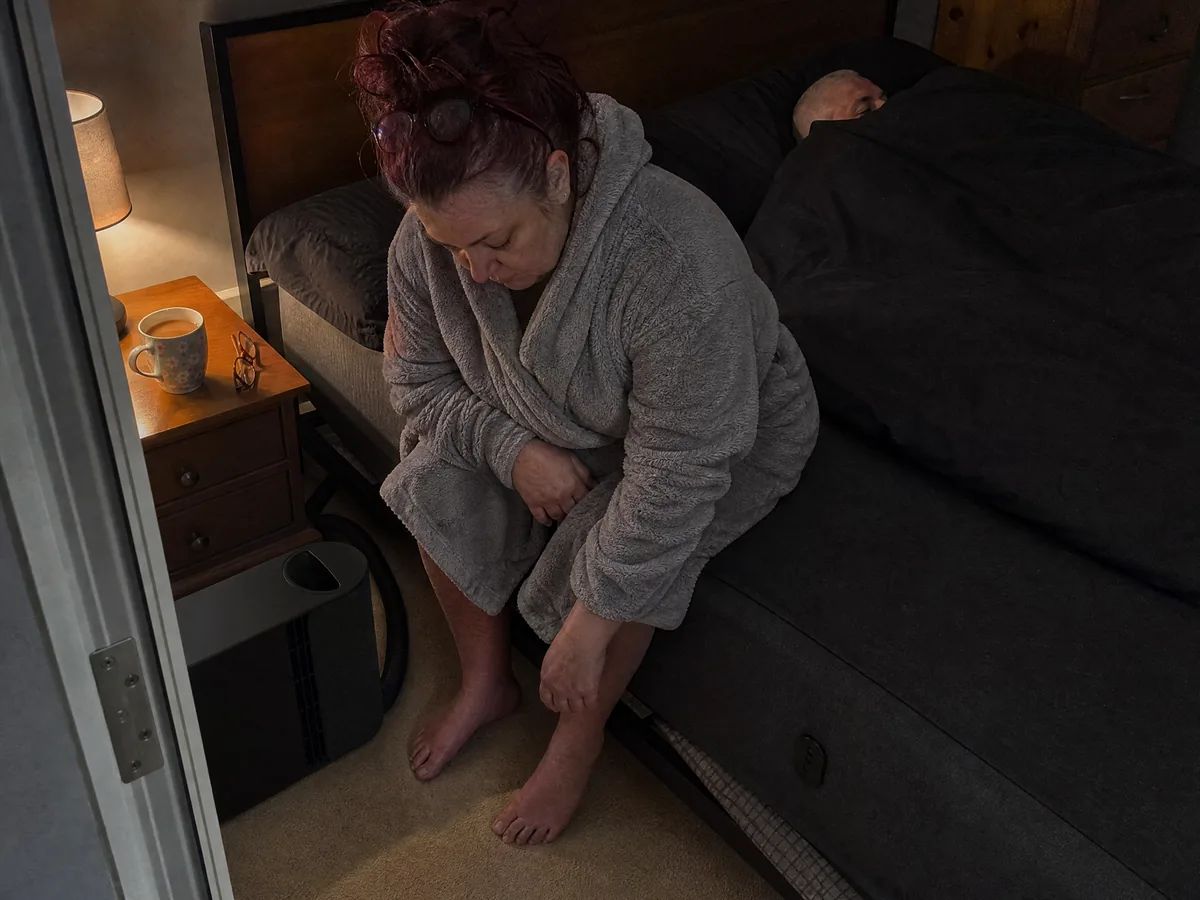
"Just get through tonight, Denise." I said that to myself most nights of last July, lying on top of the duvet at 3 a.m. with a frozen bottle of water wrapped in a tea towel under my neck and a desk fan pushing warm air from one side of the room to the other.
Our back bedroom in Nottingham faces west. On a hot day it holds on to the afternoon like a storage heater, and like most British homes we have no air con. Steve, my husband, sleeps through anything and snores through anything, so I lie awake hot and listen to him not being hot. After twenty years of nights on the wards, I know what a run of broken sleep does to a person.
So this year I slept on the Eight Sleep Pod 5 from 24 June to 19 September. That's 88 nights, including the late July heatwave, two thunderstorms, one power cut and a cat who discovered on night three that my side of the bed was the good side.
- My side measured 20.8°C at the sheet in a 27.1°C bedroom
- Each side sets its own temperature, so Steve stayed happy too
- About 12p a night to run in July, far less than a portable air con
- Snoring log matched my own notes on almost every night
- Around £2,450 for a king, plus a year of Autopilot you can't skip
- The hub eats floor space in a small British bedroom
- It counted some of my wide-awake nights as sleep
- Pod 6 now costs less for a similar bed
Our verdict: if you sleep hot in a house without air con, nothing we've tried comes close. But with the Pod 6 out at lower UK prices, only buy a Pod 5 on a proper clearance discount, and check your bedroom floor plan before you order anything.
Why a British bedroom is a special case
Most Pod reviews come from the US, where the house already has air con. Here the bed is on its own. On the worst night of July our bedroom read 27.1°C at 11 p.m. with the window open, and still 24.6°C at 4 a.m. Brick houses soak up heat all day and give it back all night.
I used to watch the same thing happen to patients on hot wards: asleep by midnight, wide awake by three. Your body wants to cool down in the small hours and the room won't let it. A fan moves warm air about. A frozen bottle lasts about ninety minutes.
So my question was simple: can a bed cover do the job of an air conditioner, in a room that has none? First, I had to fit it in.
What you're actually buying
Think of it as a fitted sheet with plumbing. The smart cover has water channels inside and zips onto the mattress you've got. A hub on the floor heats or cools the water, separately for each side, from about 13°C to 43°C.
Sensors inside the cover read heart rate, breathing and movement. The paid membership, called Autopilot, uses those readings to shift each side's temperature through the night, wakes you with a vibration instead of an alarm, and logs snoring, which in our house turned out to be the most honest feature of all.
In the UK the Pod 5 comes in double (135 x 190 cm), king (150 x 200 cm) and super king (180 x 200 cm). The Core bundle is just the cover and the hub, and that's what I tested on our king. The Ultra bundle adds a water-powered blanket and an adjustable base, but only in bigger sizes and from about £4,249. Remember that base. It comes back later, when we get to Steve.
Getting it into the room: 34 minutes and one wrong socket
Setup took 34 minutes: cover on like a fitted sheet, hose tucked down beside the mattress, distilled water in the hub, app paired. None of that was hard.
The hard part was geography. The Pod 5 hub has roughly the footprint of a small bedside cabinet and needs space around it to breathe. Our only free socket was on Steve's side, so the hub went there and Steve's cabinet went out onto the landing, where it still is. He calls it "the lodger".
The first night, 24 June, wasn't even a hot one. The heat came a few weeks later.
How I tested it
I kept my usual paper sleep diary, filled in each morning before I looked at any app: how often I woke, whether I'd kicked the duvet off, and a score from 1 to 5 for how rested I felt at the kettle.
For numbers, I pointed an infrared thermometer at the sheet 30 minutes and 2 hours after lights out, a room thermometer on the chest of drawers, a noise meter beside my pillow and a plug-in energy monitor on the hub. Same kit and rules as every sleep test we run, all on our how we test page.
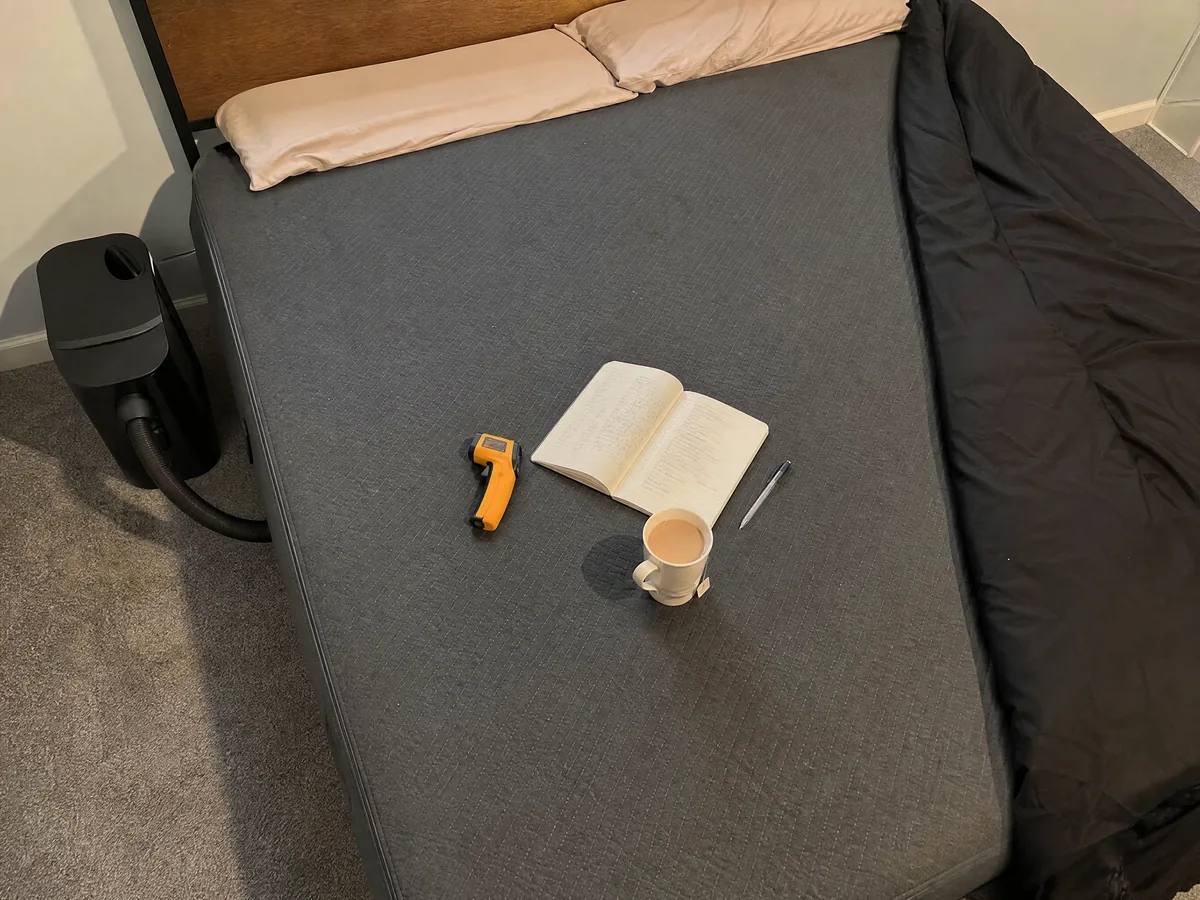
Two weeks of diary before the Pod gave me a baseline: 2.6 wake-ups a night in hot spells. That was the number to beat.
The heatwave: where the Pod earns its price
On the hottest night of the test the room was 27.1°C at bedtime. My side, on -5, read 20.8°C at the sheet surface after 30 minutes. Steve's side, set to -1 because he runs cooler than me, read 25.9°C. Same bed, two very different nights, and neither of us touched the duvet.
The real difference showed up at 3 a.m., which is when the frozen bottle used to give up. The morning graphs showed my side drifting about two degrees colder in the small hours on most hot nights, all on its own. My diary doesn't mention it once, because I was asleep for it.
| My sleep diary | 2 weeks before the Pod | 88 nights on the Pod |
|---|---|---|
| Wake-ups per night (average) | 2.6 | 0.8 |
| Nights I got up to cool down | 9 of 14 | 3 of 88 |
| Rested score, 1 to 5 (average) | 2.3 | 3.8 |
| Hottest bedroom at bedtime | 26.4°C | 27.1°C |
The three nights I did get up were all in the first week, before I set it cold enough. Start colder than feels sensible, and set a pre-cool. Mine started at 10:15 p.m., so I got into a bed that already felt like a cellar.
"You've stopped doing the thing where you throw the duvet on me at four o'clock." Steve, on night 19, who had apparently been noticing for years
On a few chilly nights in mid-September I switched to +2 for the first hour, and it felt like an electric blanket that turns itself off. In a British winter that would get used. Cooling is only one job the cover does. It also keeps notes on you.
Tracking: honest about Steve, generous about me
The Pod logs snoring for each side. It flagged Steve on 71 of the 88 nights. My diary said "snoring" on 68 of those, and the three I missed were nights I was asleep, which I'll call a success. For couples who argue about who snores, the app settles it in one morning.
It doesn't fix it, though. The feature that raises your head when it hears snoring lives in the Base, which only comes with the Ultra bundle, from about £4,249. I did the maths and decided a gentle elbow costs nothing. Steve has asked me to point out that the elbow is not always gentle.
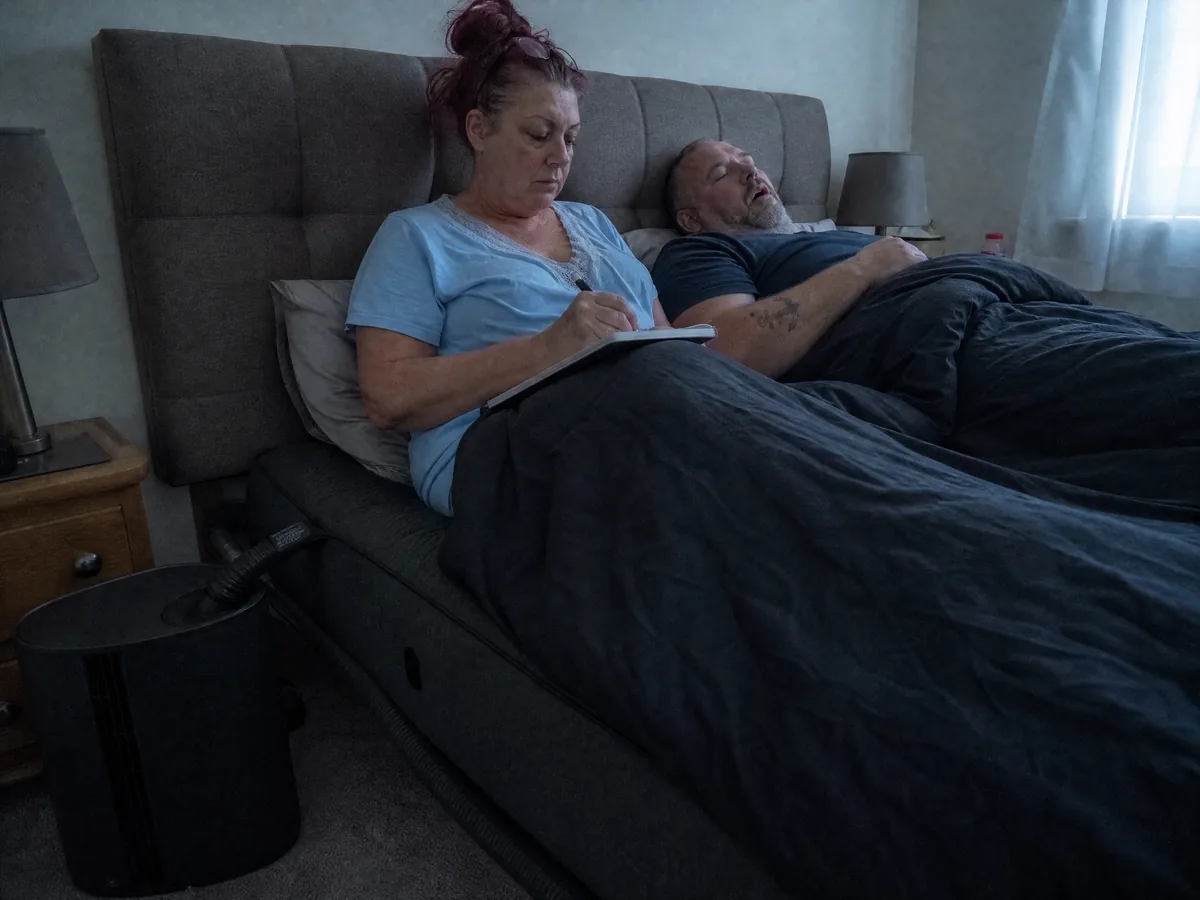
Sleep time was less reliable. On 11 nights it credited me with sleep while my diary says I was lying awake listening to the snoring. On average it gave me 31 minutes more a night than I'd have given myself. Lying very still, it turns out, looks a lot like sleep to a mattress cover, which is a generous view of a middle-aged woman in a warm room.
And then there was Mog, our cat, who spent most of August against my legs on the cool side. On a handful of nights my heart rate graph went oddly fast for an hour, and I'm fairly sure that was Mog's. Otherwise the heart rate and breathing trends tracked my bad nights well. Just don't treat the sleep score as gospel. If sleep data is what you're after, my colleague Gillian wore a ring for 118 nights in our Oura Ring 4 review. For sleep stages I'd trust a ring a bit more.
Noise, water and the electricity bill
On normal cooling the hub read 31 dB at my pillow, basically silent. Working hard in the first 25 minutes of a hot night, it reached 39 dB, a soft whoosh. Steve's snoring measured 52 dB from the same spot. The hub was never the loudest thing in our bedroom.
The app asked for a water top-up once, on night 63. Two minutes. With an ordinary sheet over it, the cover itself needed one wash all summer, and unhooking the hose for that is fiddly.
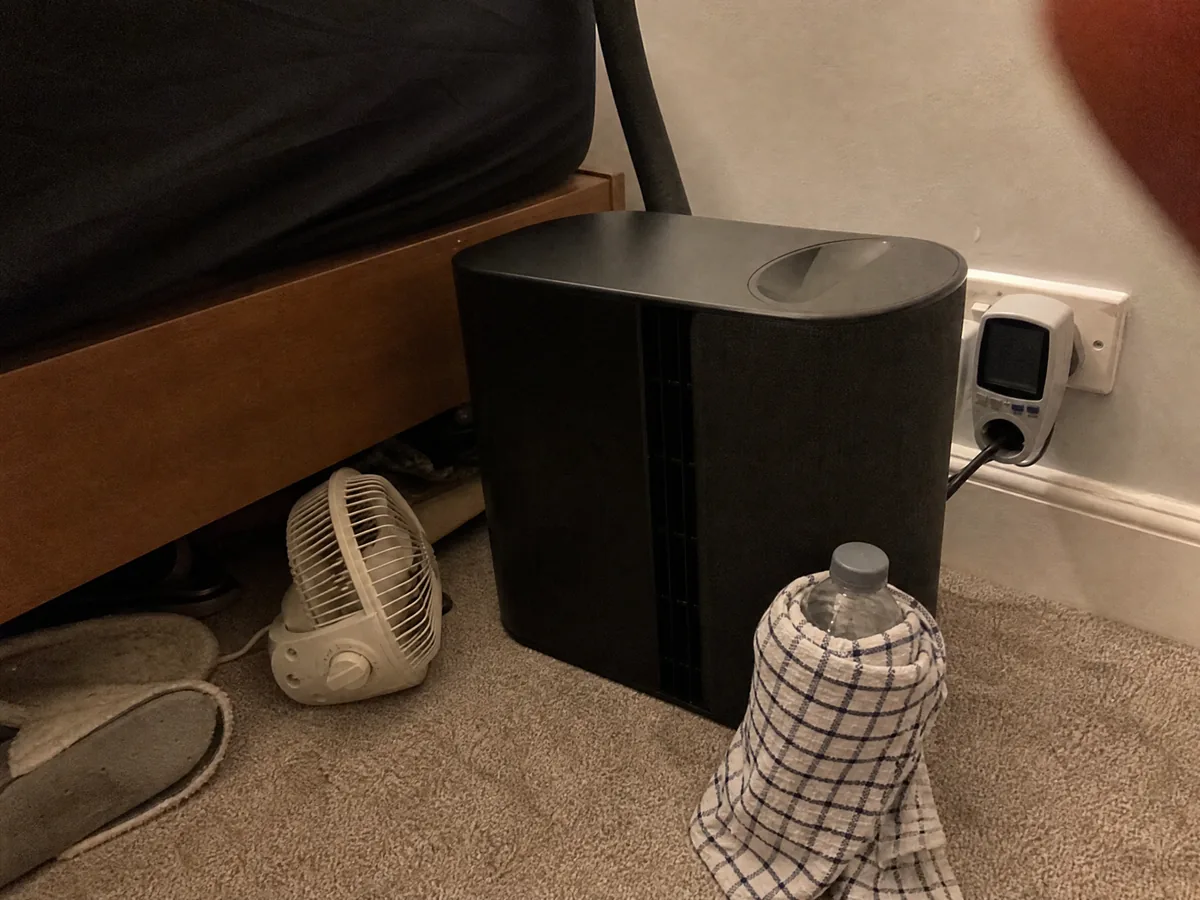
Now the bit British readers always ask about. The hub averaged 0.47 kWh a night in July. At about 26p per kWh, that's roughly 12p a night, or £3.70 a month. Last summer I borrowed my sister's portable air con. It drew about 1.1 kW, sounded like a hairdryer, and would have cost over £2 a night. So running the Pod is the cheap part. The expensive part comes next.
One more real-life moment. A thunderstorm cut our power for about 40 minutes in August. The hub restarted on its own, but for the rest of that night Autopilot didn't adjust anything. Not a disaster. Worth knowing.
What it really costs in the UK
At the time of writing, the Pod 5 Core is listed from about £2,349 for a double to about £2,649 for a super king, with our king around £2,450, although Eight Sleep runs offers often. On top of that, Autopilot is required for the first year, and one plan does both sides of the bed.
| Autopilot plan (UK) | Per year | Per month | What you get |
|---|---|---|---|
| Standard | £199 | £17 | Autopilot, sleep and health reports, alarms, snoring detection, 2-year warranty |
| Enhanced | £299 | £25 | Everything in Standard, with a 5-year warranty |
| Elite | £399 | £33 | Everything in Enhanced, plus extra health checks |
On the Standard plan, year one for a king costs roughly £2,650. I'd pick Enhanced: a pump full of water on your bedroom carpet is exactly what I want five years of warranty on. Drop the membership after twelve months and the bed still heats and cools, but only to the numbers you type in yourself, with no tracking and no snoring log.
You get 30 nights to change your mind, and a return refunds the membership as well. Make sure a hot spell falls inside those 30 nights. And since 23 September, there's a second question to ask.
Pod 5 or Pod 6?
The Pod 6 fixes my biggest grumble. Eight Sleep says the hub is about half the size and slides under most bed frames, a big deal for British bedrooms. Announced for the UK:
- Price: from £1,799 for a Solo, for one sleeper, and from £2,399 for a standard two-sided bed.
- Speed: around 20% faster temperature changes than the Pod 5.
- Sensors: many more of them, which Eight Sleep says helps it tell you apart from a pet or a child in the bed. Mog may finally lose her heart rate graph.
- Membership: Autopilot is still required for the first year, from £199.
We haven't slept on a Pod 6 yet and will update this page when we have. Until then, don't pay Pod 5 list price, because a two-sided Pod 6 starts below what our king cost. A Pod 5 king on clearance at £1,800 or less is still a brilliant bed, because the cooling I measured is already plenty. Solo sleepers should wait for the Pod 6 Solo.
Is it for you?
Cheaper things I'd try first
Plenty of hot sleepers can get most of the way for under £100, so try the easy fixes first.
- A lower tog duvet. A 4.5 tog for summer, or just a cotton sheet on the worst nights.
- Percale or linen bedding, which breathes far better than polyester blends.
- Curtains shut in the afternoon on the sunny side, windows wide open after dark. Most of us do it the wrong way round.
- A cooling pillow and a fan aimed at your feet, not your face.
If you've done all of that and you still wake at 3 a.m. soaked, the Pod is the next real step, and it's a big one. You'll find more of our tested sleep kit in the reviews.
As for me, the tea towel is back in the kitchen drawer where it belongs. Steve still snores. I sleep through most of it now, because I'm finally cool enough to.
Questions people ask about Eight Sleep in the UK
Is Eight Sleep available in the UK?
Yes, directly from Eight Sleep in double, king and super king sizes, with a 30-night trial. Autopilot starts at £199 a year.
Can you use the Eight Sleep Pod without a subscription?
Only after the first twelve months, which need an Autopilot plan. Once you cancel, the app still lets you pick a temperature for each side, but the bed stops adjusting itself overnight and the sleep and snoring reports disappear.
How much electricity does the Eight Sleep Pod use?
In our July test the hub used about 0.47 kWh a night. At around 26p per kWh that's roughly 12p a night, much less than running a portable air conditioner until morning.
Does the Eight Sleep Pod help with snoring?
It detects and logs snoring on the Autopilot plans, and on our test it was accurate. The feature that raises your head to reduce snoring needs the adjustable Base, which only comes in the more expensive Ultra bundle.