
Oura Ring 4 review: 118 nights, hot flushes and the subscription question
Three in the morning, duvet on the floor, again. I wore the Oura Ring 4 for 118 nights to see if it could explain my sleep, and whether it's worth paying for every month.
 By Gillian Scrivens, health and beauty tester
Tested in Bristol · 13 August 2026 · 11 min read
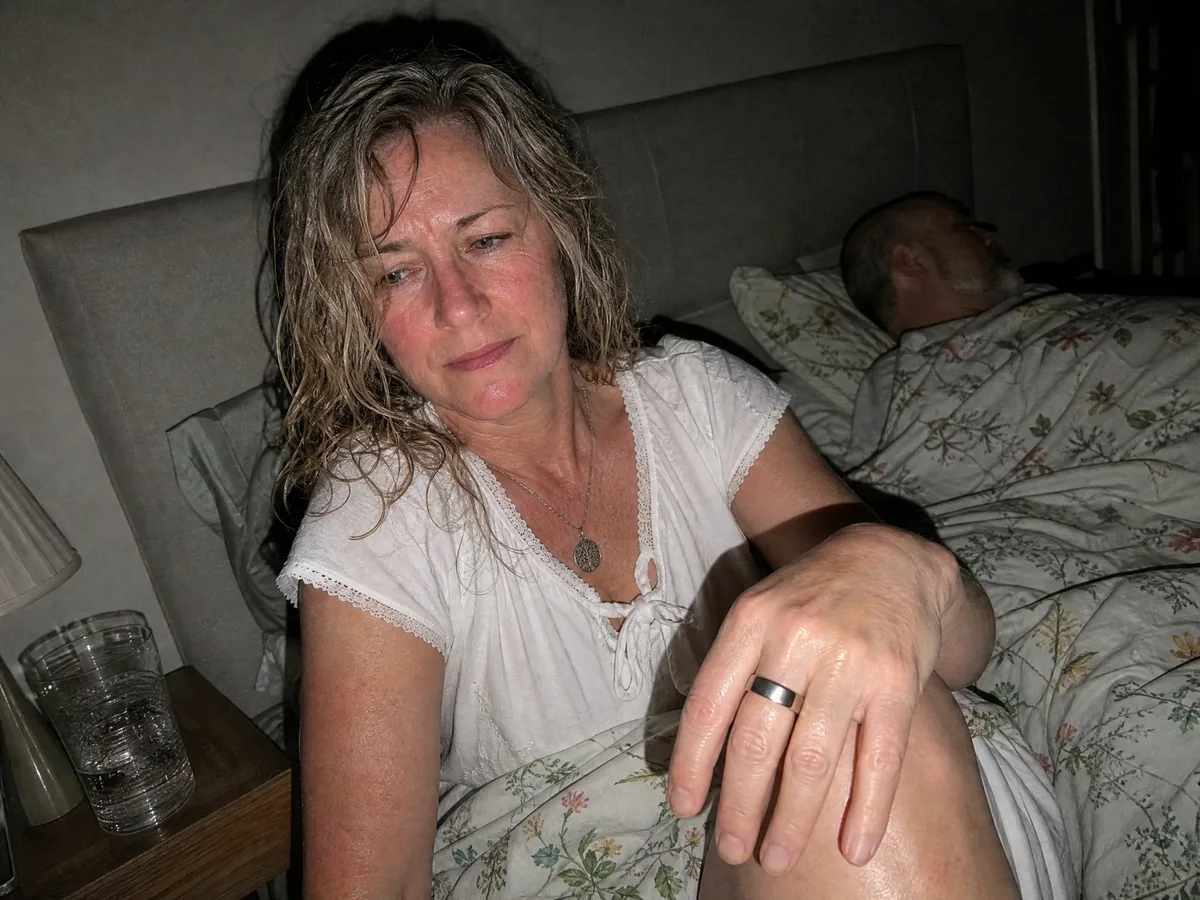
3:12 a.m. The duvet is on the floor, my pillow is damp, Martin is snoring gently on the other side of the bed, and I'm wide awake doing sums about how many hours are left before the alarm. If you're a woman somewhere past 45, you may know this hour well.
For a year I'd told my GP, my sister and myself that I "wake up a couple of times." In April I slid a smart ring onto my right index finger to check. It wasn't. The Oura Ring 4 said I was waking four or five times most nights, and it could show me which ones came with a spike in skin temperature.
I test health and beauty kit for a living, and most wellness gadgets are in a drawer within a fortnight. This one is still on my hand after 118 days. That doesn't make it worth the money on its own, so here's the rest: what it measured well, where it got confused, and the monthly fee nobody mentions on the box.
- Resting pulse matched Darren's chest strap to 2 beats or better, 33 times out of 36
- Temperature graph matched 19 of my 23 logged hot flush nights
- Comfortable enough that I forgot I had it on in the bath, twice
- Sells for roughly £220 to £245 in UK shops now the Ring 5 is here
- £5.99 a month on top, or £59.99 a year
- Symptom Radar mistook two sweaty nights for a bug
- Housework and gardening counted as workouts
Our verdict: nothing we've worn to bed tells you more about your nights while asking so little of you. At £349 it was a hard sell next to the smaller Ring 5. At around £220 to £245, it's the one we'd buy.
A ring with no screen and a lot of sensors
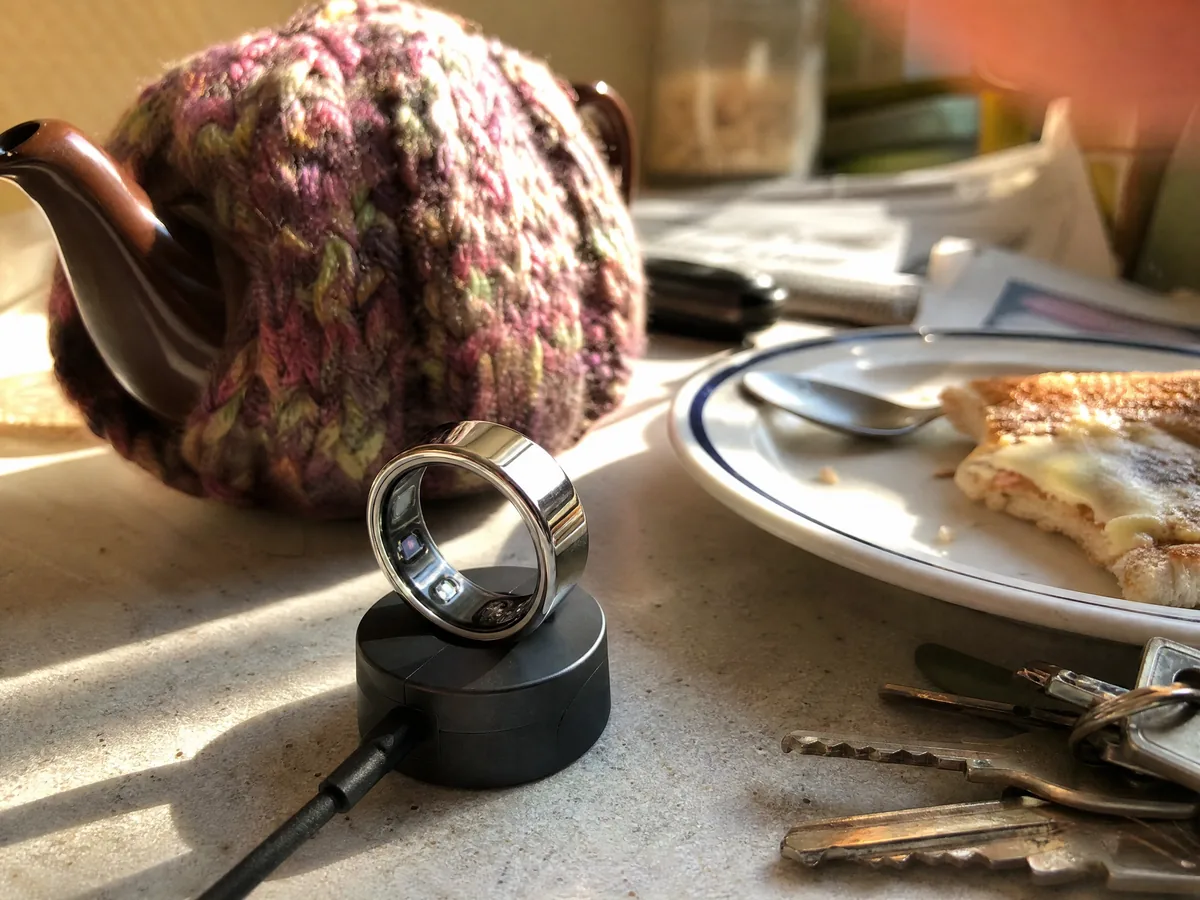
The Ring 4 won't light up, beep or buzz. It's a plain titanium band, and tucked into its inner surface are LED sensors (red and infrared), a skin temperature sensor and a motion sensor. Day and night they watch the pulse in your finger, and everything lands in the phone app next time you look.
Each morning the app boils it down to Sleep, Readiness and Activity scores. Tap in and you'll find your pulse at rest, HRV (heart rate variability), sleep phases, how your skin temperature drifted overnight, your breathing and your oxygen levels. Oura calls its trick Smart Sensing: the ring switches between 18 different sensor paths to find the cleanest reading as it turns on your finger.
That last bit matters in real life. Fingers swell on a warm evening and shrink on a cold morning walk. Rings spin. So the question isn't whether the sensors are good in a lab. It's whether they still read well at 3 a.m. when you've been tossing and turning and the ring has slid round.
How we tested it
I paid full price for the ring, went through the sizing kit and wore it from 15 April to 10 August. That's 118 days and 115 nights. The three missing nights were a weekend in Tenby where I packed the charger in the wrong bag.
To check the numbers, Darren, our team physio, lent me his chest strap for 36 spot checks at rest and 10 whole nights. Each morning I gave myself a mark out of 5 for how I felt, before I was allowed to look at my phone. And on the bedside table I kept a paper "flush diary": a tick with the time whenever I woke up hot. If the ring only told me things I already knew, it would be a very expensive mirror. The full routine follows our usual rules on the how we test page.
Sizing: forget your jewellery size
This is where UK buyers trip up. We measure rings in letters. Oura uses US numbers, 4 to 15. My wedding ring is an N, which I assumed made me a US 6 or 7. The free plastic sizing kit said an 8 for my index finger. It was right and I was wrong.
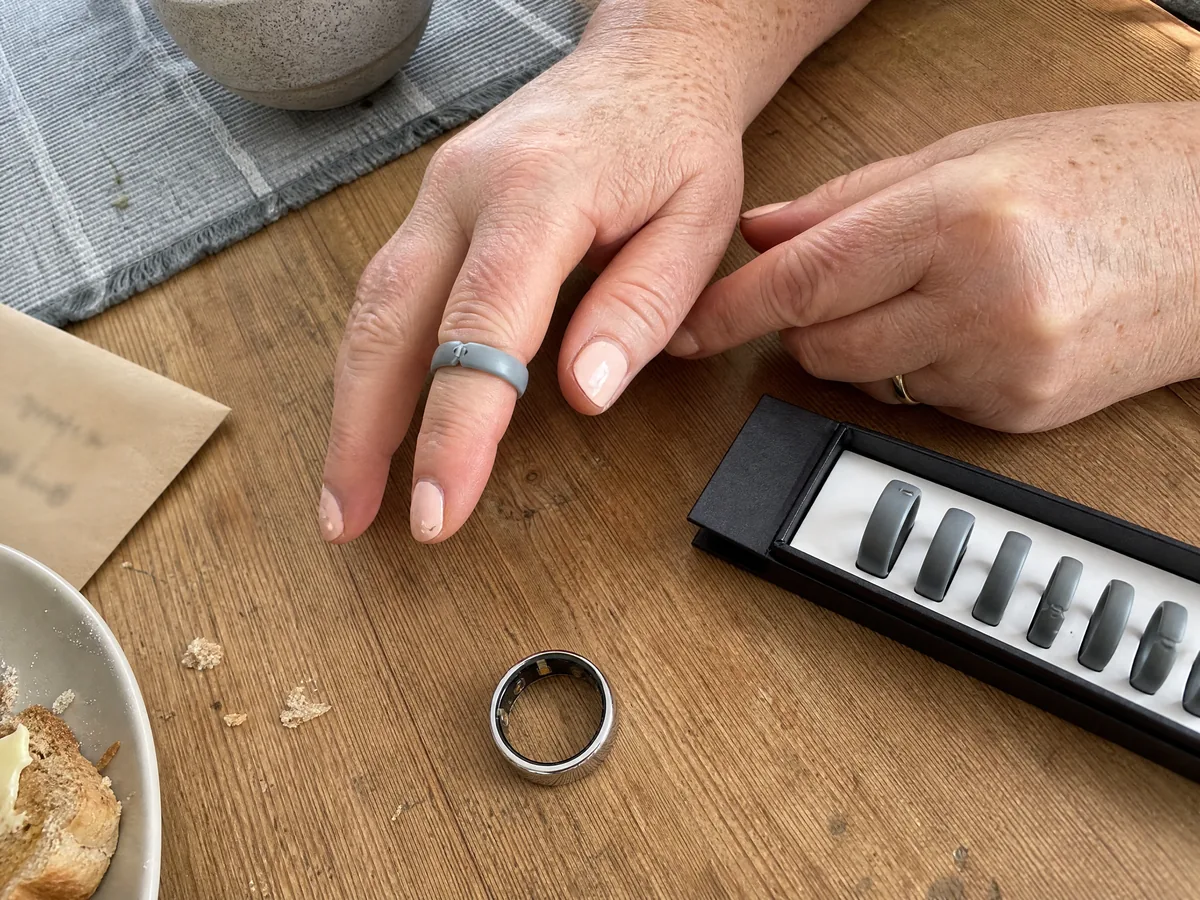
My knuckles are a bit stiffer in the mornings than they used to be, and my fingers swell in the heat. A dummy that slipped on easily at 7 a.m. was pinching by a warm afternoon. Keep the plastic one on for a whole day and a night before you choose.
Nights: where the Ring 4 earns its keep
Nights are what this ring does best, and I checked them as carefully as a kitchen-table tester can. Against Darren's chest strap, my resting pulse was no more than 2 beats out on 33 of 36 checks. All three misses were hot, restless nights when the sensors had slid round towards my middle finger.
Without a sleep clinic, I can't grade the deep and REM phases. But the times it gave for dropping off and waking agreed with my scribbled notes, give or take 10 minutes, on 101 of 115 nights. It also caught the wake-ups I'd forgotten by breakfast. My "couple of times" averaged 4.3.
HRV, the number many people buy an Oura for, needs a word of context. At 55, lower numbers are normal. Mine averaged 27 ms. After my niece's wedding and more prosecco than planned, it fell to 16 and my Readiness score to 58. Then I tried a month without my weekday glass of wine. My average crept up to 32, and, just as interesting, my flush diary got shorter.
"Don't compare your HRV with anyone else's, and definitely not with a 30-year-old's on the internet. Compare it with your own last month. That's the only line that means anything." Darren Ackroyd, physiotherapist
Hot flushes, temperature and the new menopause tools
This is the part I most wanted to test, and the part other reviews tend to skip. The ring doesn't measure your core temperature. It tracks how your skin temperature at night moves compared with your own baseline. That's precisely the signal a hot flush leaves behind.
Over the test I ticked 23 nights in my flush diary. On 19 of them, the temperature graph showed a clear bump at roughly the right time, usually within 20 minutes of what I'd scribbled down. On the other four, either the ring had slipped or I'd dreamt the whole thing, which at 3 a.m. is genuinely possible.
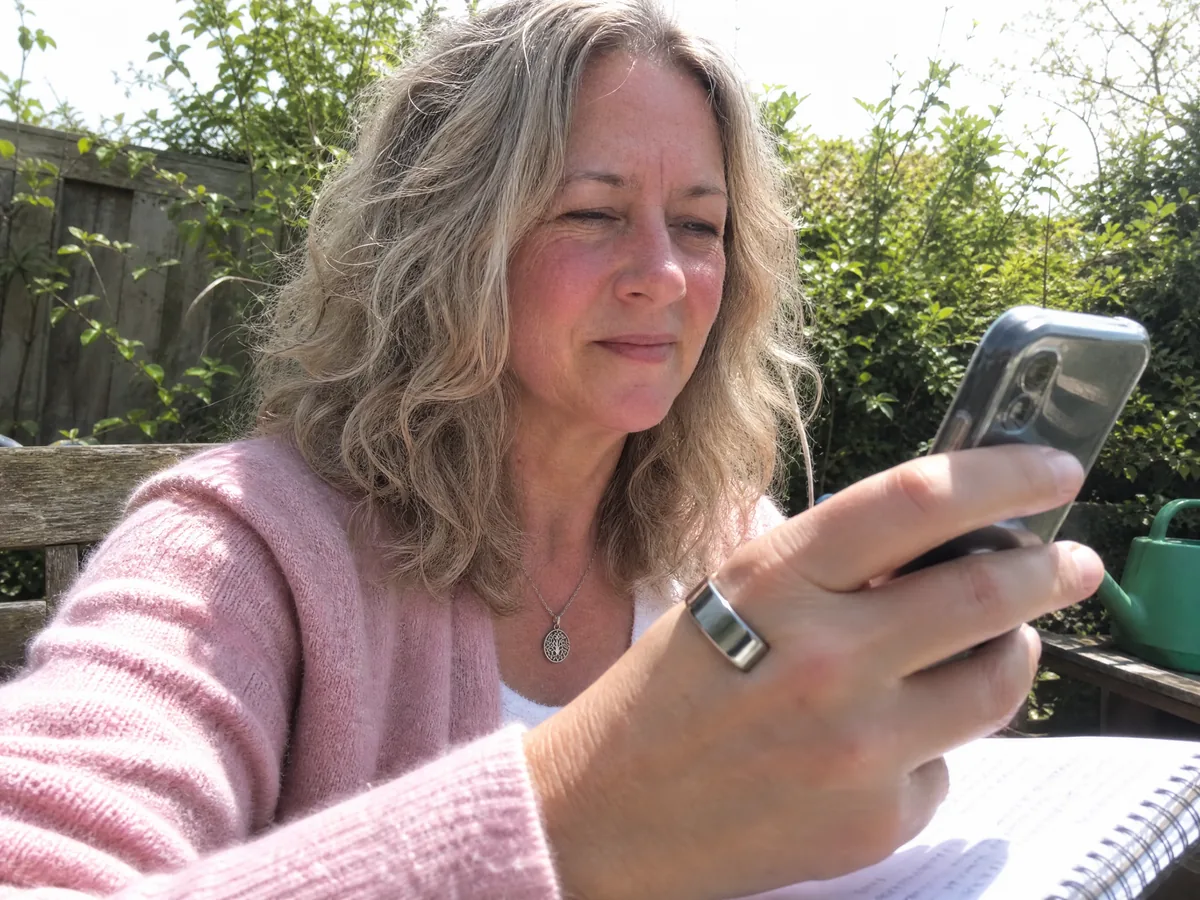
Oura started rolling out Menopause Insights in May 2026, and it appeared in my app a few weeks later. It begins with a clinical questionnaire about how symptoms affect your day, then tracks them alongside your temperature and sleep. It won't treat anything. But walking into my GP appointment in July with six weeks of graphs, instead of "I think it's getting worse," made it a very different conversation.
One honest niggle. Symptom Radar, which looks for early signs you might be coming down with something, flagged "signs" twice after very hot, sweaty nights. Nothing followed either time. If your nights are regularly hot, take its warnings with a pinch of salt.
Daytime: useful, with a few daft moments
On ordinary walking days, the step count landed within 8% of my phone. The trouble is anything that isn't walking. Whisking a pavlova by hand earned me 9 minutes of activity. Hoovering the stairs counted as a workout. Mowing the lawn, which frankly is a workout on our slope, was about right.
My Pilates class twice a week rarely registered on its own, so I logged it by hand. If you want live heart rate during exercise or a screen to glance at on a run, a watch still does that far better. The ring has nothing to glance at.
The newer daytime features were more useful than I'd expected. Daytime Stress showed a spike every Sunday from about 6 p.m., which is exactly when I start thinking about Monday. Cardio Capacity, Oura's VO2 max estimate, asked for a short brisk walk and gave me a number that, reassuringly, didn't make me feel 80.
Battery and charging
The box promises as much as 8 days. I ran every feature, oxygen tracking at night included, and got 5.9 days on average over 17 charges. Turning the oxygen readings off stretched it to 7.1. You get a low-battery nudge well before it runs flat.
A top-up from 20% took 68 minutes on the little dock. I settled into charging it on Sunday mornings over the newspaper and a pot of tea. Once, I walked out and left it sitting there all day. The app just showed an honest blank for those hours instead of inventing them, which I respect.
Oura Ring 4 specs
| Spec | Oura Ring 4 |
|---|---|
| UK price when we checked | £349 RRP (Silver, Black), around £219 at Amazon and £244 at Argos and Currys |
| Membership | £5.99 a month or £59.99 a year, first month included |
| Build | All titanium, 7.9 × 2.88 mm band |
| Sizing | US sizes 4 to 15, sizing kit sent first |
| Battery (Oura / our test) | 8 days / 5.9 days, every feature on |
| Water | Fine for swimming and the bath, rated to 100 m |
| What's inside | Infrared and red LEDs, skin temperature sensor, motion sensor, Smart Sensing over 18 paths |
The second row is the one that decides whether you're happy in a year's time, so let's put numbers on it.
The membership, in pounds
Skip the membership and the app shrinks to three headline numbers. The sleep phases, the HRV history and Menopause Insights all disappear behind it. Think of the fee as part of what the ring costs. Here's how it adds up at today's shop prices, on the yearly plan.
- Year one: about £244 for the ring at Argos or Currys, plus £59.99, so roughly £304. At the old £349 price it would have been about £409.
- Year two: another £59.99, about £364 in total.
- Year three: about £424. Paying monthly instead costs roughly £12 more a year.
That's real money for something with no screen. In month two I nearly cancelled. What kept me paying was that I kept changing small things because of what I saw, the weekday wine being the big one. If you're the sort to check an app eagerly for a week and then never again, keep your money.
Ring 4 or Ring 5?
The Oura Ring 5 came out in the UK on 4 June, from £399, with the fancier finishes at £499. It's roughly 40% slimmer at 6.09 by 2.28 mm, and it charges in a little case. It reads the same things and uses the same app and scores, and features like Menopause Insights reach the Ring 4 as well.
So my advice is simple. If you have slim fingers, wear other rings next to it or find smart rings chunky, the Ring 5 is worth a look. If what you're after is proper sleep data with nothing on your wrist, the Ring 4 at around £220 to £245 leaves more than £150 in your purse. Sizes and colours on sale do run out, so if yours comes up at a good price, that's your moment.
Should you get one?
If recovery is your reason for looking, Darren's review of the Theragun PRO Plus is a good companion read. He wore his own ring through the test, and a hard week on the bike showed up in his numbers long before it showed in his legs.
Other rings I'd consider
Samsung Galaxy Ring: no subscription and a similar focus on sleep. Works best with a Samsung phone.
RingConn Gen 2: cheaper, no subscription, long battery life and sleep apnoea monitoring. The app feels thinner and the advice more generic.
Ultrahuman Ring Air: light, no subscription, good sleep data. Fewer women's health features than Oura at the time of writing.
For everything else we've worn, used and lived with this year, have a browse through the blog.
Oura Ring 4: your questions
Can the Oura Ring track hot flushes and menopause symptoms?
It can't diagnose anything, but it tracks night-time skin temperature against your own baseline, and in our test the graph showed a bump on 19 of 23 nights with a logged hot flush. Menopause Insights, which began rolling out in May 2026, adds a symptom questionnaire and trends.
Is the Oura Ring worth it without the subscription?
Not really. Without the £5.99 monthly or £59.99 yearly membership you only see the three headline scores. Sleep stage detail, HRV trends and the women's health features are all behind it.
How do UK ring sizes convert to Oura sizes?
They don't convert reliably, because the Oura band is wider than most jewellery. Order the free sizing kit and wear the dummy ring for 24 hours on your index finger. My UK N wedding ring suggested a 6 or 7, and the kit said 8.
Should I buy the Oura Ring 4 or wait for a Ring 5 deal?
At around £220 to £245, the Ring 4 is the better buy for most people. The Ring 5 is slimmer and nicer to wear with other rings, but the data and app are the same, and it starts at £399.