
Smart meat thermometers tested: which one still reaches the basement couch?
34 cooks on the smoker and in the oven, watched from a basement couch 52 feet away. One of the five never went quiet once, and that mattered more than a tenth of a degree.
 By Randall Plunkett, outdoor, grill and fitness tester
Tested in Kansas City, Missouri · November 4, 2026 · 12 min read
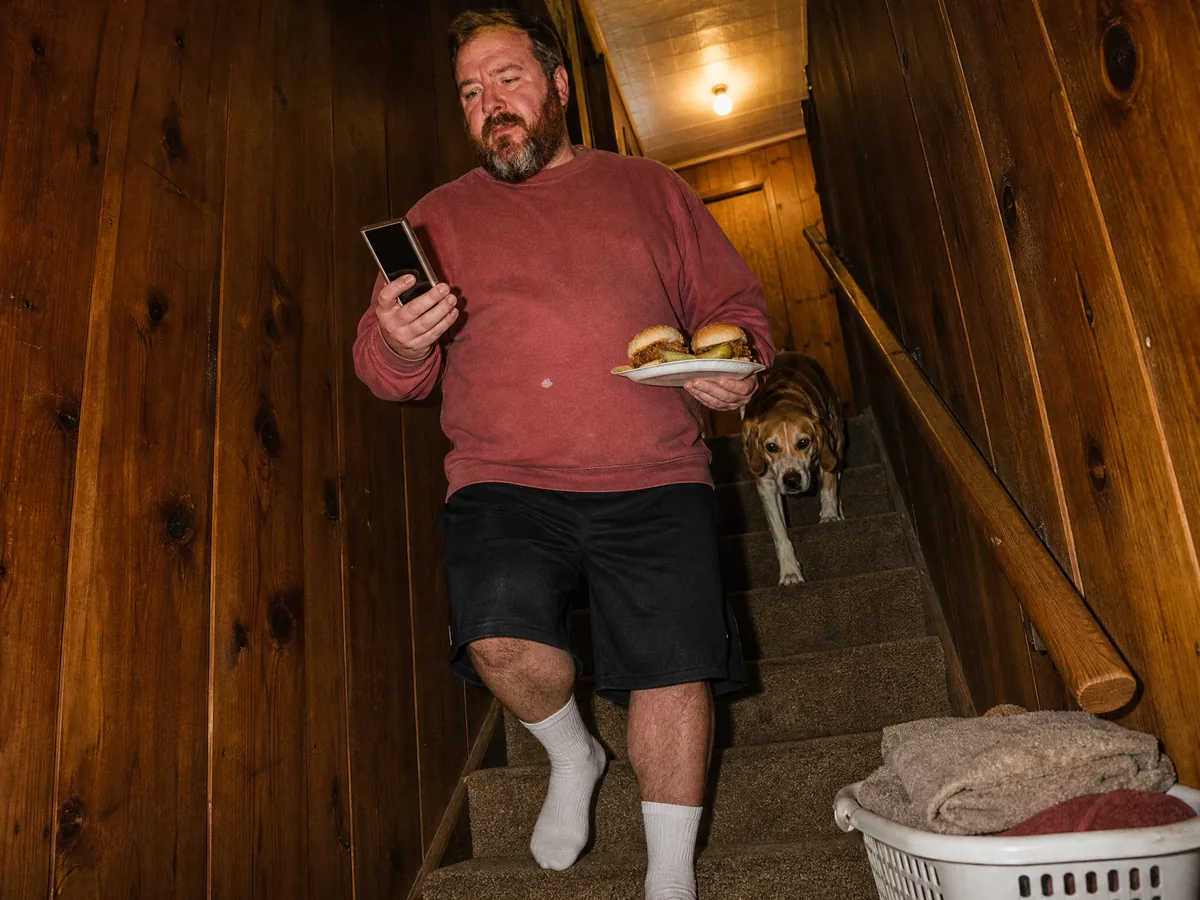
Our basement has the big TV, a sectional that has outlived two dogs, and cell service that comes and goes like a teenager. It's also where every Chiefs game gets watched in this house. That's a problem when there's a pork butt on the smoker out back.
For years my Sundays went the same way. Kickoff, glance at the phone, trust the number. Then the number sits still through an entire drive, so I jog up the stairs and out the slider, only to find the app lost the probe a quarter of an hour ago.
So when we planned the fall kitchen tests, I asked for the one I wanted answered for myself. Which smart meat thermometer keeps a steady signal from the grill or the oven to the couch, and hits the target temperature within 1°F? From Wednesday, September 2 to Thursday, October 29, 58 days, five of the best-known models went into pork, brisket, chicken and beef at our place in south Kansas City.
- Zero dropouts in 14 cooks, base on the basement couch 52 feet from the smoker
- 13 of 14 alarms within 1°F, 0.5°F off on average
- Its own color screen, right next to you
- Wi-Fi too, for checking from the store
- $199.99 is real money for two probes
- 2.4 GHz Wi-Fi only
- Base menus take a couple of cooks to learn
- The Combustion was a hair more accurate
Verdict: a perfect reading you never see is worth nothing on game day. The Typhur reached the couch every single time, and it was close enough on accuracy that I never tasted the difference. For the tightest numbers and a dinner countdown, get the Combustion. Under $100, get the ThermoMaven P2.
- Why a basement is a radio's worst day
- The 1°F rule and a bowl of ice
- 58 days on one page
- Typhur Sync Gold Dual: the only one that followed me downstairs
- Combustion Predictive: the sharpest numbers in the test
- ThermoMaven P2: great value and a lesson about glass doors
- MEATER Pro: the friendliest app and a borrowed iPad
- ThermoPro TempSpike Plus: fine at the grill, lost in the basement
- Five habits that keep any probe talking
- Who should buy which
- What they cost in the US right now
- What people ask me at cookouts
Why a basement is a radio's worst day
Most smart thermometers talk over Bluetooth, the same 2.4 GHz radio your earbuds use. It works fine across an open kitchen. It struggles with metal, water, brick and dirt, and a basement is built out of most of those.
Here's the route in our 1950s brick ranch in Waldo. From the offset smoker on the patio to the basement sectional it's 52 feet, through the brick wall, the kitchen floor and the joists. From the oven it's about 30 feet, plus the steel box of the oven itself, and metal boxes are where radio signals go to die.
So most of these kits ship with a middleman: a booster, a block, a display or a base that catches the probe close to the heat and relays it. Each one went where its quick start guide says it reaches farthest. Anything that could follow me downstairs did, and the rest reported to my phone over Wi-Fi.
Tanya set the only house rule. If I went upstairs to check on the meat before an alarm went off, I owed her a dollar. I paid $4 in 58 days, all of it in the first week.
The split was 20 outdoor cooks, on the offset, the Traeger Woodridge Pro and an old kettle, plus 14 in the oven. Two or three thermometers shared each cook, and I shuffled the pairs so nobody always got the easy seat. Staying connected was one job. Being right when it beeped was the other, and that needed someone to keep score.
The 1°F rule and a bowl of ice
The scorekeeper was a Thermapen ONE, the orange instant-read made by ThermoWorks out in Utah, rated at ±0.5°F and in my back pocket at every cookout since 2021. On day one, every probe and the Thermapen went into a mixing bowl packed with ice and water, which sits at 32°F.
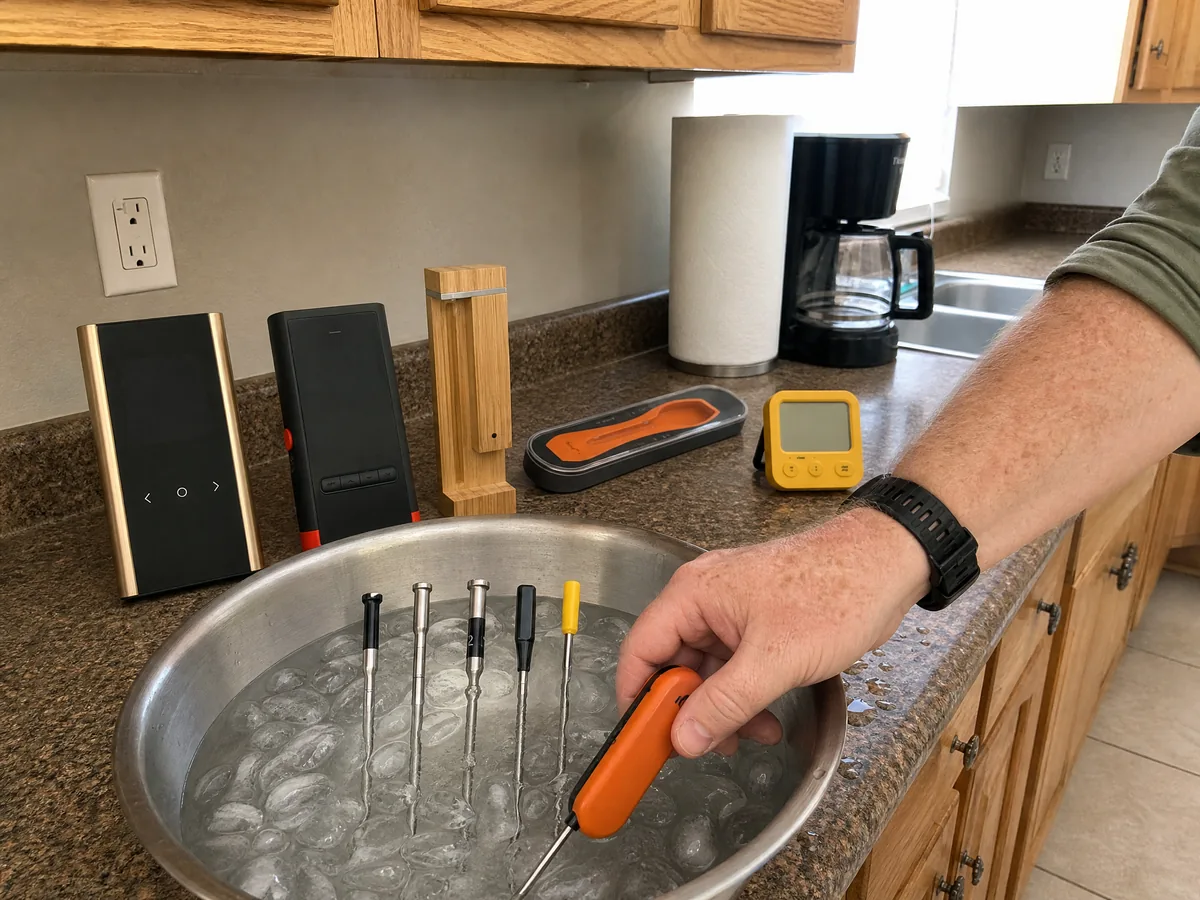
The Thermapen and the Combustion both read 32.0°F. The Typhur probes read 32.1 and 32.2, the MEATER 32.3, the ThermoMaven pair 32.2 and 32.4, the TempSpike 33.0. On day 58 nothing had drifted more than 0.3°F, so whatever went wrong later happened in the meat, not at the factory.
Pull temperatures: 130°F for medium-rare beef, 145°F for pork loin, 165°F for chicken breast, 175°F for thighs, 203°F for pork butt and brisket. Each time an alarm sounded, the Thermapen went in a finger's width from the probe, just as deep, for three readings. If the probe was no more than 1°F off their average, it scored.
A dropout was any lost-connection message, or a number frozen for more than a minute. The frozen kind is sneakier. A blank screen gets you off the couch. A stuck number keeps you parked while dinner overcooks.
58 days on one page
Each thermometer got 8 outdoor and 6 oven cooks. A cook counts once in the dropout columns, no matter how many times it hiccuped.
| Model | US price at the time of writing | Outdoor cooks with a dropout | Oven cooks with a dropout | Longest gap | Average gap to the Thermapen | Alarms within 1°F | Score |
|---|---|---|---|---|---|---|---|
| Typhur Sync Gold Dual | $199.99 | 0 of 8 | 0 of 6 | None | 0.5°F | 13 of 14 | 9.2 |
| Combustion Predictive + WiFi Display | $199 kit, $149 thermometer only | 1 of 8 | 2 of 6 | 4 min 10 s | 0.3°F | 14 of 14 | 8.8 |
| ThermoMaven P2 | About $60 to $95 | 2 of 8 | 3 of 6 | 11 min | 0.7°F | 11 of 14 | 8.0 |
| MEATER Pro | About $110 to $130 | 3 of 8 | 2 of 6 | 14 min | 0.6°F | 12 of 14 | 7.7 |
| ThermoPro TempSpike Plus | About $70 to $90 | 5 of 8 | 5 of 6 | 31 min | 1.3°F | 7 of 14 | 6.3 |
Read the two right-hand columns and the Combustion wins. Read the two in the middle and nothing comes close to the Typhur. I went with the signal.
Typhur Sync Gold Dual: the only one that followed me downstairs
The Typhur Sync Gold Dual is two thin stainless probes and a slim black base with champagne-gold rails and its own color screen. The probes talk to the base on Sub-1GHz, a lower frequency than Bluetooth whose longer waves get around lids and through walls far more easily. Typhur claims up to 700 feet indoors. I needed 52.
The base sat on the arm of the sectional for all 14 cooks and never lost a probe. Not even on Sunday, September 27, when the TempSpike in the same pork butt went dark twice before halftime. The Typhur just kept counting through the stall, 167, 168, 170, while I ate sliders.
"So you just sit there now? That's the whole thing?" Tanya, Sunday, September 27, from the other end of the sectional, a little sad about losing her dollar income
On average its alarm went off 0.5°F from the Thermapen, and 13 of 14 alarms landed inside my window. The one miss was 1.4°F on a spatchcocked chicken, where the breast is so thin the probe went in at a shallow angle. Several sensors run along the shaft, and the base reports whichever reads lowest, because the coldest spot decides when a roast is done.
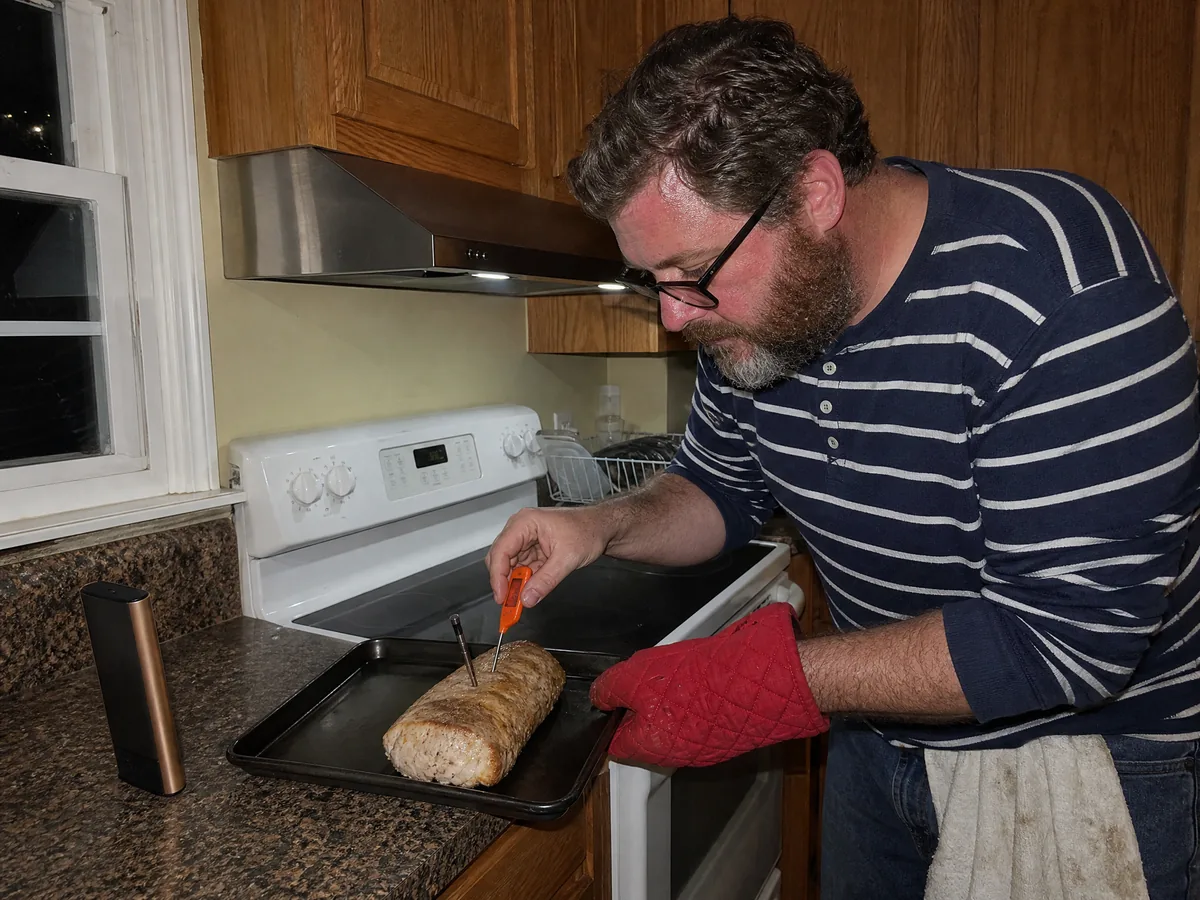
The base joins your Wi-Fi too. On Saturday, October 24, a pork shoulder was on the Traeger while I did a Costco run, and our neighbor Luis had promised to yell if he saw flames. I checked from the parking lot. 181°F and climbing, no yelling.
The downsides: $199.99 is a lot for two probes, and the base only joins 2.4 GHz Wi-Fi, so I spent an evening splitting the bands on our mesh router. Its closest rival was a little sharper with the numbers, and a little worse at reaching the couch.
Combustion Predictive: the sharpest numbers in the test
The Combustion Predictive Thermometer has a real following among competition cooks, and now I get it. The probe carries eight sensors from tip to handle and works out which one sits in the true center. The yellow WiFi Display, a chunky kitchen timer to look at, shows that core temperature and a countdown to dinner.
It was the most accurate thermometer here: 0.3°F from the Thermapen on average, a worst miss of 0.8°F, 14 alarms out of 14 inside the window. The countdown is what you end up showing people. I showed Walt.
Walt is my father-in-law. He has strong opinions about barbecue and stronger ones about gadgets. On Saturday, October 10, with two pork butts on the Traeger, the Display said the first one would hit 203°F at 5:52 p.m. Walt bet me $5 it would be after 6:30. It hit 203°F at 5:57.
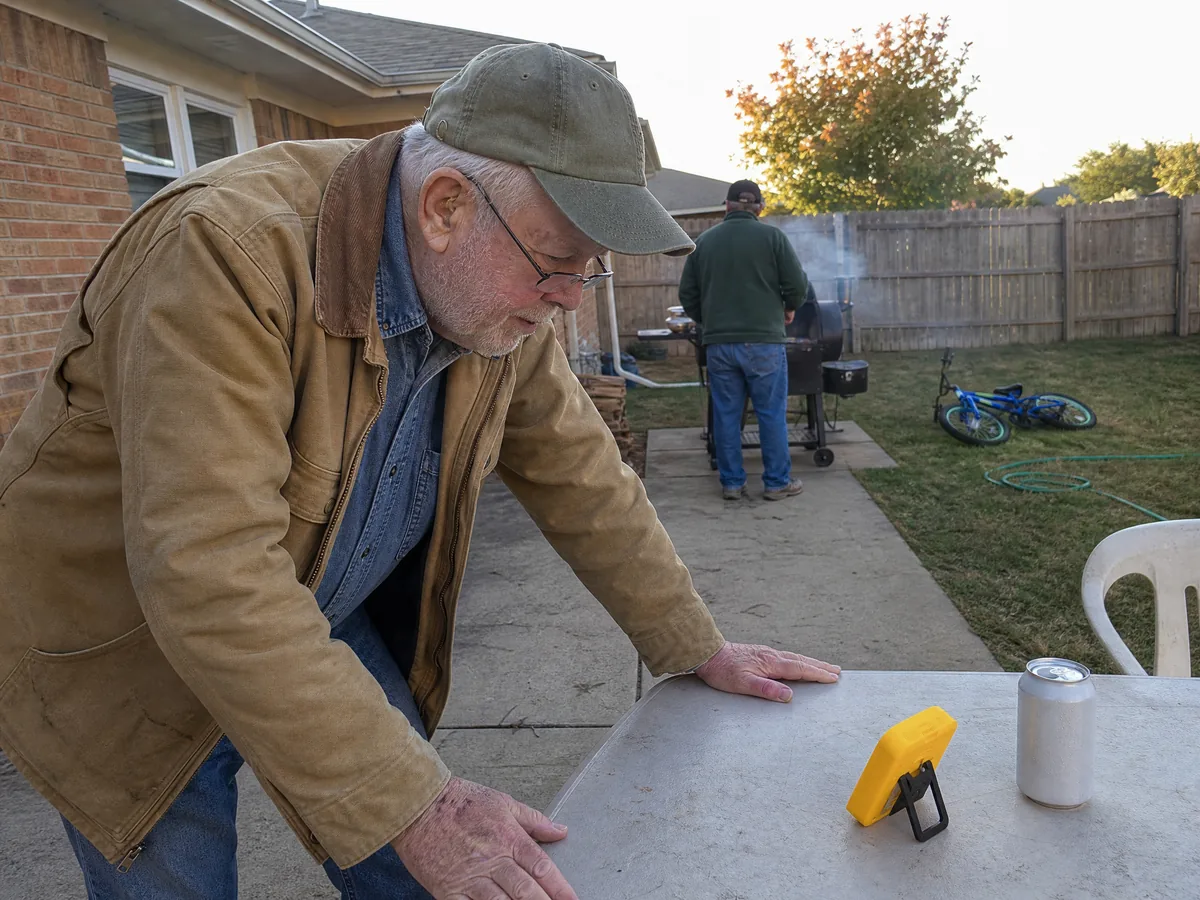
He paid, then asked if it works on a turkey. It does. The weak spot is the signal path. The Display has to hear the probe over Bluetooth, so it lived on the kitchen counter and passed readings to my phone over Wi-Fi. Three cooks had a dropout, two in the oven, the longest 4 minutes 10 seconds. A separate WiFi Booster adds range, but that's another box and more money on top of the $199 kit.
ThermoMaven P2: great value and a lesson about glass doors
The ThermoMaven P2 is the bargain. Two probes, a tall black base with a red rubber foot and a bright screen, plus Wi-Fi to your phone, usually $60 to $95 on Amazon once the near-permanent coupon kicks in.
Its probes reach the base over Bluetooth, so the base stays near the cooker. My first two smoker cooks with it both dropped out. Between the base on the kitchen counter and the smoker was our patio slider with low-E glass, the coated energy-saving glass in most newer American windows. Its thin metallic layer keeps out summer heat, and radio signals too.
The base moved to the patio table under the overhang, and it never dropped out on the smoker again. The oven was harder, with gaps in 3 of 6 cooks and a longest one of 11 minutes. Accuracy averaged 0.7°F, 11 of 14 alarms inside 1°F. Very good for the money, if you think about where the base goes.
MEATER Pro: the friendliest app and a borrowed iPad
MEATER is the name most people know, and the MEATER Pro is one sleek steel probe in a bamboo charging block that doubles as a Bluetooth repeater. Rated to 1000°F on the outside, it can stay in a reverse-seared steak over the flames. The app is the best of the five, and Tanya ran a chicken with it on day 12 without asking me a single question.
The block has no Wi-Fi, so to follow it from the basement I parked our daughter's old iPad on the counter running MEATER Link. Two of my dropouts happened because she borrowed it to draw. I can't even be mad. It was a drawing of Rosie, and it was pretty good.
In all, 5 of 14 cooks had a dropout, the longest 14 minutes in the oven. Accuracy was strong at 0.6°F on average, 12 of 14 inside the window. At $129.95 list, often near $110, it's a lovely way to start if the block and its tablet stay put.
ThermoPro TempSpike Plus: fine at the grill, lost in the basement
Search Amazon for a wireless meat thermometer and ThermoPro usually shows up first. The TempSpike Plus, model TP970, now also sold in some US stores under the TempPro name, is one thin probe with a black handle that rides in a long orange booster. ThermoPro rates it at ±1.8°F, wider than my target before any meat goes in.
With the booster on the counter, it dropped out in 5 of 8 outdoor cooks and 5 of 6 oven cooks. The worst gap was 31 minutes on Sunday, October 18, with a whole chicken in the oven. My phone sat on 148°F for the entire second quarter, and when it woke up the thighs were at 183°F.
All of its meat sensing happens at the very tip. Twice in pork butts that tip rested against the blade bone, which runs hotter, and the alarm went early. Average gap 1.3°F, 7 of 14 alarms inside 1°F. Grilling burgers two feet away? Fine. Watching football a floor below? Look elsewhere.
Five habits that keep any probe talking
- The middleman goes by the cooker. Carrying the ThermoMaven base 12 feet closer to the smoker ended its outdoor dropouts.
- Check your glass. Low-E windows and sliders block radio. If the grill is outside and the relay is inside, give the relay a covered spot outdoors.
- Aim the cap at a gap. On a smoker or kettle, face the end of the probe toward the lid seam or the vent. In the oven, face it toward the door window.
- Bury it to the mark. Every probe has a minimum depth notch. Shallow probes read the surface.
- Ice bath every fall. A good probe reads 32°F, give or take half a degree.
The scores follow the same weighting as every kitchen test on this site, explained on our how we test page. Now for the part where you spend money.
Who should buy which
The TempSpike Plus suits burgers on an open grill with you right beside it. Still choosing the grill itself? Our Weber Spirit E-325 review covers gas.
What they cost in the US right now
All five came out of our own budget. Prices from the week I wrote this, each with the price that would make me click buy:
- Typhur Sync Gold Dual: $199.99 at typhur.com, down from a $229 launch price, also on Amazon. Good under $170.
- Combustion Predictive Thermometer: $149 alone, $199 with the WiFi Display at combustion.inc, $119 for the Display by itself. It sells out often, and the $199 kit is already the deal.
- ThermoMaven P2: $149.99 list, usually $60 to $95 on Amazon with the coupon. Good under $65.
- MEATER Pro: $129.95 at MEATER's US store and at Walmart, often around $110 on sale. Good under $110.
- ThermoPro TempSpike Plus: $129.99 list at ThermoPro, usually $70 to $90 on Amazon and at Walmart. Good under $70.
Thanksgiving is November 26, and all five tend to drop for Black Friday the day after. The Typhur keeps its spot on the sectional arm for the winter. My electric shaver test runs until mid-December on our tests in progress page, and the rest of our kitchen testing lives in the home and kitchen section.
What people ask me at cookouts
Do wireless meat thermometers work through walls and floors?
Some do far better than others. In our test only the Typhur Sync Gold Dual had zero dropouts, over 14 cooks and 52 feet from a closed smoker to a basement couch. Its Sub-1GHz radio gets through walls and metal much better than Bluetooth.
Why does my meat thermometer app say the probe is disconnected?
Usually the lid or oven door blocks the signal and the relay is too far from the cooker. Move the booster, block or base close to the meat, keep it on the same side of any low-E glass door, and turn the probe cap toward the lid gap or oven window.
Is the Typhur Sync Gold better than the MEATER Pro?
For range, clearly: zero dropouts for the Typhur against 5 cooks with a dropout for the MEATER Pro. The Typhur also has two probes, a screen and Wi-Fi. The MEATER Pro has the friendlier app and costs about $70 less, a fine pick if you sit close to the kitchen.
How do I check if my meat thermometer is accurate?
Pack a glass with ice, top it up with cold water, stir for a minute and push the probe into the middle. It should read 32°F, within about half a degree. Skip boiling water unless you live near sea level.