
Weber Spirit E-325 review: 11 weeks of cookouts on the new sear zone grill
38 meals, 2 propane tanks and one overcooked ribeye later: here's what the redesigned Weber Spirit E-325 does well and where it cuts corners.
 By Rodney Frankenfield, grill and yard tester, volunteer firefighter
Tested in Harrisburg, Pennsylvania · July 21, 2026 · 11 min read
Weber Spirit E-325 (2025 generation, propane)
About $549 at the time of writing, list price $599
- Sear zone hit 688°F on the grate in 14 minutes
- 500°F in the dome in about 11 minutes
- Grease tray slides out, cleaned in under 2 minutes
- Assembled in 78 minutes, no missing parts
- Hard plastic wheels hate grass and gravel
- Left front corner runs about 40°F cooler
- No digital thermometer on this version
- Primary grate is smaller than the old E-310
Our verdict: the most fun you can have on a gas grill for around $550. The sear zone is the real deal, cleanup is easy and it feels solid. Just learn where the cool corner is, and budget for a grill cover.
My old grill died on the first warm weekend of April. Not dramatically. The burner tube just rusted through, and the flame on the left side started looking like a birthday candle in the wind. My wife Janet watched me try to cook twelve burgers on two-thirds of a grill and said, very kindly, "Maybe it's time." As a volunteer firefighter I should have said it first. A rusted burner tube is exactly the kind of thing I warn people about.
So in early May the new Weber Spirit E-325 arrived on my driveway in a box the size of a washing machine. This is the redesigned 2025 Spirit, the first real overhaul of the line in about fifteen years. Weber's big promise is a sear zone with "Boost" burners that put out 40% more heat on one side. I wanted to know if that was marketing or something you can taste.
I cooked on it 38 times over 11 weeks. Weeknight chicken, two birthday parties, a lot of burgers and one steak night that went sideways. Here's the full story, starting with the part where I got cocky.
The first cook, and my first mistake
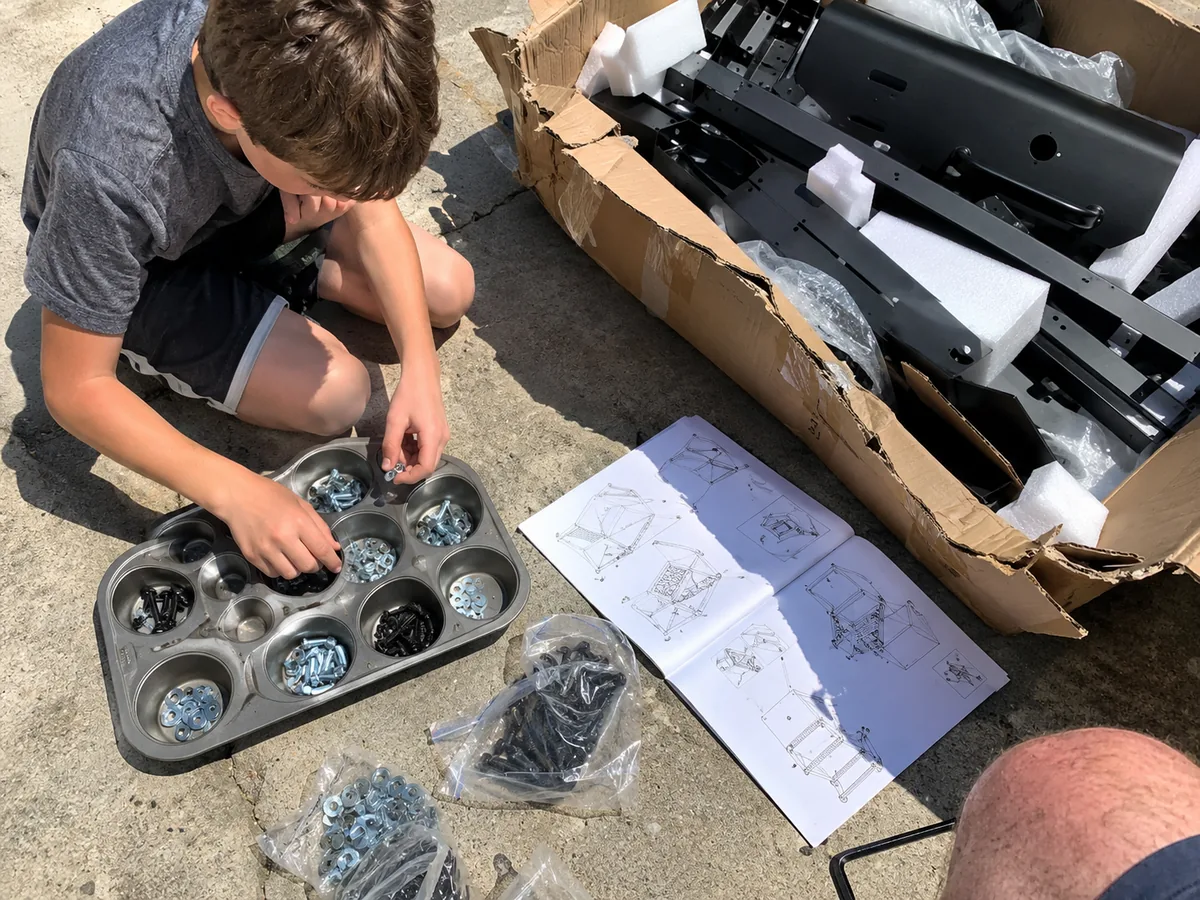
Assembly took 78 minutes. Evan, the 12-year-old from next door who shows up whenever my toolbox is open, sorted the bolts into a muffin tin, which turned out to be the best project management I've seen all year. The instructions are mostly pictures, the parts are bagged by step, and nothing was missing. The only tricky moment was holding the cookbox steady while tightening the first cart bolts, so if you can, grab a second pair of hands for that part.
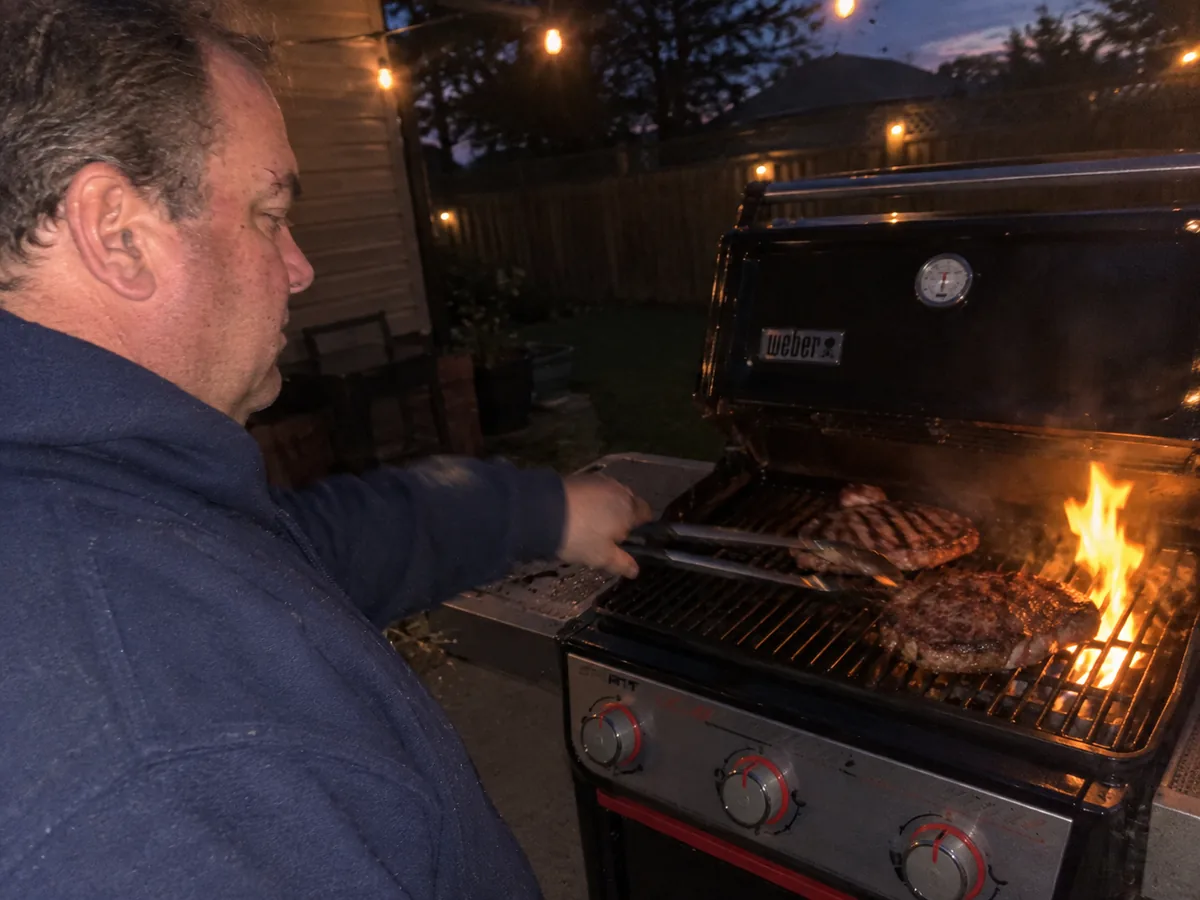
For the first cook I bought two thick ribeyes, about 1.25 inches each. I cranked the two right burners, turned on the sear boost, closed the lid and waited. Then I did what I'd always done on my old grill: four minutes a side.
They came off medium-well. Gray all the way through, with gorgeous crosshatch marks on the outside. Janet ate hers politely. My two teenage boys ate theirs without noticing. I ate mine in silence. The sear zone is hot enough that my old timing simply doesn't apply anymore, and the second time I did 2.5 minutes a side and moved them to the cool side to finish. That was the best steak I've made at home.
"So the grill is good, and the cook needs an update." Janet, being generous about the ribeyes
That steak night is also why I started measuring everything. Tasting is fun, but numbers tell you where to put the food.
What the thermometer said
I ran every heat test on days between 68°F and 81°F with light wind, which is a normal spring and early summer evening where I live. I used the lid gauge, an infrared thermometer pointed at the grates and a leave-in probe clipped at grate level. Here are the averages from four runs each.
| Test | Result |
|---|---|
| Lid closed, all burners high, to 500°F on the lid gauge | 10 min 50 s |
| Sear zone grate surface after 14 min with boost on | 688°F |
| Hottest grate reading we ever saw | 731°F |
| Indirect setup (left high, others low) settled at | 385 to 405°F after 16 min |
| Recovery after 30 seconds with the lid open | back to 450°F in about 2 min |
| Coolest spot (left front corner) vs grate center | about 40°F cooler |
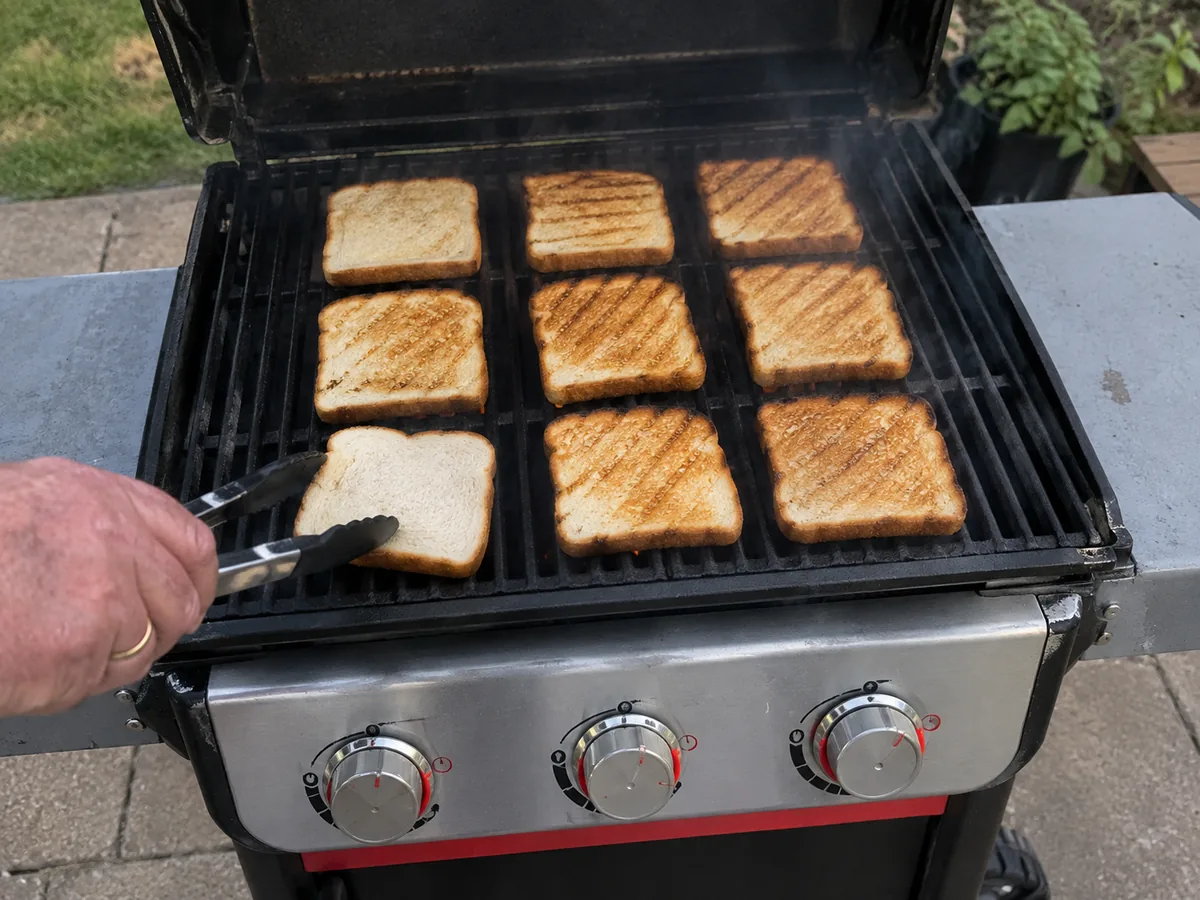
To find hot and cold spots I did the old bread test. Nine slices of cheap white bread across the grate, all burners on medium, two minutes, then flip and look. The middle and right slices toasted evenly. The left front slice came out noticeably paler every time. It isn't a dealbreaker. It just means the left front corner is where the buns go, not the chicken thighs.
One more number: the lid thermometer reads the air near the top of the dome. On average it showed about 35°F less than the grate surface on the right side. That's normal for any grill with a dome gauge, but it's worth knowing before you trust it for a pork chop. A cheap instant-read probe will save you more dinners than any upgrade.
Numbers only tell half the story though. The real test is what happens on a Tuesday when you're tired and two teenagers are hungry.
Living with it week to week
This is where the Spirit quietly won me over. The Snap-Jet ignition lights each burner on its own with one push and twist. In 38 cooks it failed to catch exactly once, on a gusty evening, and it lit on the second try. No batteries, no clicking box, nothing to replace.
Weeknights looked like this: grill on, go inside, season the chicken, come back 10 minutes later to a hot grate. Chicken thighs, zucchini, corn in the husk. The 360 square inches of main grate fit 8 thighs and 4 ears of corn with a little room left, which is exactly our family of four, with leftovers for lunch if the boys don't find them first.
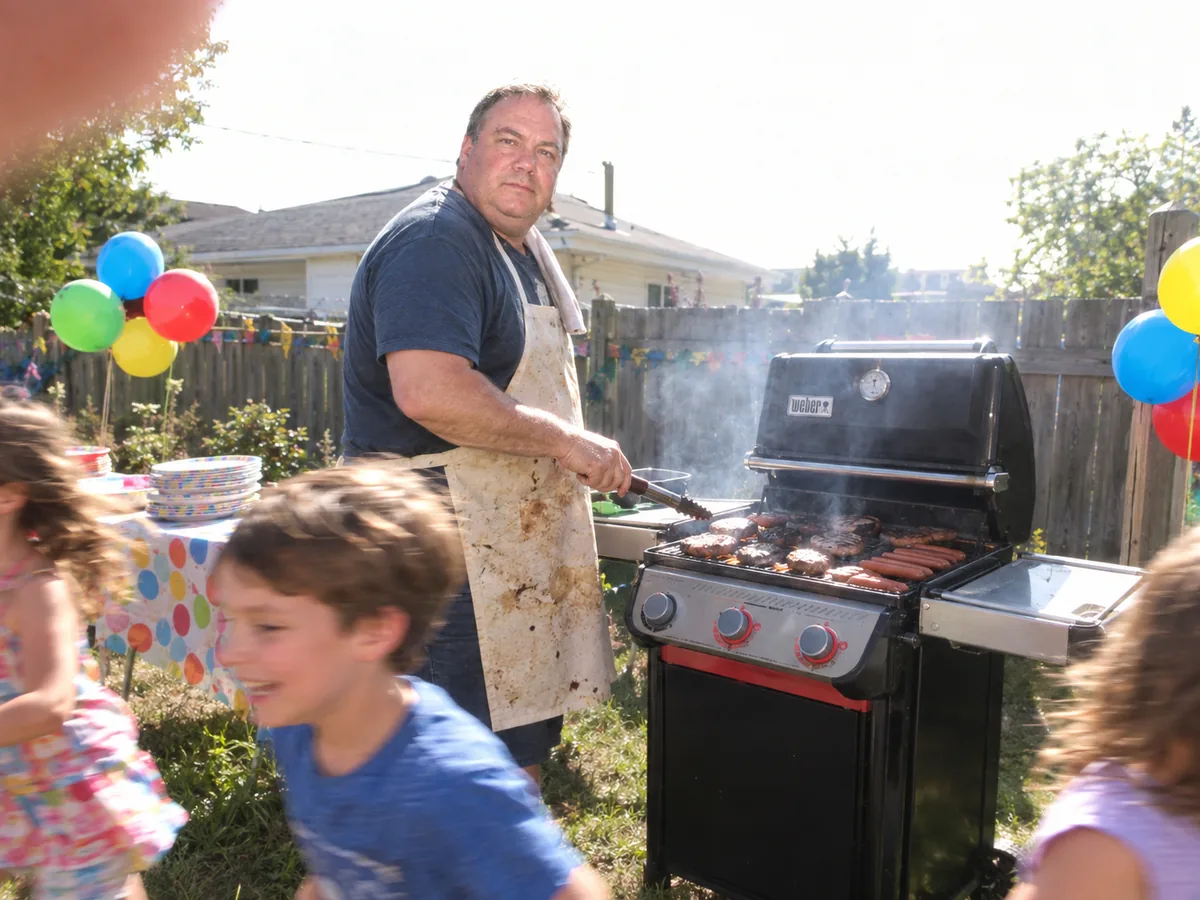
The two birthday parties were a different test. For my niece's ninth birthday my sister borrowed our backyard, because it's the bigger one, and I cooked 22 burgers and 14 hot dogs for a crowd of third and fourth graders. The E-325 fits 12 to 14 regular burgers at once without crowding, so I did two rounds and kept the first batch on the warming rack. It worked, but it was busy. If you host 15 people regularly, keep reading, because the four-burner model makes more sense for you.
Cleanup is the part I didn't expect to write about. The redesigned grease system uses a big drip tray that slides out from the front with a small disposable pan inside. After a greasy burger night I scraped the grates while they were hot, pulled the tray and wiped it in under 2 minutes. The cookbox has fewer nooks than older Weber designs, so there's less gunk to fish out when you do the deep clean. I did that once, at week 8, and it took 25 minutes including the Flavorizer bars. Don't skip it. On fire calls I've seen what a grease tray left alone for two summers can do.
Gas use surprised me in a good way. My first 20 lb tank lasted 19 cooks and about 13.5 hours of burner time, mixing weeknights on medium with a few long sear sessions. At my local exchange price that works out to around $1.40 per cook. I weigh the tank on a luggage scale now, because the E-325 has no fuel gauge. A full tank weighs about 37 lbs, an empty one about 17.
So far this sounds like a love letter. It isn't, and the next part is why.
The things that bugged me
The wheels are my biggest complaint. There are two hard plastic wheels on one side and two fixed legs on the other, so you tilt the grill and drag it. On my deck that's fine. On the lawn, where I roll it for bigger parties, it digs in and hops. At 98 lbs it's not something you want to wrestle, and the EP version with four locking casters is better here.
The painted side tables showed a scuff within a month, where I kept dragging a sheet pan across the left one. Cosmetic, but visible. The stainless tables on the EP-325 wipe cleaner, and if you keep the grill for ten years that might matter to you.
The main grate is also smaller than you'd guess from the outside. The old Spirit E-310 had a 424 square inch primary grate. The new E-325 has 360, plus a 90 square inch warming rack. Weber traded some space for the stronger sear burners, and I think it's the right trade, but if you're comparing numbers on a store shelf, it's a real difference.
And the lid gauge, as mentioned, reads low. The E-325 skips the digital thermometer you get on the EP-325. I didn't miss it much because I always use a probe, but it's the first thing the upgrade gives you.
None of these flaws stopped me from cooking. They just shape who this grill is right for, and that's easy to see once the specs are side by side.
Specs at a glance
| Spec | Weber Spirit E-325 (2025) |
|---|---|
| Burners | 3 stainless steel, 2 with Boost sear function |
| Main burner output | 31,000 BTU per hour |
| Cooking area | 360 sq in main grate + 90 sq in warming rack (450 total) |
| Grates | Porcelain-enameled cast iron, reversible |
| Ignition | Snap-Jet, one per burner |
| Size, lid closed | 46.2" H x 48.3" W x 26.6" D |
| Weight | 98 lbs |
| Fuel | Propane (a natural gas version exists) |
| Warranty | 10 yrs cookbox and lid, 5 yrs grates and Flavorizer bars, 2 yrs other parts |
| Price at the time of writing | About $549, list $599 |
The warranty deserves a word. Ten years on the cookbox and lid is the part that rusts out on cheaper grills, which is exactly what killed my old one. The 5 years on the grates and Flavorizer bars is decent too, since those are the parts you replace first. With the numbers out of the way, the real question is whether this grill fits your yard and your crowd.
Who should buy it, and who shouldn't
I'll add one more group: people who mostly smoke low and slow. The Spirit can do a decent indirect cook at 225°F to 275°F with one burner on low, and I did a rack of ribs in about 5 hours that my neighbor asked for twice. But a gas grill doesn't give you deep smoke flavor. If brisket is your dream, a pellet grill is a different animal, and Randall spent a whole spring with one for our Traeger Woodridge Pro review.
If you're in the "buy it" box but not sure about the exact model, the next section is where your extra money would go.
The alternatives worth a look
- Weber Spirit EP-325 (about $649): same cookbox and sear zone, plus a digital thermometer you can read at night, stainless side tables and four locking casters. If you move your grill around a lot, this is the one I'd pay the extra $100 for.
- Weber Spirit E-425: four burners and a lot more grate. For big families and people who host every weekend, the extra burner also makes two-zone cooking much easier.
- Weber Spirit E-310: the plain three-burner without the sear boost. Bigger main grate, gentler heat, lower price. Good for burgers and chicken, less exciting for steaks.
- Weber Genesis: a step up in size and features if your budget is closer to four figures. In our experience, most families won't cook anything on it that the Spirit can't handle.
We test every grill the same way, with the same bread test, the same thermometers and the same weeknight chicken, as explained on our how we test page. You can compare our current picks for outdoor cooking in the reviews. And if you're planning a summer of cookouts, our tips on staying cool outdoors in a heatwave apply to the person standing next to a 700°F grate too.
After 11 weeks, 2 tanks and 38 cooks, I'd buy the E-325 again. I'd just start my first steak at 2.5 minutes a side.
Questions people ask
Is the Weber Spirit E-325 worth it over the E-310?
If you care about steaks, burgers and a real crust, yes. The Boost burners made the sear zone about 150°F hotter on the grate than the rest of the grill in our tests. If you mostly cook chicken, veggies and hot dogs, the E-310 gives you a bigger main grate for less money.
What's the difference between the E-325 and the EP-325?
Same burners and cookbox. The EP-325 adds a digital thermometer, stainless steel side tables and four locking casters instead of two wheels. It costs about $100 more at the time of writing.
How long does a 20 lb propane tank last on the Spirit E-325?
In our test it lasted 19 cooks, about 13.5 hours of burner time, with a mix of medium weeknight cooks and high-heat searing. Long sessions on high will empty it faster.
How long does it take to assemble?
It took us 78 minutes with one adult and one helpful neighbor kid. Plan for 60 to 90 minutes and an extra pair of hands when you mount the cookbox on the cart.