
Ray-Ban Meta Gen 2 after six months on the road: what they're really good for
My wife gave me a pair of Ray-Ban Meta glasses for my birthday and I expected to hate them. Six months and 6,800 camper miles later, here's what they do well, what they don't, and what to pay this fall.
 By Wayne Bocook, travel tester, former trucker
Tested in Lexington, Kentucky · September 10, 2026 · 13 min read

- Photos and video without taking your hands off the fishing rod
- 6 h 20 min of mixed use per charge in our log
- Live translation got me through a week in Quebec
- They look like normal Ray-Bans from six feet away
- Heavier than regular sunglasses, felt on the nose after 5 hours
- Sound leaks in a quiet room
- Low-light photos are noisy
- Some people get uneasy about the camera
Short version: the best way to film and photograph your own life without holding a phone, plus decent open-ear speakers. Great for outdoor people, travelers and grandparents who miss moments. Not worth $379 as plain sunglasses, and with Gen 3 out, wait for a lower price.
For 61 years I've been the man who takes the picture. Birthdays, weddings, sunsets at truck stops in Wyoming. Which means for 61 years I've been missing from every picture, and also missing half of every moment, because I was busy looking at a phone screen instead of the thing in front of me.
So in March, when my wife Deb handed me a small box on my birthday, I guessed the contents from the shape alone. She'd been talking about "those camera glasses" since a cousin wore a pair to Easter. Inside were the Ray-Ban Meta Gen 2 in the Headliner shape, shiny black frames, green sunglass lenses. $379. I said thank you. I thought: a gadget for young people, and a camera on my face that I'll forget to use.
Six months later they've been with me on about 6,800 miles in the camper, from Lake Cumberland to the Smoky Mountains to a week in Quebec, plus 11 flights out of Lexington. I kept a notebook, like I do with everything I test. Some of what I wrote is praise. Some of it is a warning. Let's start with the thing Deb bought them for.
The camera: the moments I used to miss
There's a 12-megapixel ultrawide camera in the corner of the frame, and a button on the right temple. Press once for a photo, hold for a video, or just say "Hey Meta, take a photo." A small white light on the front glows while it records, so people around you can see it.
The first time it earned its price was on Lake Cumberland in May. I had a largemouth bass on the line, both hands busy, the boat drifting toward a dock. I said "Hey Meta, record a video" and landed the fish while the glasses filmed the whole fight from my own eyes. Deb watched it that night and said it was the first fishing video of mine she didn't fall asleep during. That's a compliment in our house.
Video now records in 3K, a step up from the first generation, and in good light it looks sharp and steady enough for family group chats and a big TV. Photos in daylight are good. They're not as good as a current iPhone, because the sensor is small and the lens is wide. And indoors, at dusk, or in a camper at night, photos get grainy fast.
Two things nobody told me. My cap brim shows up at the top of the frame when I pull it low, so I learned to push it back before filming. And the camera sees what your head points at, not what your eyes point at. I have a lot of beautiful footage of the ground, recorded while I was looking down to check a knot.
Filming is half the reason to buy these. The other half is what you hear, and that surprised me more.
Open-ear audio and calls
Small speakers in each temple send the sound toward your ears without anything in them. I listen to baseball on the radio app, podcasts and old country records, and on a walk or at a campsite the sound is clear, with thin bass. It's not a replacement for good headphones, and it's not trying to be. What I like is that I can hear a truck coming, a grandkid calling or Deb asking if I've seen the lighter.
The downside is leakage. At 70% volume in the camper, Deb could follow my podcast from the other end of the dinette. She now gives me a look, and I turn it down to 50%. On a plane, the engines drown out anything at a sensible volume, so for flights I switch to real headphones, which I tested in my Bose QuietComfort Ultra review.
Calls go through five microphones, and people on the other end said I sounded clear, except on the boat in wind, where my brother said I sounded "like a man calling from inside a hair dryer." Fair enough.
I don't touch the camera while I'm driving, and I keep calls short. If you plan to use the audio behind the wheel, check your state's rules first.
Sound and camera both run on a small battery, and after 26 years of checking fuel gauges, that's what I watched most closely.
Battery: my log from six months of trips
Meta rates the Gen 2 for up to 8 hours of typical use, about double the first generation, and says the case adds another 48 hours and fills the glasses to 50% in about 20 minutes. I logged every full day I wore them in the notebook that lives in the camper door pocket.
| Our test | Result |
|---|---|
| Lake day: 2 h of radio, 34 photos, 9 short videos, 20 min of calls | 6 h 20 min until empty |
| Music only, 50% volume, on a long hike | 7 h 40 min |
| Case recharge, empty glasses to 50% | 22 minutes |
| Full recharges from a full case, off-grid week in the Smokies | 5 before the case needed a wall outlet |
Video is the battery hog. On the day I filmed a 40-minute boat ride in short clips, the glasses were empty by mid-afternoon. For a normal day of photos, a few clips and some music, I never ran out, because the glasses go back in the case at lunch and come out topped up.
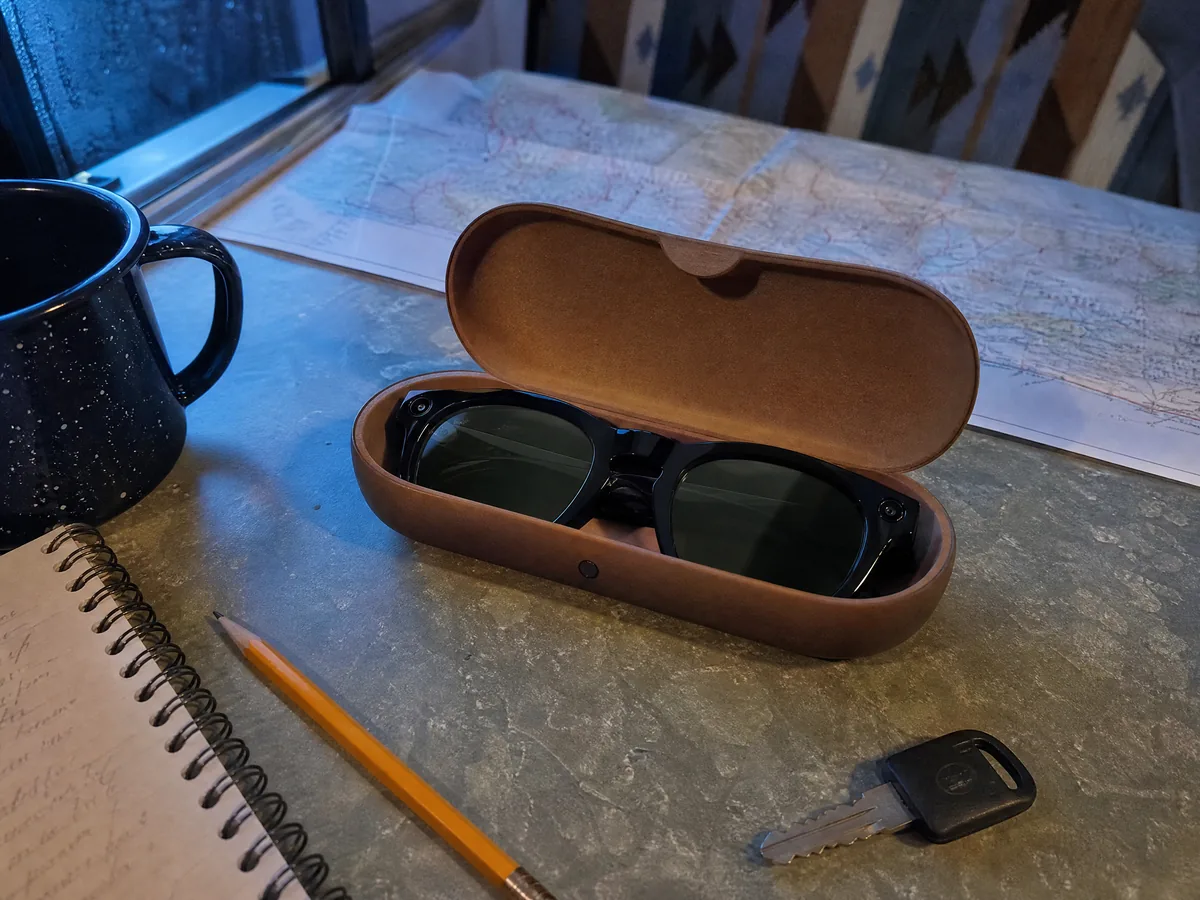
The case itself charges over USB-C, and it's about the size of a regular glasses case, a little thicker. It rides in the door pocket of the truck. Speaking of trips, the feature I cared about least in March is now the one I bring up at every campfire.
Meta AI and live translation in Quebec
You can ask the glasses questions out loud, and they can look at what you're looking at. I don't use it much at home. On the road it earned its keep a few times. At a campsite in Tennessee, I asked "Hey Meta, what plant is this?" about a green vine along the path, and it told me it looked like poison ivy and to keep clear. It was, and I did. Deb, who got poison ivy on that same trip in 2019, was very impressed.
The bigger test was a week in July at a campground outside Quebec City, where the owner, a lovely woman in her seventies, spoke French and about ten words of English. I turned on live translation in the Meta AI app, downloaded French before we left so it would work without signal, and had a real conversation about hookups, firewood and where to buy the best tourtière. Her French came into my ear in English about two seconds after she spoke. My answers showed up on my phone screen in French so she could read them.
"Your glasses speak better French than my grandson." The campground owner in Quebec, after we sorted out a firewood delivery and a recipe for meat pie.
It isn't perfect. It stumbled on local expressions and on two people talking at once. But it turned a week of pointing and smiling into a week of actual conversations, and I'd pay for that alone. The glasses handle English, French, Italian, Spanish, German and Portuguese for live translation.
All this works well. Wearing them all day, though, taught me a few things the box doesn't mention.
Comfort, lenses and the camera question
The Gen 2 Headliner weighs around 51 grams, noticeably more than my old drugstore sunglasses. For the first couple of hours I forgot about them. After about five hours, I felt them on the bridge of my nose, and the thick temples pressed a little behind my ears under a cap. Try them on in a store before you buy, because the Wayfarer, Skyler and Headliner shapes fit very differently, and the Wayfarer comes in a larger size too.
Mine have plain green sunglass lenses, and that's my one real regret. Indoors, in a restaurant or a gas station at night, I either take them off or look like a man hiding from someone. If you'll wear them all day, pay extra for Transitions lenses, which go clear inside and dark outside. They can also be made with your prescription. I use drugstore readers for close-up work, so I still carry a second pair, which is a little silly on a camping trip where I'm trying to pack light.
Then there's the camera question. At a campground laundromat in Pigeon Forge, a woman folding towels asked, politely but firmly, if I was filming her. I wasn't, and I showed her the light was off. She said "OK, just checking," and I don't blame her. So I made rules for myself: glasses off in restrooms, locker rooms and doctors' offices, and camera off around other people's kids unless their parents say yes. They're splash resistant, rated IPX4, which covered rain and a wave over the boat's bow, but they're not for swimming.
That's six months in a nutshell. Here are the plain specs before the buying advice.
Ray-Ban Meta Gen 2 specs at a glance
| Spec | Ray-Ban Meta Gen 2 | Ray-Ban Meta Gen 3 |
|---|---|---|
| Camera | 12 MP ultrawide, 3K video | 12 MP, 3K video |
| Battery | Up to 8 h, 6 h 20 min in our mixed log | Up to 9 h |
| With the charging case | Up to 48 more hours, 50% in about 20 min | Up to about 50 hours |
| Microphones | 5 | 6 |
| Buttons | Capture button | Capture plus programmable action button |
| Frames | Wayfarer, Skyler, Headliner | Wayfarer, Aviator, Zena |
| Water | IPX4, splashes and rain | Not tested by us |
| Price | From $379 | From $449 |
Holiday deals: what the Gen 2 should cost now
Last year's holiday sale tells you a lot. For Black Friday 2025, Meta took 20% off the first-generation glasses, bringing them down to $239, at Meta, Amazon, Best Buy, Ray-Ban stores and Target through December 1. The Gen 2, which was the new model back then, was left out of that deal. Meta also took 20% off prescription lenses for Gen 1 and Gen 2 frames bought on its own website.
In other words, the discount went to last year's model. This year, last year's model is the Gen 2. If Meta follows the same playbook, a 20% cut would put the $379 frames at about $303. That's our guess from last year's pattern, not an announcement, and I won't pretend otherwise.
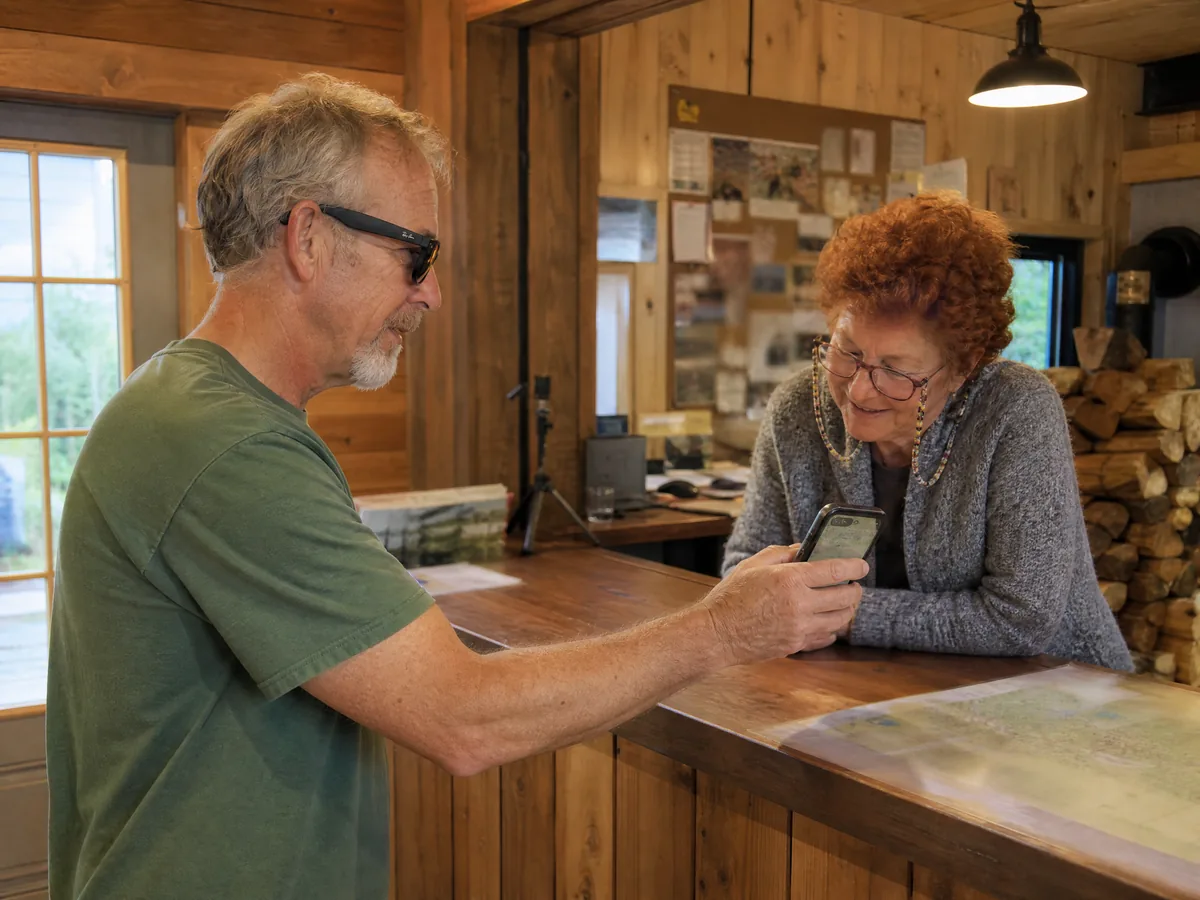
Are they a good gift? For the right person, they're one of the best I've seen. Think of an outdoorsy parent, a grandparent who's always behind the phone at family events, or a traveler who likes to record trips. They're a poor gift for anyone private by nature, anyone who needs prescription lenses you can't order without them, or anyone who doesn't want a Meta account, which you need to set them up.
- Size and shape: if you can, bring the person to a store to try frames on first, or buy from a place with an easy return window.
- Lenses: Transitions for everyday wear, plain sunglass lenses for fishing and driving days.
- Worth adding: a floating strap for boats and a microfiber cloth for the camera lens. Nothing else is required.
On returns, most big stores extend their windows over the holidays, but lenses made with a prescription are a different story, so read the fine print before you order them. And once the glasses are paired to someone's account, factory reset them before any return.
Who should wear them
The alternatives we'd consider
- Ray-Ban Meta Gen 3 (from $449). An extra hour of battery, the action button, new frame shapes. If you buy at full price, buy these.
- Ray-Ban Meta Audio (from $349, shipping October 13). No camera at all, up to 12 hours of battery. For people who want the open-ear audio and none of the camera questions.
- Oakley Meta HSTN (from $399 at its 2025 launch). A sportier, wraparound shape with the same idea, better suited to running and cycling.
These glasses now travel with my Kindle, which I put through 23 trips in my Kindle Paperwhite review, and ride in the suitcase from my Away carry-on test. If you want the method behind my battery log and comfort scores, read how we test, or browse more reviews on our blog.

And the man who takes the pictures? This summer, for the first time, there's a video of me landing a fish, a video of Deb laughing at me landing a fish, and one of a campground owner in Quebec teaching me to say "tourtière" properly. I'm still not in the pictures. But I was in the moment, and at 61 that's the better deal.
Questions readers asked us
Are Ray-Ban Meta Gen 2 glasses worth it now that Gen 3 is out?
Only at a discount. At the $379 list price, the Gen 3 at $449 gives you an extra hour of battery and an action button. If the Gen 2 drops to around $300, or you want the Headliner or Skyler frame, the Gen 2 is still a very good buy.
How long does the Ray-Ban Meta Gen 2 battery last?
Meta says up to 8 hours. In our log, a mixed day of photos, short videos, radio and calls lasted 6 h 20 min, and music alone lasted 7 h 40 min. The case refilled the glasses to 50% in 22 minutes.
Can you get Ray-Ban Meta glasses with prescription lenses?
Yes. You can order them with your prescription or add prescription lenses later through Meta and Ray-Ban, and Transitions lenses are available too. Prescription orders usually have stricter return rules, so check before you buy.
Can people tell when Ray-Ban Meta glasses are recording?
A white light on the front of the frame turns on while the camera takes a photo or video. It's visible up close in normal light. We still recommend taking them off in private places and asking before filming other people's children.
Will Ray-Ban Meta glasses be on sale for Black Friday?
Meta hasn't said. Last Black Friday it cut the previous generation by 20% and left the newest one out. If that repeats, the Gen 2 would land around $300, which we'd consider a great price.