
Bose QuietComfort Ultra Headphones (2nd Gen): 9 months of flights, camper nights and noise
I bought the second-generation Bose QC Ultra last Black Friday to replace a seven-year-old pair. Nine months of regional jets and generator nights later, here's what they block, what they don't, and what to pay.
 By Wayne Bocook, travel tester, former trucker
Tested in Lexington, Kentucky · August 30, 2026 · 12 min read
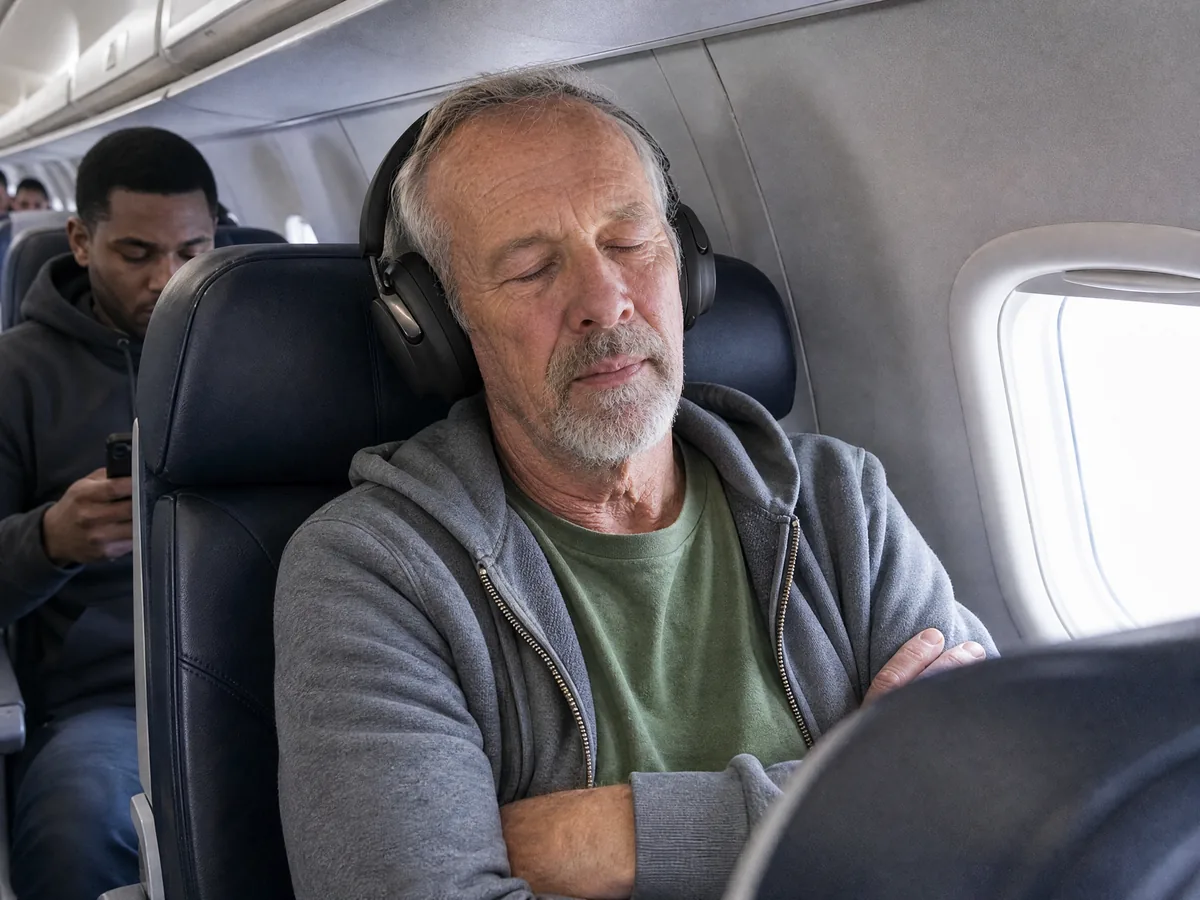
- Took the drone out of a 50-seat regional jet better than anything I've owned
- 28 h 40 min on one charge in Quiet mode
- Works with the seat-back screen, cable included
- You can finally listen while they charge
- Touch strip changes the volume when you adjust them
- Case takes real space in a carry-on
- Warm on the ears in summer
- $449 list is a lot, and they're often cheaper
Short version: the best noise-cancelling headphones I've used for travel, and the most comfortable for a full day of flying. Never pay $449. At $379 or less they're easy to recommend to anyone who flies, commutes by train or shares a small space with a snorer.
The loudest place I ever tried to sleep was the berth of a Freightliner at a truck stop outside Amarillo, with about forty diesel engines idling around me and a refrigerated trailer humming next door. That was 2019, and it's why I bought my first pair of noise-cancelling headphones: a Bose QC35 II that got me through the last few years of driving and a lot of flights since.
Seven years later the ear pads were flaking black crumbs onto my shirt, and the battery gave up somewhere over Georgia. So last Black Friday I bought the Bose QuietComfort Ultra Headphones (2nd Gen), in black, for $379 instead of $449.
Since then they've been on 23 flights out of Lexington, almost always with a connection in Charlotte or Atlanta, and on 41 nights in the camper, our home for about six months of every year, where the neighbors don't always turn off their generators at quiet hours. I tested them the way I test everything: a steel tape, a notebook, a sound meter app and a stopwatch. Let's start where it counts.
Noise cancelling: the regional jet test
From Lexington, most trips start on a small regional jet, the kind with two seats on each side and the engines hanging right behind the last rows. I measured the cabin on six of those flights with a sound meter app at cruise: 82 to 86 decibels in the back rows, 79 to 81 up front. That's like standing next to a busy highway for two hours.
With my old QC35 II, the engine drone went from a roar to a hum. With the QC Ultra in Quiet mode, it went from a roar to something I had to listen for. The low rumble is almost gone. The middle of the sound, where voices and the drink cart live, drops to a murmur. On a 6:10 a.m. flight to Charlotte I fell asleep before the seatbelt sign went off, which has happened to me exactly never.
"You were snoring, and you didn't even hear yourself." Deb, after the Charlotte flight. She was in the window seat, with no headphones, and had heard everything.
Bose's second generation uses a new algorithm that adapts more precisely to your ears and surroundings. I can't measure what happens inside my ear cup with a phone app, so I compared by switching between my old pair and the new pair five times on the same flight. Every time, the new ones were clearly quieter, and the gap was biggest on sudden noises: a baby's cry, the lavatory door, the captain's announcement at full volume.
They're not magic. Very sharp sounds still get through a little, like a dropped tray or a dog barking in the next campsite. But for steady noise, nothing I've owned comes close. That brings me to the camper, where the noise isn't steady at all.
Camper nights, generators and a snoring husband
At state parks in Kentucky and Tennessee, quiet hours usually start at 10 p.m. Not every neighbor agrees. On a trip to the Smokies in June, the RV next to us ran a generator until almost midnight, and the hum came right through our thin camper walls. With the QC Ultra on and nothing playing, the hum disappeared, and I read until I got tired instead of until I got angry.
Now the confession. I'm the snorer in our camper, not Deb. So the headphones spend a lot of evenings on her head, not mine, while she watches a show on the tablet and I fall asleep early. She uses the Cinema mode, new on this generation, which spreads the sound out and keeps the dialogue clear. She says it's the first time in 38 years of marriage that my snoring has been "someone else's problem."
You can't sleep in them lying on your side, and I tried. Over-ear headphones press into the pillow, and one ear cup ends up at your eyebrow. For sleeping, soft foam earplugs are still better and a lot cheaper. For reading, watching and falling asleep sitting up, these are the best thing I've found.
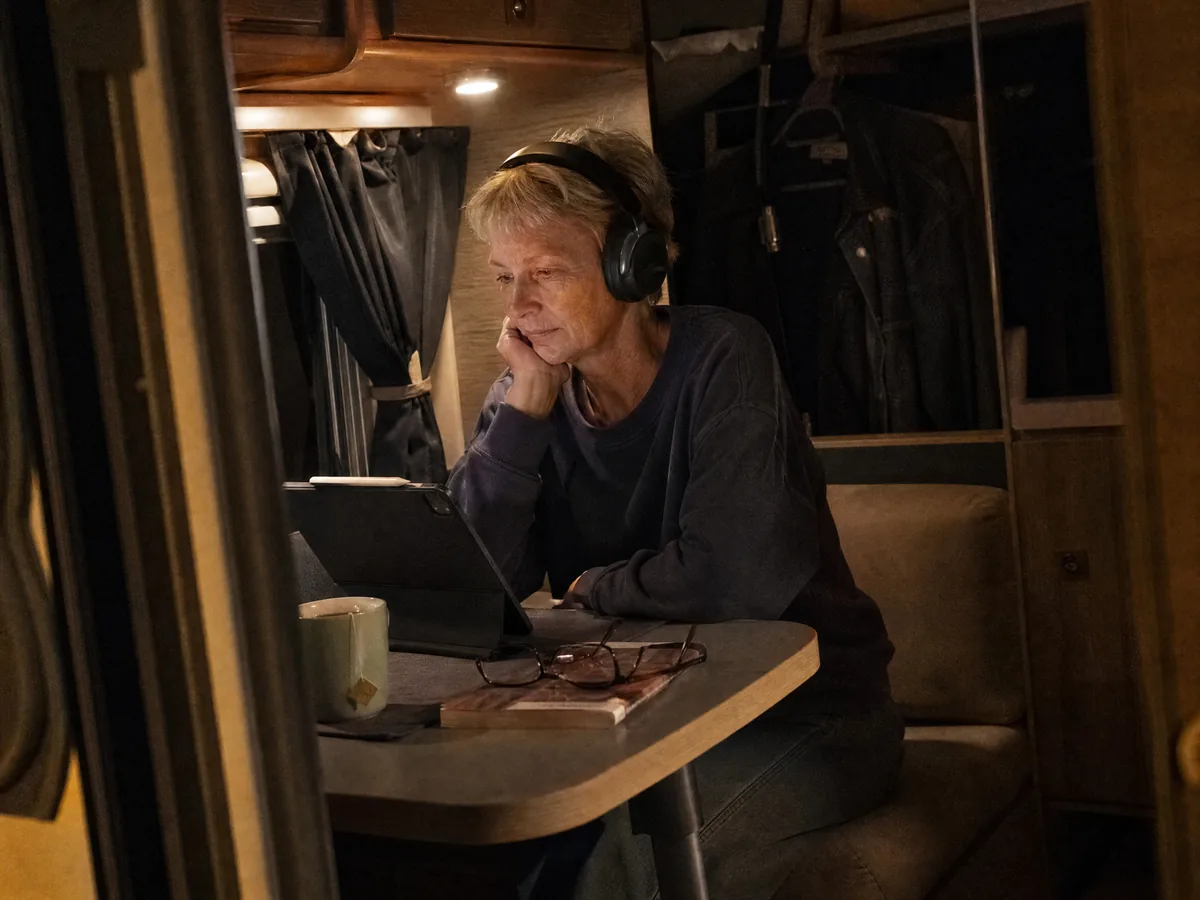
Hours of use like that only work if the battery keeps up. So I timed it.
Battery: 28 hours and 40 minutes
Bose rates the 2nd Gen for up to 30 hours with noise cancelling, up from 24 on the first generation, and up to 23 hours with Immersive Audio turned on. I ran two full tests from 100% to shutdown, podcasts and music at 50% volume, in the camper with the phone on the table.
| Our test | Result |
|---|---|
| Quiet mode, 50% volume | 28 h 40 min |
| Quiet mode with Immersive Audio on | 21 h 50 min |
| 15 minutes on a phone charger, then listening | 2 h 55 min (Bose says 3 h) |
| Our old QC35 II, 7 years old, same test | 6 h 10 min |
In real terms, I charge them about once every two weeks of normal travel. A round trip from Lexington to Portland, with connections both ways and about 14 hours of airports and planes, used 52% of the battery.
Two small upgrades matter more than they sound. You can now listen while the headphones charge, which the first generation couldn't do. And the USB-C port also carries audio, lossless at 16-bit and 44.1 or 48 kHz, if you plug into a laptop or a phone with USB-C. I tried it on my laptop, and I'll be honest: my 61-year-old ears couldn't tell the difference from Bluetooth. Deb says that's because of the diesel engines, and she's probably right.
That cable leads to the part of flying most reviews skip: the screen in the seat in front of you.
Seat-back movies, cables and controls
The box includes a cable with a 3.5 mm plug on one end and a 2.5 mm plug for the headphones on the other. With it, the headphones work with the seat-back entertainment, and noise cancelling keeps working as long as they're switched on. On older planes with the two-prong jack, you'll need a small airline adapter, which costs a few dollars and weighs nothing. Mine lives in the case.
Bluetooth handles two devices at once, so my phone and the tablet both stay connected, and switching between them has been reliable. Calls are clear indoors. With the truck window down, Deb says I sound like I'm calling from a car wash, so I roll it up.
The controls are my one real complaint. There's a button, and a touch strip on the right ear cup for volume. Every time I adjust the headphones on my head, or push my cap back, my thumb brushes the strip and the volume jumps. After nine months I've learned to grab the headband instead of the ear cup. You can turn off the touch controls in the app, but then you lose the volume slider.
Controls are something you get used to. Comfort isn't, which makes the next part important.
Comfort and build after nine months
They weigh 0.58 pounds, about 264 grams, and on my head they feel lighter than that. The ear cushions are soft and deep, and the headband doesn't press on the top of my head. I've worn them for a full travel day, Lexington to Atlanta to Portland, about nine hours with breaks, without a sore spot.
Two exceptions. In summer, in a camper without air conditioning running, my ears got warm and sweaty after an hour. And with my reading glasses on, the seal breaks a little at the temples, so a bit more noise gets in. Thin-framed glasses are better than thick ones here.
After nine months the build looks almost new. There's one scuff on the headband from a TSA bin in Atlanta, the metal arms still move smoothly, and the cushions show no cracking yet. They fold into a carry case that measures about 8 by 7 inches and 2.5 inches thick on my steel tape. In a carry-on I pack light, that's a real chunk of space, and it's the main reason some people prefer earbuds.
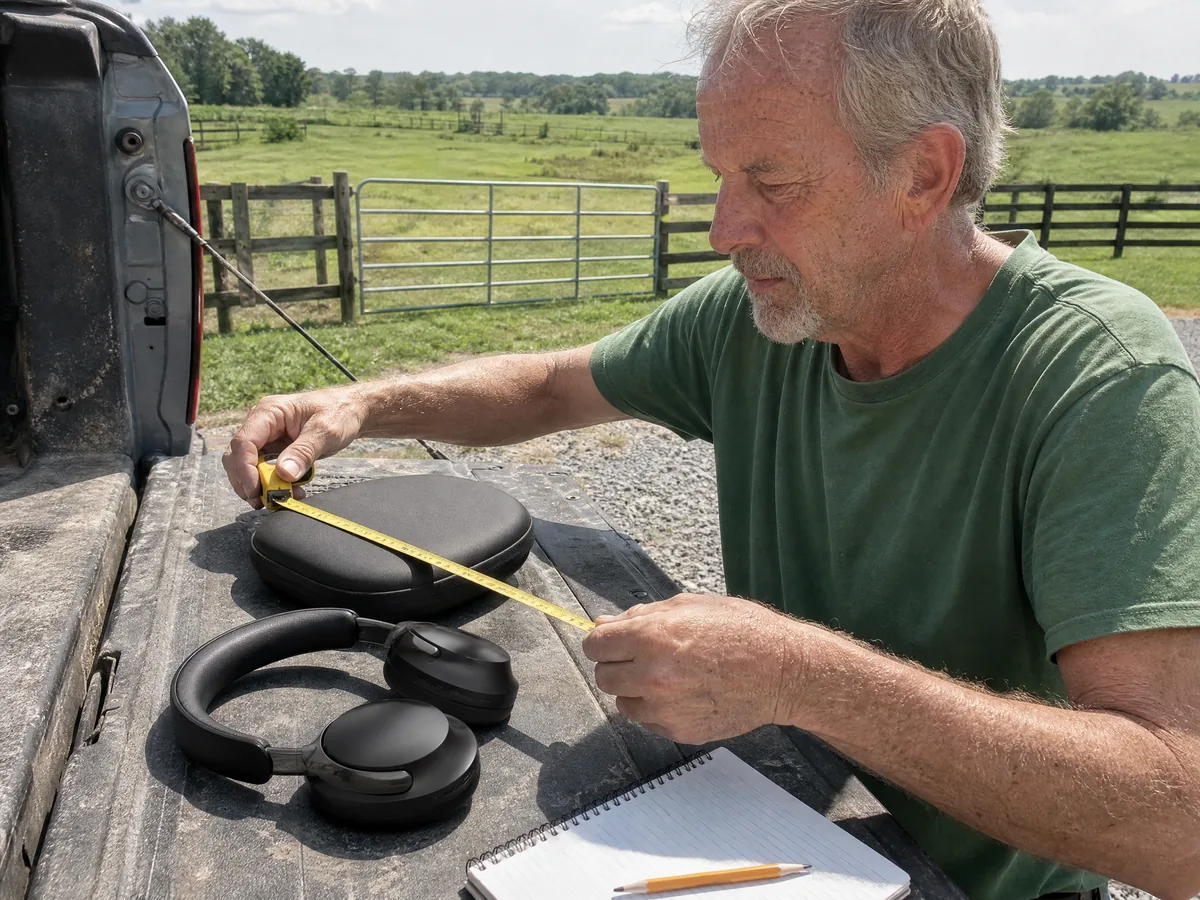
Here's everything in one table before we talk about money.
Bose QC Ultra Headphones (2nd Gen) specs at a glance
| Spec | QC Ultra Headphones (2nd Gen) |
|---|---|
| Battery, noise cancelling | Up to 30 h (Bose), 28 h 40 min in our test |
| Battery, Immersive Audio | Up to 23 h (Bose), 21 h 50 min in our test |
| Quick charge | 15 minutes for about 3 hours |
| Wired audio | USB-C lossless, 16-bit at 44.1 or 48 kHz, plus 3.5 mm cable |
| Modes | Quiet, Aware, Immersion, Cinema mode for video |
| Weight | 0.583 lb (264 g) |
| In the box | Carry case, 3.5 mm to 2.5 mm cable, USB-C cable |
| Colors we've seen | Black, White Smoke, Driftwood Sand, Midnight Violet, plus limited editions |
| Price | $449 list, $379 at recent sales |
Holiday season: never pay $449
I'll make this simple: don't pay $449. For Black Friday 2025, Bose sold them for $379, and that's what I paid. In June 2026, Amazon matched that $379 for Prime Day. On the used market, clean pairs sell for around $300. So $379 is the normal sale price, and it tends to come back for every big sales event.
This year's holiday deals aren't announced yet. The prices we've actually seen are enough to set a rule, though.
Is it a good gift? For anyone who flies, rides a train to work, works in an open office or lives with a snorer, it's one of the best gifts I know. It's a poor gift for a runner or a gym person, since over-ear headphones get hot and bounce, and for someone who packs ultralight. The case is big.
- Color: black hides airport grime. White Smoke looks great for about three trips.
- Worth adding: a two-prong airline adapter, a small USB-C charger for the hotel nightstand, and, down the road, a set of replacement ear cushions, which Bose sells.
- For a first flight: download a few podcasts or shows before leaving, because airport Wi-Fi fails exactly when you need it.
On returns, Bose and the big chains have historically given holiday buyers more time, with cutoffs that move from year to year. Keep the box and the plastic tray inside, and don't throw out the receipt until the headphones have survived one real trip.
Who they're right for
The alternatives we'd consider
- Bose QuietComfort Headphones (2nd Gen) ($359, new this August). The cheaper Bose, with physical buttons instead of a touch strip, the same immersive modes and up to 24 hours of battery. If the touch strip would drive you crazy, look here.
- Sony WH-1000XM6 (around $450 at launch). Excellent noise cancelling and a bit more detail in the music, with a tighter fit that some people find less comfortable on long days.
- Apple AirPods Max ($549 list). Great for iPhone owners, heavier on the head and much more expensive.
- AirPods Pro 3, if you want earbuds instead. Brenda flew 58 times with them in her AirPods Pro 3 review, and they take a fraction of the space in a bag.
In my carry-on, from the Away test, the headphones take the front pocket and the Kindle from my Paperwhite review slides in behind them. That's the whole flight kit. Our testing method covers how we time batteries over months, and the blog has every other review.
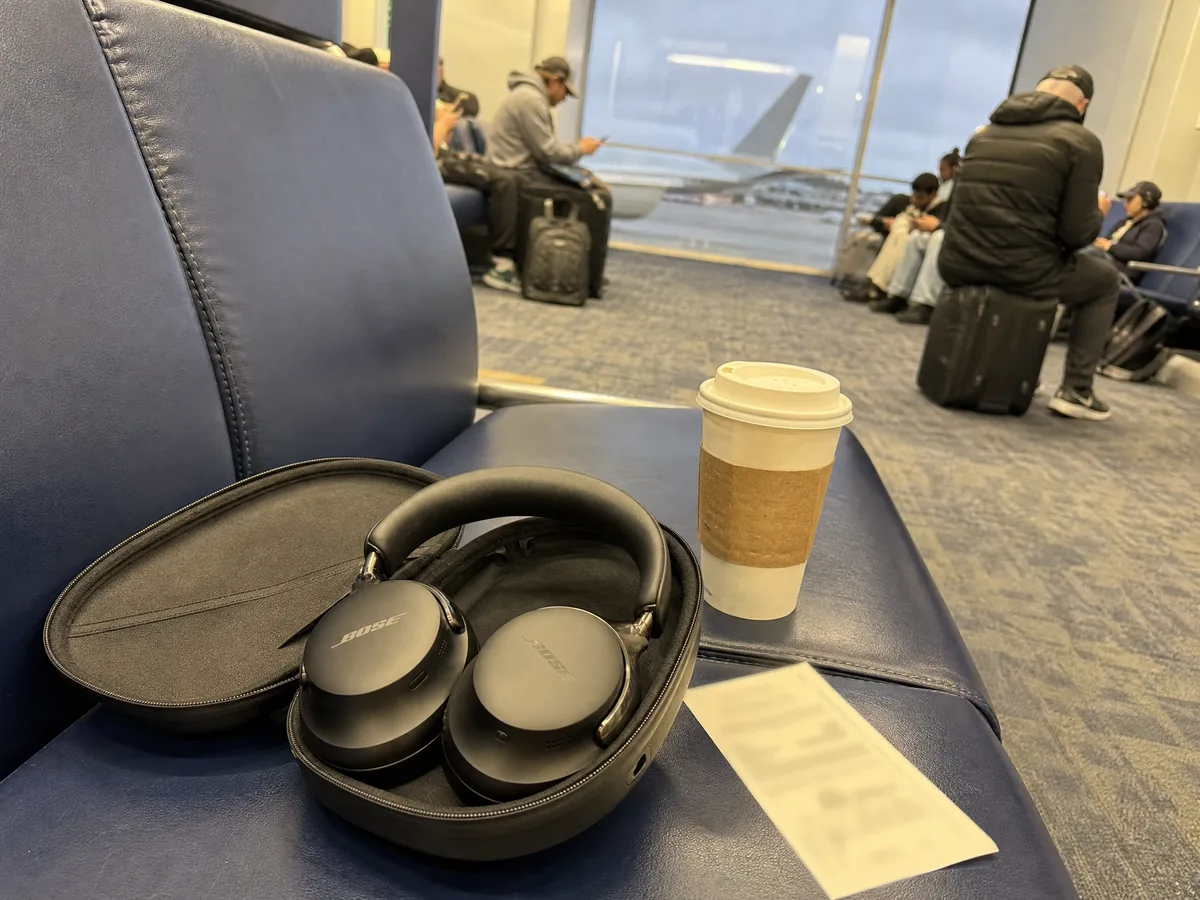
My old QC35 II are retired now, pads replaced, living in the truck for the day I need to sleep at a rest stop again. I don't drive for a living anymore. But after 26 years of engines, I've earned a quiet seat, and these give me one every time.
Questions readers asked us
Is the Bose QuietComfort Ultra 2nd Gen worth it over the 1st Gen?
If you're buying new, yes: longer battery (up to 30 hours instead of 24), listening while charging, lossless USB-C audio and better noise cancelling. If you already own the 1st Gen and it works, the upgrade isn't urgent.
Will the Bose QC Ultra Headphones be on sale for Black Friday 2026?
No deals are public so far. Last Black Friday Bose sold them for $379, and Amazon matched that price for Prime Day in June 2026, so we'd call $379 a good price and $349 a great one.
Can I use the Bose QC Ultra with airplane entertainment screens?
Yes. Use the included 3.5 mm to 2.5 mm cable, with a small two-prong adapter on older planes. Keep the headphones switched on and noise cancelling keeps working.
How long does the Bose QC Ultra 2nd Gen battery last?
Bose says up to 30 hours with noise cancelling and 23 with Immersive Audio. In our tests we got 28 h 40 min and 21 h 50 min at 50% volume, and 15 minutes of charging gave almost 3 hours.
Can you sleep in the Bose QC Ultra Headphones?
Sitting up on a plane or in a chair, yes, they're very comfortable. Lying on your side, no, the ear cups press into the pillow. For sleeping in bed, soft foam earplugs work better.