
iPhone 18 Pro vs Pro Max: six days, three flights and which one to buy
Two new iPhones, one jacket pocket, three flights. Our travel tester timed the batteries, tried the new aperture camera and found the one question that decides Pro or Pro Max.
 By Brenda Vukovich, tech and travel tester, frequent flyer
Tested in Chicago, Illinois · September 24, 2026 · 11 min read
- Pro Max battery outlasted a 19-hour travel day
- 50% charge in 16 minutes with a 60W brick
- Variable aperture gives real control over background blur
- Smaller Dynamic Island, a little more screen
- $100 more than last year for both models
- Pro Max is 249 grams, and your wrist knows it
- Small upgrade if you own an iPhone 17 Pro
- eSIM only in the US, no SIM tray
Short version: the best iPhone you can buy right now, and the Pro Max is the one we'd pick for anyone who travels or films a lot. Coming from an iPhone 15 Pro or older, it's a big step. Coming from a 17 Pro, keep your money.
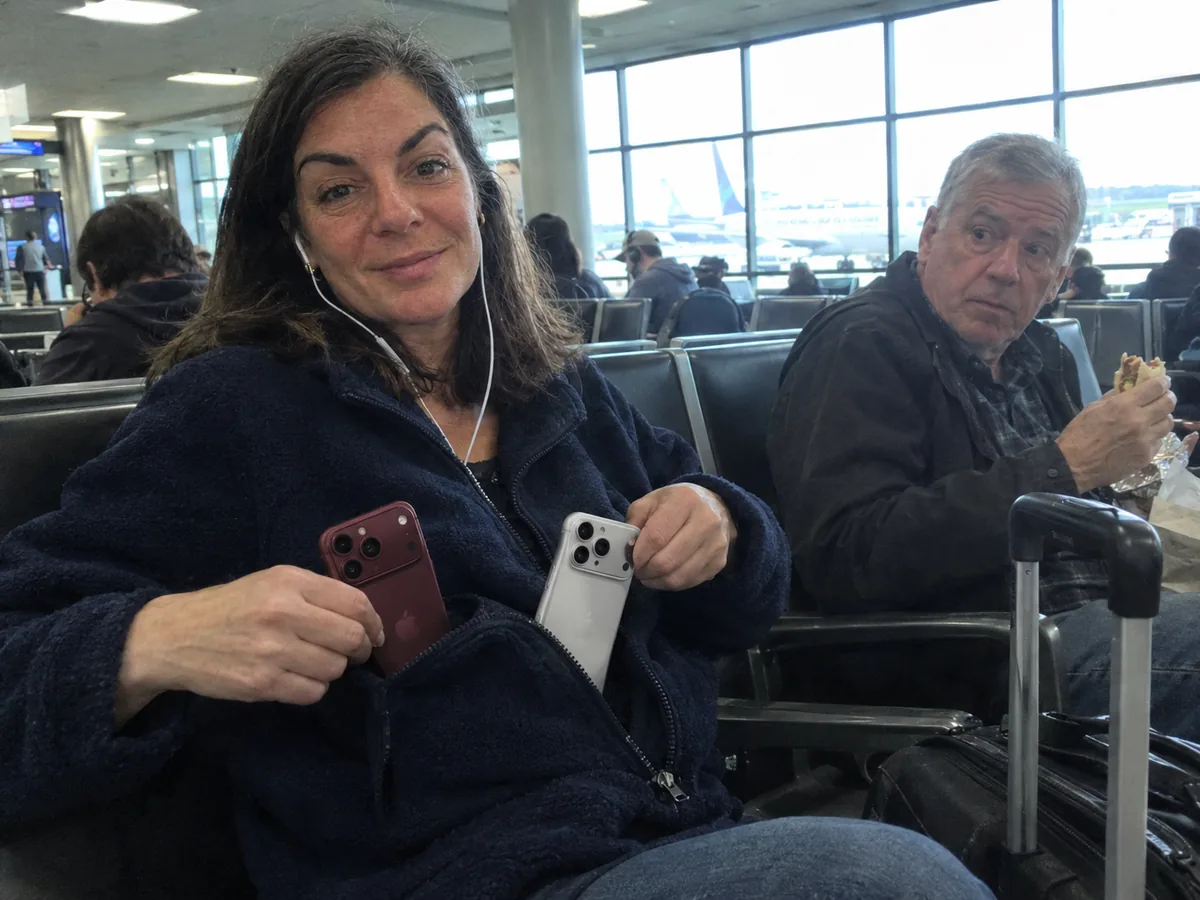
"Two phones in one jacket pocket is one phone too many." I said that out loud at Gate B22 in Denver, when both of them buzzed at once and the man next to me looked up from his sandwich.
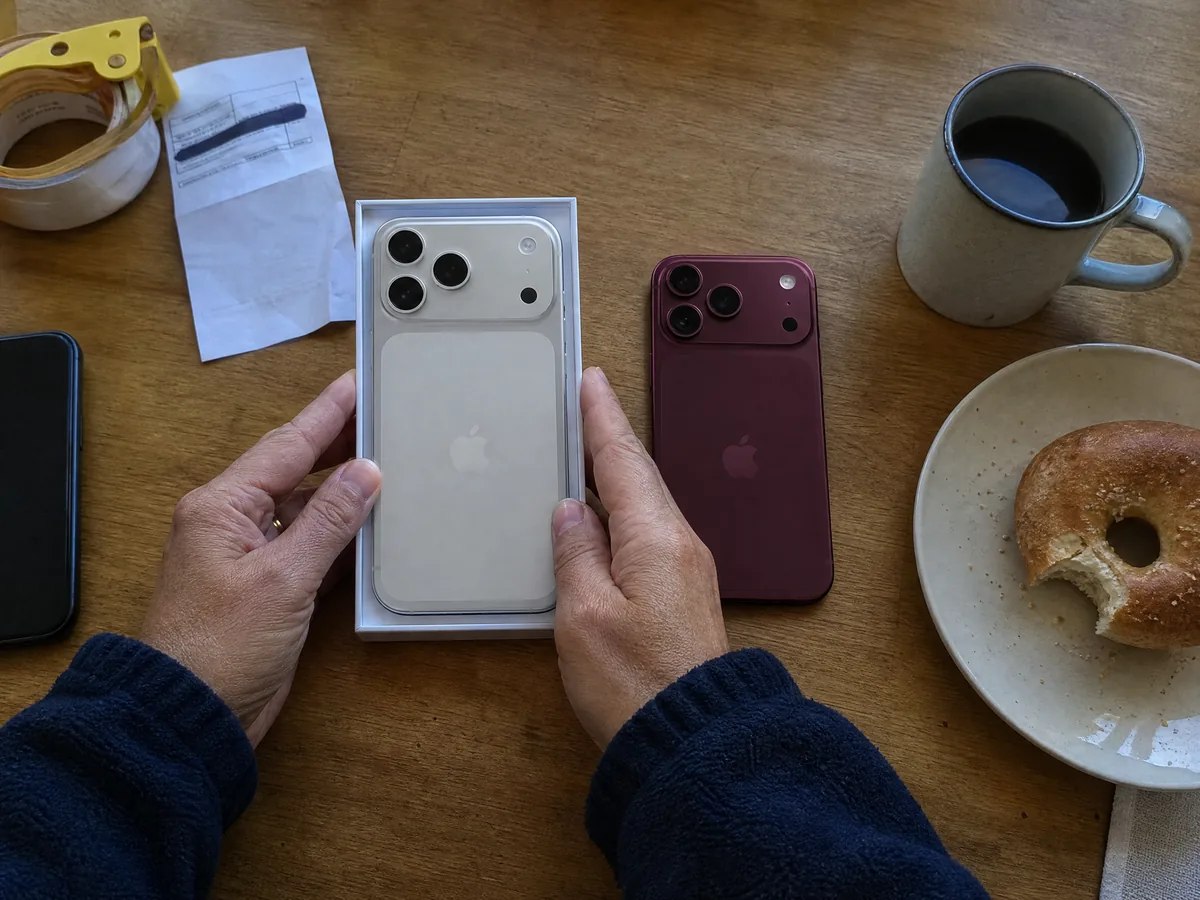
I bought the iPhone 18 Pro and the iPhone 18 Pro Max on preorder, like anyone else would, and both arrived on launch day, September 18. For the next six days I carried them everywhere: three flights, one wedding weekend in Colorado, one nine-year-old's birthday party and a lot of hotel nightstands. My daily phone before this was an iPhone 15 Pro, which is exactly the phone a lot of you are holding right now and wondering about.
Six days is short for a phone review, and I'll be honest about what that means further down. But it's long enough to answer the three questions I get asked most: is the battery really that much better, is the new camera a gimmick, and which size should you buy? Let's start with what actually changed, because the list is shorter than the marketing suggests.
What's actually new this year
From the outside, the 18 Pro looks like last year's 17 Pro with new colors. The changes are inside, and there are four that matter in daily life:
- A20 Pro chip, built on a 2 nm process. Apple says the graphics are about 40% faster than the A19 Pro.
- Variable aperture on the main camera, from f/1.48 wide open to f/4. The first time an iPhone lens can physically change how much light it lets in.
- Bigger battery, faster charging. Up to 50% in about 15 minutes with a 60W adapter, and 25W on MagSafe.
- A smaller Dynamic Island, because part of the Face ID hardware moved under the display.
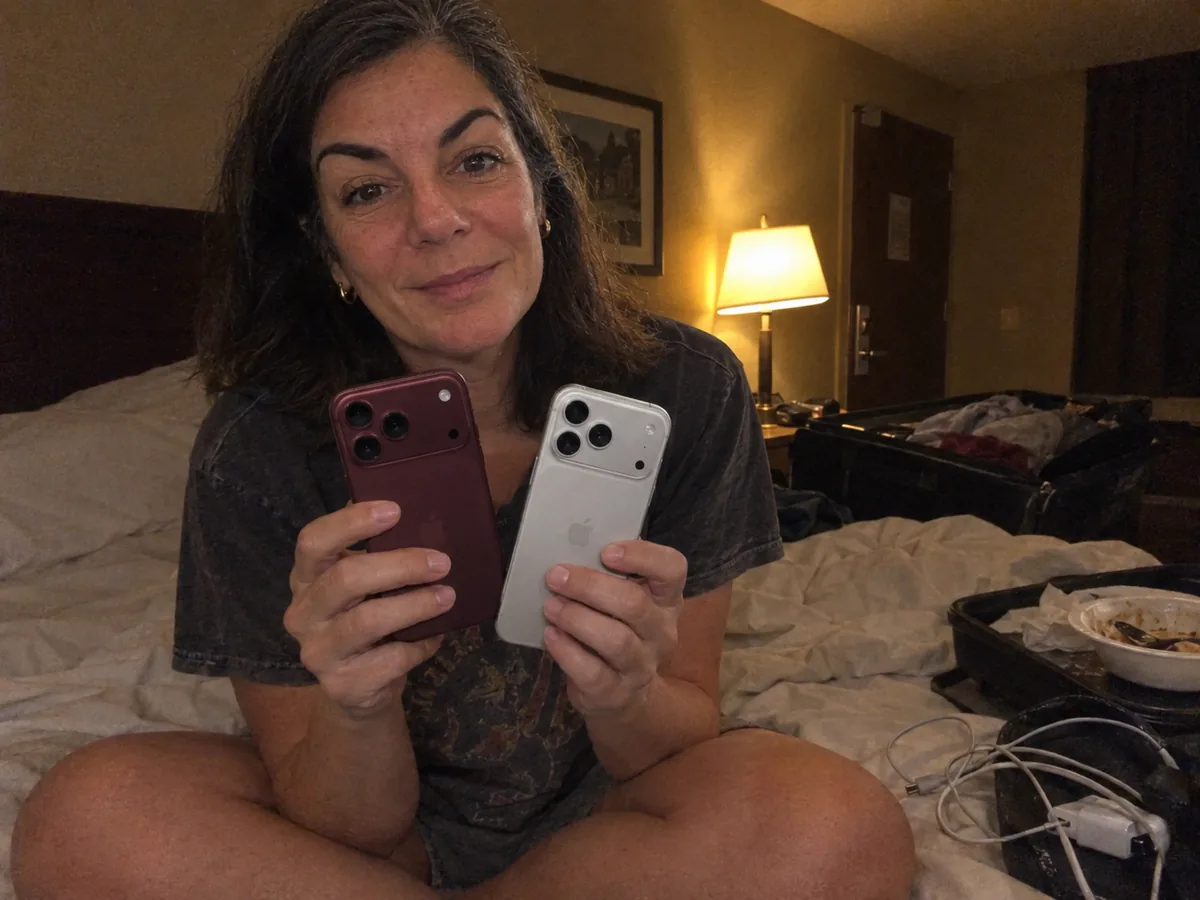
There's also a new C2 modem that Apple says uses about 15% less energy than the C1X, Wi-Fi 7, and iOS 27 with the reworked Siri. Colors are Black, Silver, Glacier and a deep Burgundy that my sister called "the color of a very serious lipstick." I bought the Pro Max in Burgundy and the Pro in Silver, which made it easy to tell them apart at 5 a.m.
On paper, the battery is the headline. So that's where I spent most of my testing time.
Battery: the 19-hour travel day
Tuesday was the real test. Alarm at 4:50 a.m., Uber to the airport, a flight from Newark to Denver, a work call on hotel Wi-Fi, dinner, photos, maps and a lot of messages. I used the Pro Max as my main phone all day and gave the Pro the exact same jobs: same apps, same brightness on auto, same streaming playlist, same boarding passes.
At 11:52 p.m., the Pro Max was at 31%. The Pro was at 9% and had been in Low Power Mode since 9:40 p.m. My old 15 Pro would have given up before we reached Kansas, and I know that because it did, on the same route, in March.
At home I ran our standard loop too: video streaming over Wi-Fi at a fixed 200 nits until the phone shut off. These are our numbers, not Apple's:
| Test | iPhone 18 Pro | iPhone 18 Pro Max |
|---|---|---|
| Streaming loop, 200 nits | 21 h 48 min | 27 h 15 min |
| Travel day, 4:50 a.m. to midnight | 9% (Low Power from 9:40 p.m.) | 31% left |
| 0 to 50%, 60W USB-C adapter | 15 min | 16 min |
| 0 to 100%, 60W USB-C adapter | 54 min | 58 min |
| 0 to 50%, old 20W adapter | 31 min | 33 min |
| Apple's claim, video playback | up to 36 h | up to 45 h |
The 20W row in that table is the one to read twice. The fast charging only happens with a charger that can deliver the power. With the little 20W cube that's been in my bag since 2022, the Pro Max took more than twice as long to reach 50%.
So the battery claims hold up, and the Pro Max holds them up better. The part Apple talked about even more on stage was the camera.
The camera: what a variable aperture actually does for you
Here's the simplest way I can explain it. Until now, the iPhone main camera was stuck wide open, like a person who can only squint or not squint. Portrait mode faked the rest with software. The 18 Pro can now close its lens down, from f/1.48 to f/4, the same way a real camera does.
In Auto, you mostly won't notice. The phone picks the aperture for you, and in a dim restaurant it stays wide open to grab light. Night shots were a touch cleaner than on my 15 Pro, with less of that smeary look on faces.
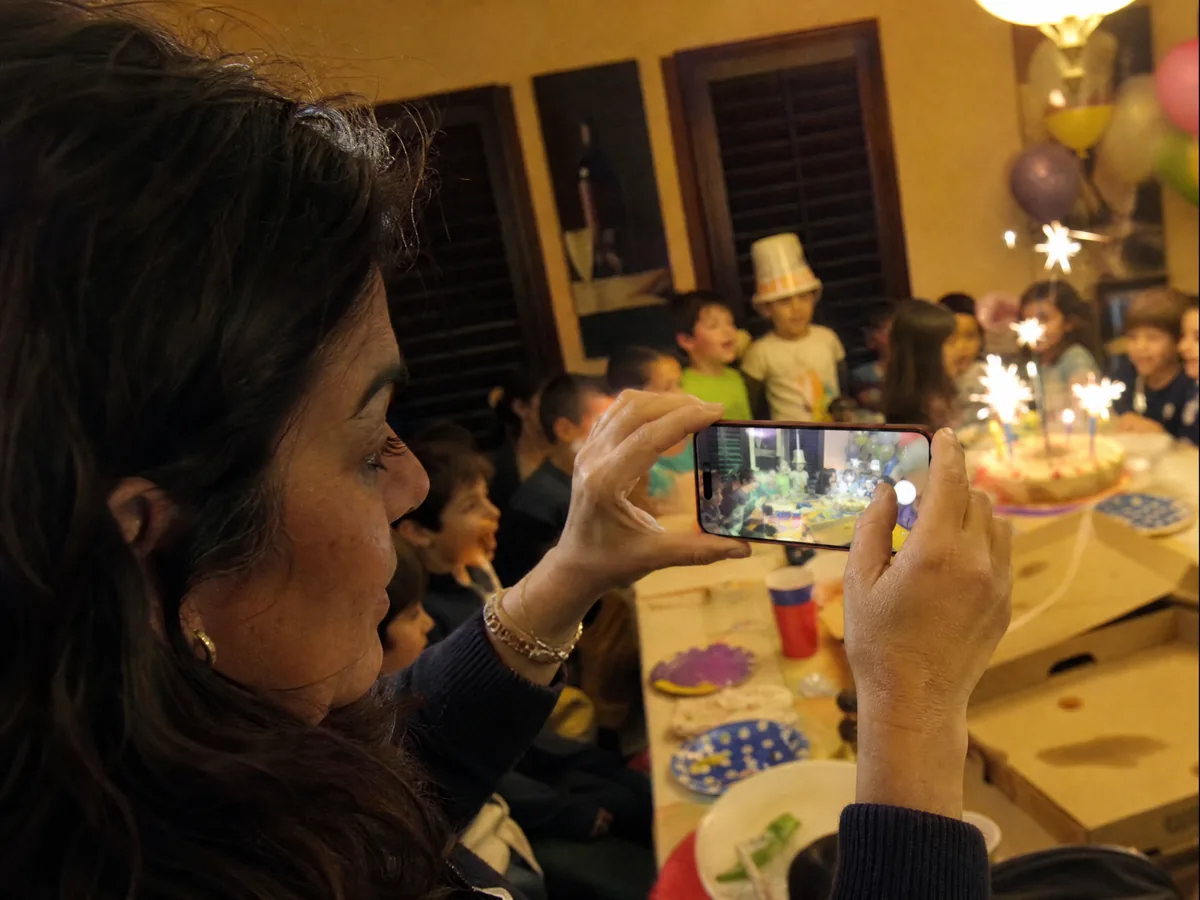
Where it earns its money is group photos. At my nephew's ninth birthday I had eleven kids around a table and a cake with sparkler candles. On my old phone, the kids in the back row were always soft, because the lens was focused on the one closest to me. With the aperture set to f/4 in the camera controls, the whole table was sharp, from the cake to the kid wearing a bucket on his head for reasons nobody explained.
Going the other way, wide open at f/1.48, a single face gets real optical background blur. The edge around hair looks natural, not cut out with scissors like fake portrait mode sometimes does. The 4x telephoto (48 MP, with an 8x crop Apple calls optical quality) was sharp at the wedding, from the fourth row, which is where you want to be at a wedding anyway.
"Wait, it's the same camera on both? Then why is yours so heavy?" My sister, holding the Pro Max for the first time
She had a point, and it's the question that ends up deciding which model you should buy.
The weight you'll feel, and the screen you'll gain
The cameras, chip and features are the same on both. The differences are size, battery and weight. The Pro weighs 211 grams (7.44 oz). The Pro Max weighs 249 grams (8.78 oz), which makes it the heaviest iPhone Apple has made. With a case, mine was close to 290 grams.
On day two I noticed it lying in bed, holding it above my face to read. On day four I stopped noticing it, mostly. The Pro, in comparison, disappears into a jeans pocket and is much easier to use with one hand on a jet bridge while pulling a suitcase.
The screens are 6.3 inches on the Pro and 6.9 inches on the Pro Max, both 120Hz, both rated at 3,000 nits peak outdoors. On the tarmac in Denver at noon, both were readable without squinting. The smaller Dynamic Island is a nice touch, not a reason to upgrade. You get a few more pixels at the top and room for up to three Live Activities, like a flight, a ride and a timer.
So how do you decide? This is the table I'd have wanted before I bought them.
Pro or Pro Max: the quick decision
| iPhone 18 Pro | iPhone 18 Pro Max | |
|---|---|---|
| Screen | 6.3 inches | 6.9 inches |
| Weight | 211 g | 249 g |
| Our streaming loop | 21 h 48 min | 27 h 15 min |
| Cameras and chip | Same | Same |
| Starting price (256 GB) | $1,199 | $1,299 |
| Best for | One-hand use, small pockets, city days | Travel, video, reading, long days away from outlets |
My rule after six days: if you've ever ended a day with your phone in Low Power Mode and felt that little panic, buy the Pro Max. The 5 hours and 27 minutes of extra streaming in our loop is the most useful thing money can buy in this lineup. If your phone lives in a pocket and your days end at home near a charger, the Pro is lighter, cheaper and just as fast.
Both start at 256 GB, and both go up to 2 TB. One small technical note from the lab reviews: the larger storage tiers use a slower type of flash memory. You won't feel it scrolling Instagram, but if you shoot hours of ProRes video, 512 GB is the sweet spot for price and speed.
The size question is easy once you know your days. The software question is where things get more personal.
iOS 27 and the new Siri, after one week
Both phones shipped with iOS 27 and the reworked Siri. I'll keep this short, because six days isn't enough to judge an assistant. It understood "text my sister I'm landing forty minutes late and tell her I'm sorry about the airport pickup" on the first try and wrote a message I would have sent myself. It also set an alarm for 5:15 when I asked for 5:50, twice, which is the kind of thing you only forgive a new friend once.
Speed is a non-issue. The A20 Pro opens everything instantly, edits 4K video in the Photos app without a stutter, and stayed warm, not hot, through a 40-minute game on the plane. Where the chip actually helped me was battery, not benchmarks.
All of which brings us to the honest part: who should not spend $1,199 or more this fall.
Who should buy it, and who should wait
There's also the money. Both phones cost $100 more than last year's starting prices. With carrier deals and trade-ins you'll rarely pay full price, but read the fine print: most of the big discounts lock you into a 36-month plan.
And if you're not tied to iOS, it's worth looking at the other big phone on my desk this year.
The alternatives we'd consider
- Samsung Galaxy S26 Ultra (from $1,299). Lighter at 214 grams, a built-in S Pen and a clever privacy screen. Its battery ran shorter than the Pro Max in the lab tests we read, but it charges even faster. I lived with it for five weeks earlier this year, and you can read how that went in my Galaxy S26 Ultra review.
- iPhone 17 Pro Max, if you can find it discounted. Same design, slightly smaller battery, no variable aperture. At $200 or more below the 18 Pro Max, it's the value pick.
- Google Pixel 11 Pro XL (from $1,299). The software tricks and call screening are still Google's strongest cards. We haven't tested it yet.
If you're pairing the new phone with earbuds, our AirPods Pro 3 review covers the ones I wore on all three of these flights. Everything we recommend across categories lives in our reviews, and the way we score it is explained on our how we test page. For phones, that means we buy them ourselves and run the same battery loop every time.
What six days can and can't tell you
Six days is enough for battery trends, camera habits and weight. It isn't enough for battery aging, long-term scratches on the aluminum frame or how Siri behaves after a month of learning my habits. I'll keep using the Pro Max as my main phone and update this review at the 30-day mark, with a second travel day log and a drop or two I'd rather not have.
For now, my verdict fits in one line: the iPhone 18 Pro Max is the phone I'd hand to anyone who's tired of hunting for outlets, and the Pro is the one I'd hand to anyone who's tired of heavy phones. The Silver Pro is going back to the store tomorrow, and my jacket pocket is grateful.
Questions readers asked us
Is the iPhone 18 Pro worth upgrading from the iPhone 17 Pro?
For most people, no. You get a better battery, a variable aperture and a smaller Dynamic Island, but the day-to-day difference is small. From an iPhone 15 Pro or older, the upgrade is big, especially in battery life.
Does the iPhone 18 Pro have a SIM card slot?
Not in the US. Both models are eSIM only here. Your carrier can transfer your number in a few minutes during setup, and you can store several eSIMs for travel.
What charger do I need for fast charging?
A USB-C power adapter of 60W or more for the fastest speed. In our test it took the Pro Max from 0 to 50% in 16 minutes. An older 20W adapter needed 33 minutes for the same charge.
How heavy is the iPhone 18 Pro Max?
249 grams, or 8.78 ounces, without a case. The iPhone 18 Pro weighs 211 grams. Add around 30 to 45 grams for a typical case.