
Apple Watch Series 12 or a cheaper Series 11? A physiotherapist's honest take
I wore a Series 11 for eleven months and have had the Series 12 on my other wrist since launch day. What the new heart sensor changes, what it doesn't, and which one I'd buy this holiday.
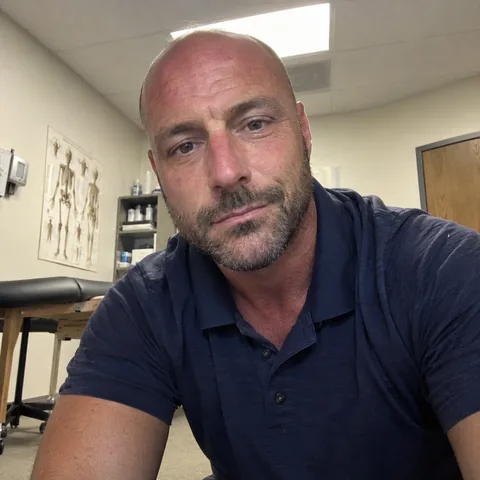 By Gary Szymanski, physiotherapist
Tested in Pittsburgh, Pennsylvania · September 22, 2026 · 13 min read
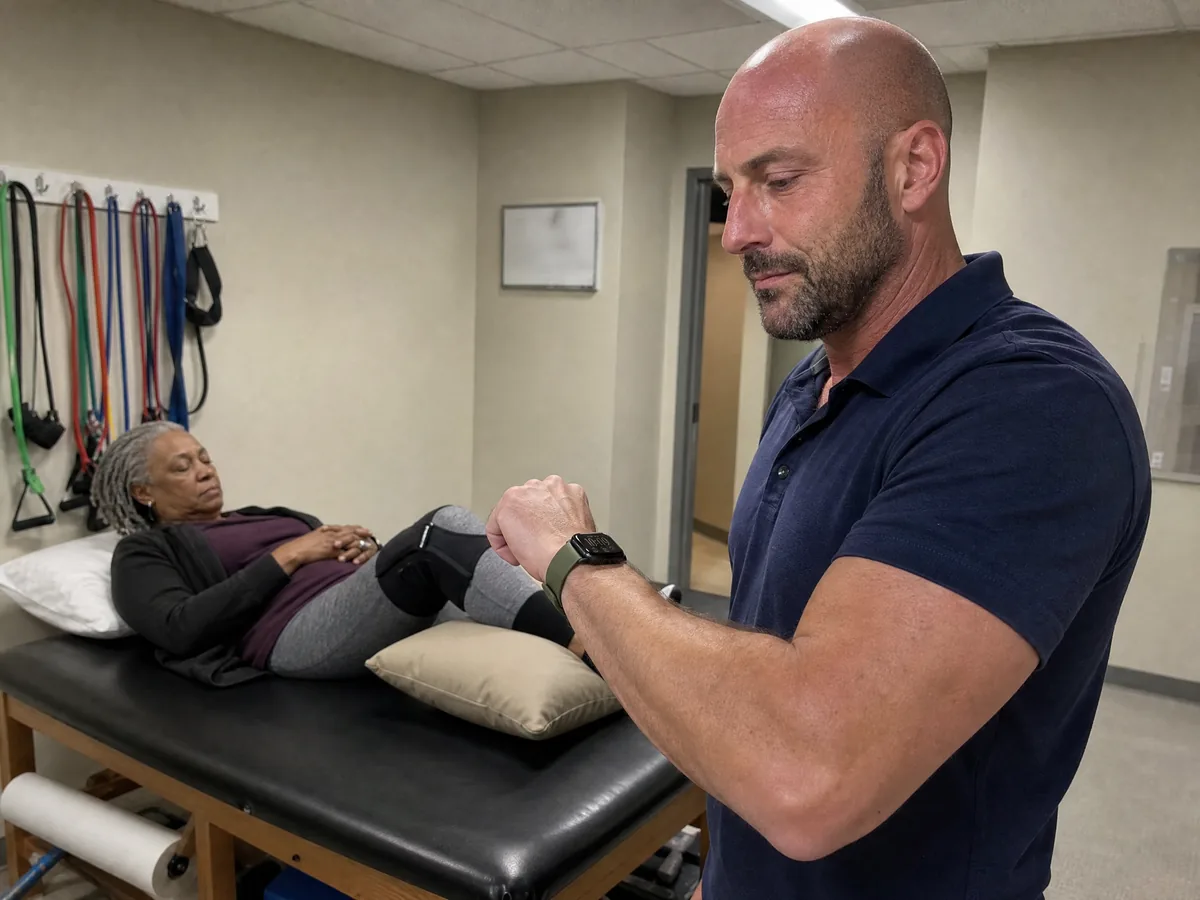
- Tracked our chest strap closer than the Series 11 in every session
- Readiness score with a plain recommendation
- 15 minutes of charging gave us 35 points of battery
- Tougher glass on the aluminum models
- Same 24-hour battery rating as last year
- Audio features arrive later, in beta
- Looks almost identical to the Series 11
- Still needs an iPhone, no Android support
Short version: the best Apple Watch for health tracking, and a clear upgrade if your watch is a Series 8 or older. If you own a Series 10 or 11, keep it. And if you're buying a first Apple Watch for the holidays, a discounted Series 11 is the smarter money.
Three patients showed me their watch before they showed me their knee last Tuesday. One wanted to know why her resting heart rate had crept up since her surgery. One wanted me to explain a sleep score of 61. The third just wanted me to admire his step count, which, to be fair, was impressive for a man eight weeks out from a hip replacement.
That's my clinic in Pittsburgh in 2026. Wearables walk in with my patients every day, and I spend a real part of each week explaining what the numbers mean and, more often, what they don't. So when Apple said the Apple Watch Series 12 has "the most accurate heart rate sensing in a wearable," I wanted to check it the way I check any health claim: against a reference, on real bodies, with notes.
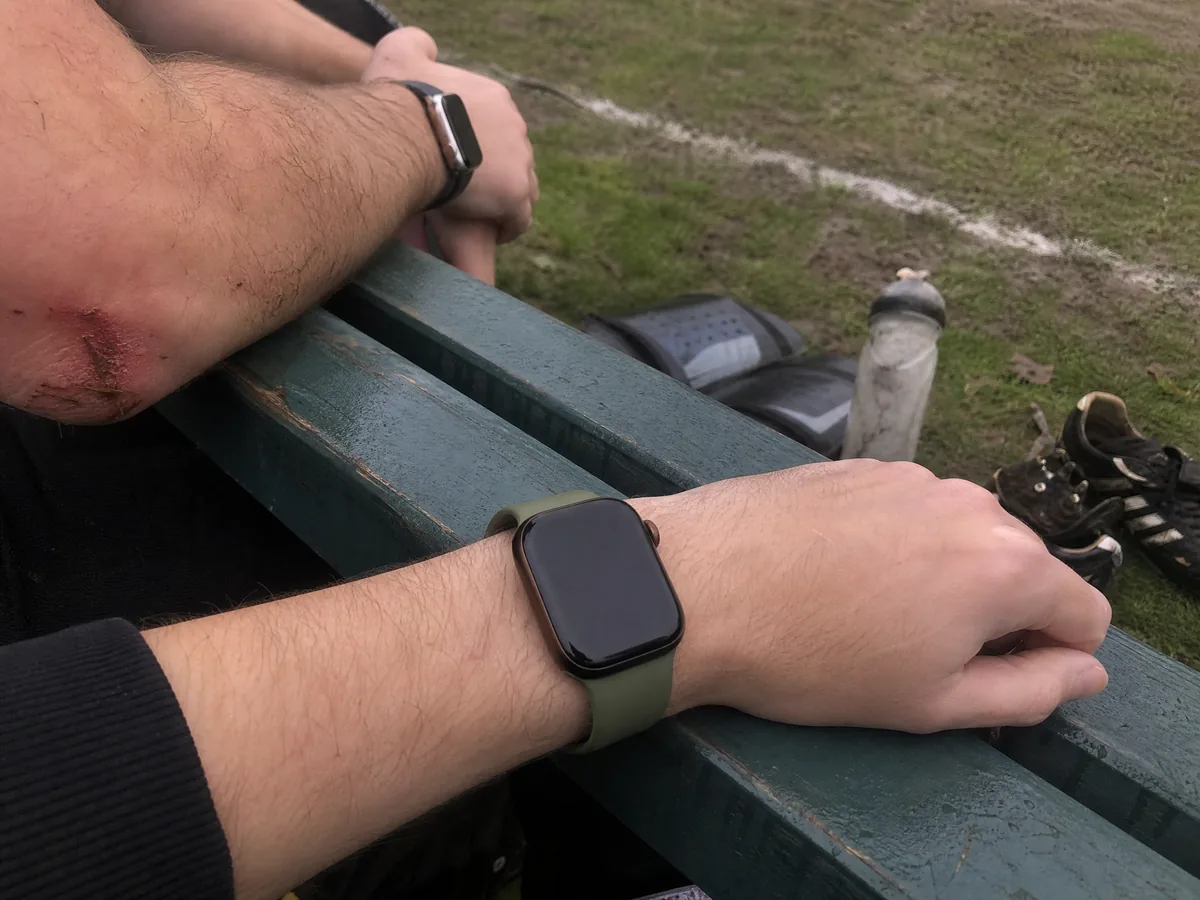
I've worn a Series 11 every day since October 2025, at work and on the soccer field on weekends. My Series 12 arrived on launch day, September 18, and for the four days since then I've worn one watch on each wrist. Four days is not enough for a final verdict on battery aging or long-term trends, and I'll tell you exactly where that matters. It is enough to test the heart sensor, and to answer the question my patients will ask me all December: which one should I buy?
What's actually new on the Series 12
From across the room you can't tell them apart. Same shape, same 42 and 46 mm sizes. The differences are inside:
- A new Health Sensing System with larger green LEDs. It reads your heart rate every five seconds, all day. Apple says that's 60 times more often than the Series 11 in the background.
- Heart rate variability up to 24 times more often, split into a "recovery" value for day-to-day stress and an "overall" value for long-term heart health.
- Readiness, a 0 to 10 score each morning with one of four recommendations: Recover, Pace Yourself, Ready or Go For It.
- The S11 chip, which also powers new Audio Intelligence features coming later this year in beta.
- Ceramic Shield 2 on aluminum models, which Apple says is 60% tougher than the Ion-X glass on the Series 11.
- Faster charging: 15 minutes for up to 12 hours of use, about 50% more than last year.
New finishes too: dark bronze, black, light gold and space gray aluminum, two titanium colors, and a new ceramic case in pearl white and night blue. I bought the 46 mm in dark bronze with an olive band, because my clinic polos are all dark blue and I was told, by my wife, that silver "looks like a hospital."
The health sensor is the headline, so that's where my test started.
Heart rate: Series 12 vs a chest strap
A chest strap measures the electrical signal of your heart directly, which is why cardiologists and sports scientists still trust it more than any wrist sensor. I borrowed the same one our outdoor tester Randall uses for his running watches, and did four sessions wearing the strap, the Series 12 on my right wrist and the Series 11 on my left:
- Two treadmill interval sessions in the clinic gym after hours, 30 minutes each, with 30-second sprints.
- One 45-minute stationary bike ride at a steady effort.
- My Sunday soccer match: two halves of 40 minutes, lots of stop and start, one very sore left calf.
I compared all three recordings second by second in a spreadsheet, which my wife called "the least romantic Sunday evening of our marriage."
| Session | Series 12, average gap to strap | Series 11, average gap to strap |
|---|---|---|
| Treadmill intervals, session 1 | 1.8 bpm | 3.9 bpm |
| Treadmill intervals, session 2 | 2.1 bpm | 4.4 bpm |
| Stationary bike, steady | 1.2 bpm | 1.9 bpm |
| Soccer match, 80 minutes | 2.9 bpm | 5.6 bpm |
On steady efforts both watches are very good, and the difference is small. The gap opens up when your heart rate changes fast. At the start of each sprint, the Series 11 took 6 to 8 seconds to catch up with the strap. The Series 12 took about 3. During soccer, the Series 11 dropped about 20 beats below the strap for half a minute after a hard sprint back on defense. The Series 12 stayed within 5.
"So the new one is better at the exact moments I care about, and the same at the moments I don't." Me, to Randall, who replied with a thumbs-up and a picture of a brisket.
Four sessions on one 42-year-old man is not a clinical trial. Apple's own study used over 1,000 people, and my results point the same way. If you train with heart rate zones, or you're in cardiac rehab and your care team gave you an upper limit, the Series 12 is more trustworthy during quick changes. For walking and steady cardio, the Series 11 was already good enough.
A better sensor matters most for what it feeds into, and on the Series 12 that's a new score.
Readiness: a useful nudge, not a doctor
Readiness combines your recent activity, training load, vitals and sleep score into one number from 0 to 10, with one of four recommendations. It updates during the day if something changes, like a hard workout.
My first score appeared on the second morning: 7, "Ready." On Monday morning, after 80 minutes of soccer, a poor night and a neighbor with a leaf blower at 6:10 a.m., it said 4, "Pace Yourself," and flagged low recovery HRV and a short night as the reasons. That matched how my calf felt. I did a light bike session instead of my usual run, and Tuesday climbed back to 6.
My physio take: a score like this is good at making you notice a pattern you'd otherwise ignore, like training hard on three nights of five hours' sleep. It's bad when people let it decide how they feel. I have patients with health anxiety who would check it ten times a day, and for them I'd switch it off. The algorithm comes from Apple's Heart and Movement Study, but I haven't seen it tested against outcomes like injuries, so I treat it as a coach's opinion, not a measurement.
The health features I'd actually recommend to a patient's family aren't new this year. They're the ones already on the Series 11.
What both watches already do well
If you're choosing between the two, it helps to know how much they share. Both have:
- Hypertension notifications. The watch looks for patterns over 30 days and alerts you to possible chronic high blood pressure. It won't catch everyone and it isn't a diagnosis. Last spring, one of my regular clients got a notification on her Series 11, went to her doctor, and left with a blood pressure plan. That's one person, but it's the kind of outcome that makes me like this feature.
- Sleep score and sleep apnea notifications.
- ECG app, blood oxygen and temperature sensing.
- Fall Detection and Emergency SOS, the two features I bring up with every family of an older patient.
- watchOS 27, including the new Siri, which rolled out as a beta on September 14 to the Series 9 and later.
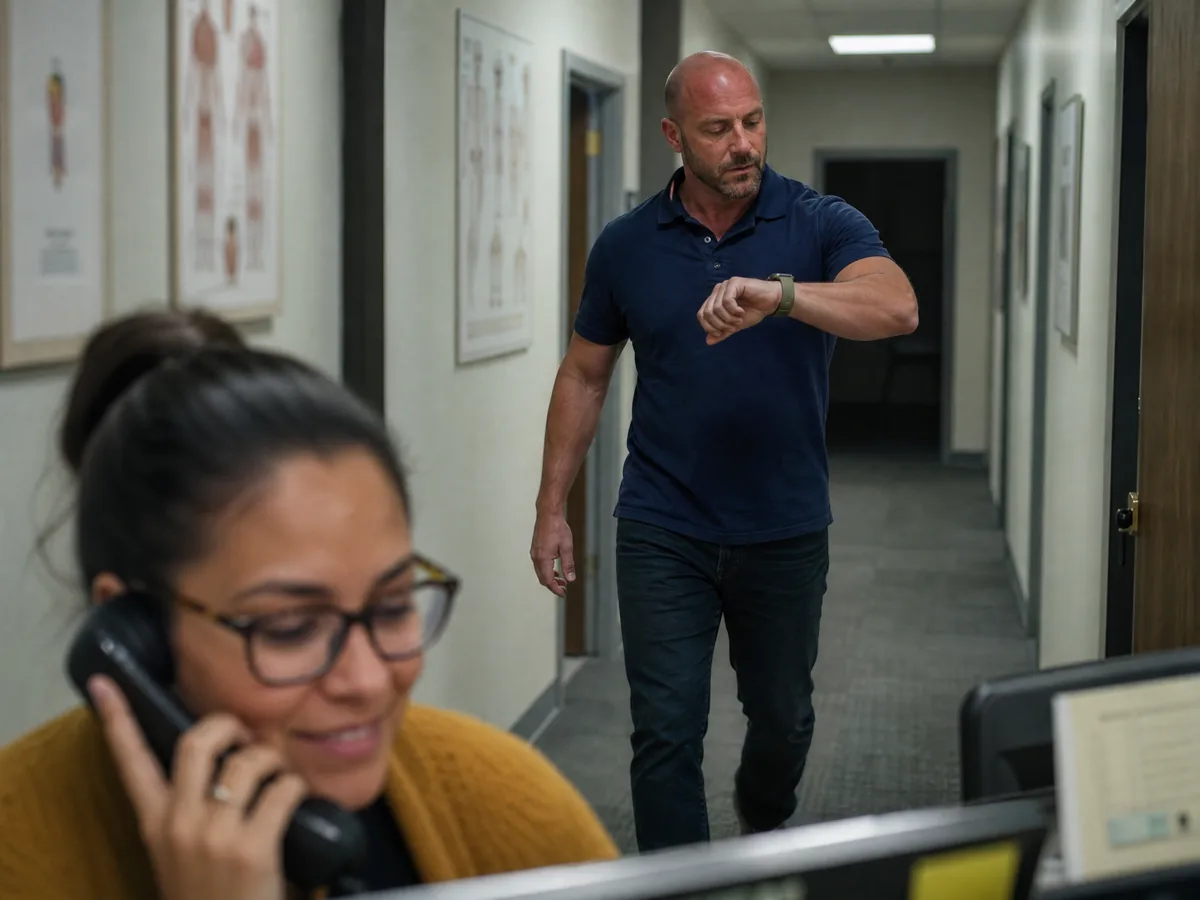
One small new thing I did test: Apple says the Series 12 has the most accurate step tracking of any smartwatch. I walked exactly 500 steps down our clinic hallway, counted out loud, while our receptionist pretended not to hear me. The Series 12 said 497. The Series 11 said 488. Both are fine. One is finer.
What neither watch changed is the battery rating, and that's where I expected more.
Battery and charging after 4 days
Apple rates the Series 12 for up to 24 hours, the same as the Series 11, with up to 38 hours in Low Power Mode. Outdoor workouts get more: up to 10 hours with GPS, 25% more than last year.
| Our test | Series 12 (new) | Series 11 (11 months, 91% battery health) |
|---|---|---|
| Clinic day, 45-min workout, sleep tracking, 6:40 a.m. to 6:40 a.m. | 23% left | 12% left |
| Soccer day, 80-min outdoor workout with GPS, at bedtime | 31% left | 19% left |
| 15 minutes on the included fast charger, from about 12% | Up to 47% | Up to 36% |
Part of that gap is my Series 11's age, so don't read it as "twice as long." Both get me through a day and a night. The real improvement is charging: 15 minutes while I shower now covers a full workday. I'll update this table at the 60-day mark.
Battery life doesn't break the tie. Glass and new features might, so let's look at those.
Tougher glass, and features that aren't here yet
My Series 11 has two hairline scratches on the screen, both from the metal edge of a treatment table I lean over thirty times a day. Ceramic Shield 2 on the Series 12 aluminum models should help with exactly that. After four days I can't prove it, and I'm not going to scratch a new watch on purpose for you. I'll report back.
The Audio Intelligence features, including Live Rewind, which shows you the last 15 seconds of a conversation as text, and Siri Recap, which summarizes conversations, arrive later this year in beta. I haven't used them. For people who are hard of hearing, Sound Recognition on the wrist could be the most useful feature in the whole launch. For me at work, there's a privacy question: I talk with patients about their health all day, so I'd keep conversation summaries switched off in the clinic, whatever the privacy promises.
So which one should you buy? That depends a lot on timing, and this year the timing is interesting.
Apple Watch Series 12 specs at a glance
| Spec | Series 12 | Series 11 |
|---|---|---|
| Sizes | 42 and 46 mm | 42 and 46 mm |
| Chip | S11 | S10 |
| Background heart rate | Every 5 seconds | Less frequent |
| Readiness score | Yes | No |
| Hypertension, sleep score, ECG | Yes | Yes |
| Battery | Up to 24 h, 38 h Low Power | Up to 24 h, 38 h Low Power |
| Fast charging | 15 min for up to 12 h | About 8 h from 15 min |
| Glass, aluminum models | Ceramic Shield 2 | Ion-X |
| Price | From $399 | $399 at launch, $299.99 to $329.99 last holiday |
Black Friday and Christmas: what to pay for each
Last year gives us a good map. The Series 11 launched at $399 in September 2025. Around Black Friday, Amazon had it at $329.99. Target then advertised it at $299.99 from December 8, and Costco members could get the 42 mm for about $305. So Apple's newest watch dropped roughly $70 to $100 in its first holiday season, without Apple itself cutting a cent.
Nobody has announced deals for this year yet, and I won't invent them. If the Series 12 follows the same path, here's what I'd consider a fair price:
Apple still lists the Series 11 on its own comparison page, and retailers will want to clear their stock before Christmas. That's why, for a first Apple Watch, a Series 11 under $279 is what I'd buy for my own mother. She'd use Fall Detection, the ECG and the sleep score. She would never notice a heart rate reading every five seconds.
Is it a good gift? For an iPhone user who wants to move more or sleep better, or for an older parent, yes. Get these right:
- It only works with an iPhone. For an Android user, look at the Garmin or Samsung watches instead.
- Pick a Sport Band, not a Solo Loop, when it's a surprise. The Solo Loop has no clasp and comes in fixed sizes, and guessing someone's wrist size is harder than it sounds.
- For a parent without an iPhone, Family Setup lets you manage the watch from your own iPhone, but it needs the cellular model and a cellular plan.
- Worth adding: a second band for sleep, a spare fast charger for work or travel, and AppleCare+ for anyone who works with their hands.
Returns: in past years Apple has given holiday buyers extra time, often into early January for purchases from November, and big retailers run similar programs. Confirm this year's cutoff when you pay, and keep the box and the unused band pieces.
Series 12, Series 11, or neither?
The alternatives we'd consider
- Apple Watch Series 11, discounted. Everything most people need, including hypertension notifications. Our pick for a first Apple Watch this holiday.
- Apple Watch SE 3 ($249 at launch in 2025). Fewer health sensors, no ECG, but Fall Detection and the basics for a lower price. Fine for a teenager or a first watch on a budget.
- Garmin Forerunner 570, for runners who want longer battery life and serious training data. Randall ran 312 miles with one in our Garmin Forerunner 570 review.
- Oura Ring 4, if you mostly care about sleep and recovery and hate wearing a watch in bed. Darlene wore one for months in her Oura Ring 4 review.
If you spend your days at a desk and your watch keeps telling you to stand, my 40-day posture corrector test ends with the six-minute routine I give patients. The way we set up tests like this one, with reference devices and scoring sheets, is written down in how we test. More reviews from the team: the blog.
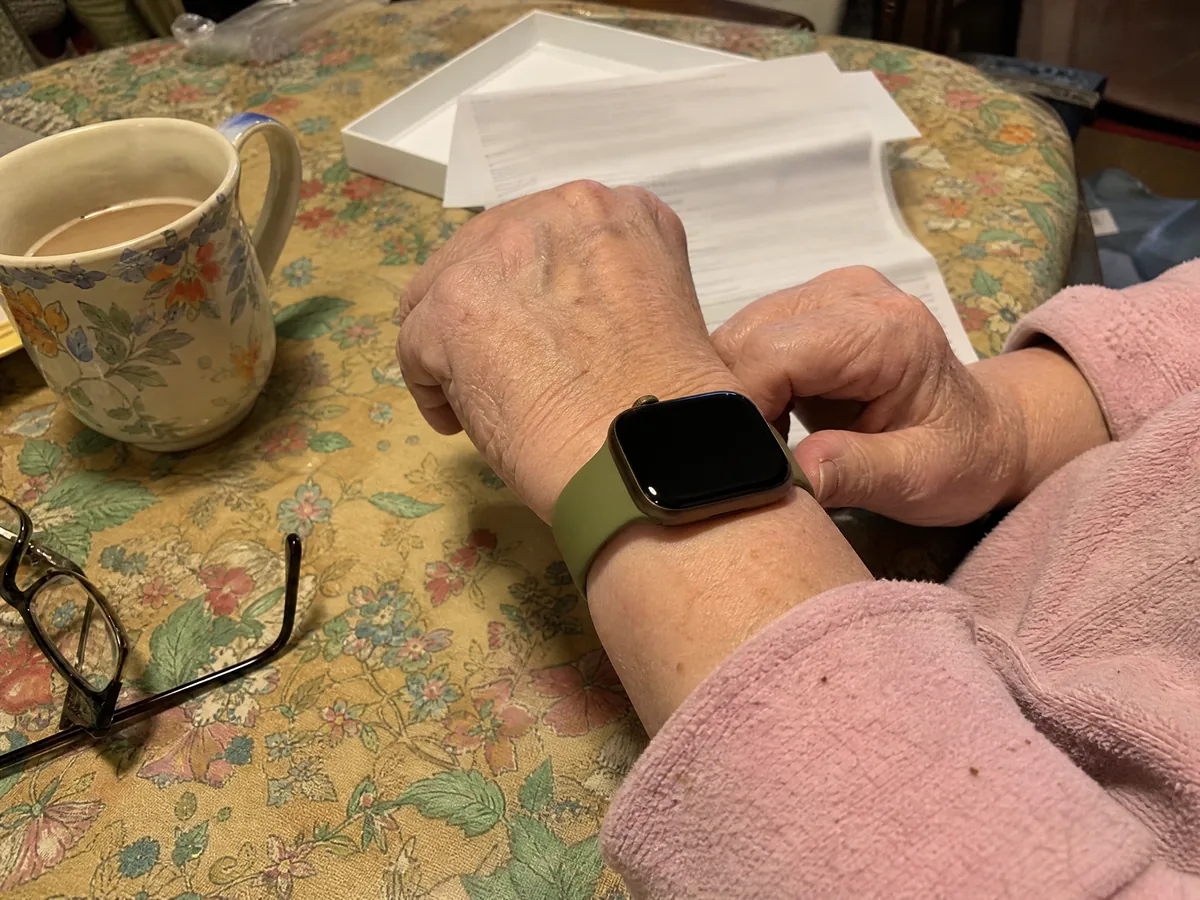
My Series 11 isn't going in a drawer. It's going to my mother, with Fall Detection switched on and a sticky note on the box that says "wear it in the shower too." She has already asked whether it can tell her when the Steelers are losing. I told her she won't need a watch for that.
Questions readers asked us
Is the Apple Watch Series 12 worth upgrading from a Series 11?
For most people, no. The heart sensor is more accurate during fast changes and charging is quicker, but battery rating, screen and most health features are the same. From a Series 8 or older, the upgrade is worth it.
Will the Apple Watch Series 12 be on sale for Black Friday?
No deals have been announced yet. Last year the brand-new Series 11 fell to $329.99 at Amazon around Black Friday and $299.99 at Target in December, so we'd call $349 or less a good price for the 42 mm Series 12 and $329 a great one.
How accurate is the Apple Watch Series 12 heart rate?
In our four sessions against a chest strap, it averaged within 1.2 to 2.9 beats per minute, and caught up with sprints in about 3 seconds. The Series 11 averaged within 1.9 to 5.6 and lagged 6 to 8 seconds.
Does the Apple Watch Series 12 have a blood pressure feature?
It has hypertension notifications, which look for patterns over 30 days and alert you to possible chronic high blood pressure. It doesn't show a blood pressure number, it won't catch every case, and it's not a diagnosis. The Series 11 has the same feature.