
Garmin Forerunner 570 review: 312 miles later, is it worth more than the 265?
Forty-seven runs, one July 4th 10K and a brisket night that wrecked my training score. Here's what the Forerunner 570 gets right, what it lacks, and who should save the money.
 By Randall Plunkett, outdoor and grill tester
Tested in Kansas City, Missouri · August 17, 2026 · 11 min read
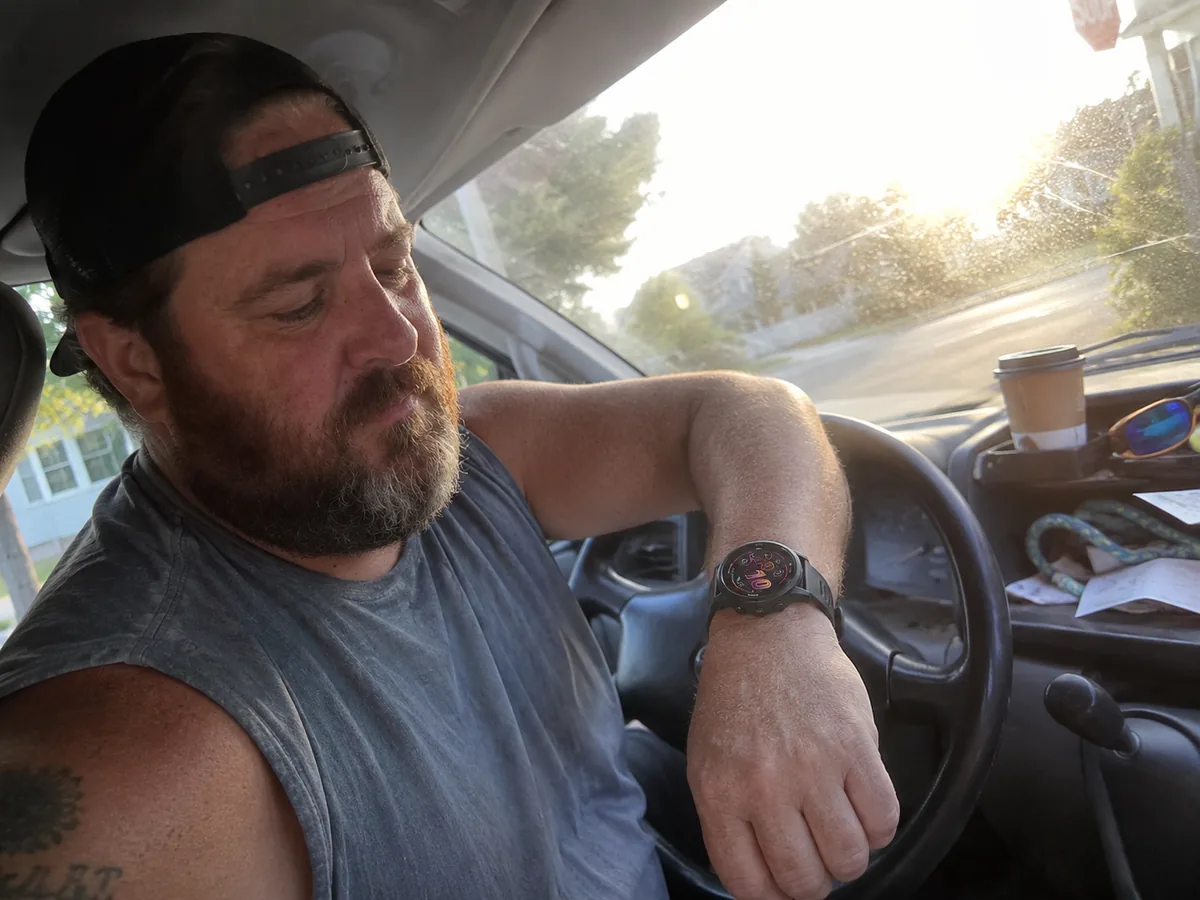
- 1.99 track miles measured as 2.00
- Wrist heart rate within 2 bpm of a chest strap on easy runs
- Bright AMOLED screen, easy to read at a glance
- Speaker and mic for calls and voice commands
- No maps, only a breadcrumb trail
- No flashlight, no ECG
- Battery drops by half with always-on screen
- $200 more than the 265 was at launch
Short version: one of the most accurate running watches we've worn, with coaching that actually changed how I train. Buy it on sale. If you run trails you don't know, the Forerunner 970 and its maps are worth the extra money.
"You've looked at that thing four times since the stop sign." My wife, from the passenger seat, on the way to the Fourth of July 10K.
She was right. The Garmin Forerunner 570 had told me that morning that my training readiness was 81 and my race prediction for 10K was 47:52. I'd never broken 49 minutes. I kept looking at the number the way you look at a lottery ticket before the draw.
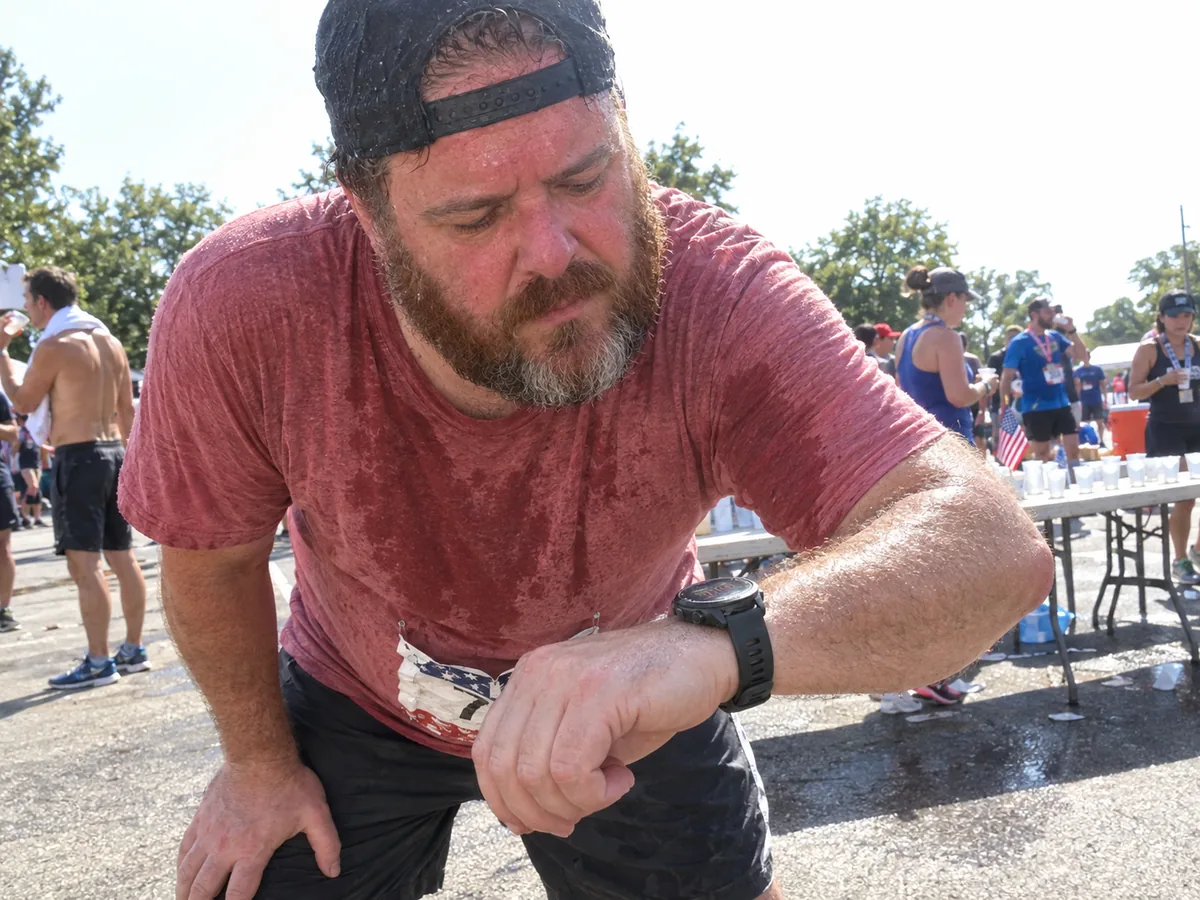
I bought the 47 mm version in late May to replace my Forerunner 255, which had done four years of hard service and one trip through the washing machine. Since then I've worn it for 11 weeks, 47 runs and 312 miles: roads, a high school track, dusty trails and one very humid race. I also compared it against a chest strap and my old watch. Here's what I found, starting with the thing you see first.
What you get for $549.99
The 570 replaced the Forerunner 265 as Garmin's mid-range running watch in 2025. It's still the current model in that spot. This spring Garmin added the cheaper Forerunner 70 and 170 below it, and the 970 sits above it.
| Spec | 42 mm | 47 mm (tested) |
|---|---|---|
| Screen | 1.2-inch AMOLED, 390 x 390 | 1.4-inch AMOLED, 454 x 454 |
| Weight | 42 g | 50 g |
| Smartwatch battery (Garmin) | Up to 10 days | Up to 11 days |
| GPS, all systems and multi-band (Garmin) | Up to 13 h | Up to 14 h |
| Heart rate sensor | Gen 5 optical sensor, with skin temperature and Pulse Ox | |
| Extras | Speaker and mic, 8 GB for music, 5 ATM water rating, Gorilla Glass 3 | |
| Not included | Maps, flashlight, ECG | |
Both sizes cost the same. I have big wrists and a big beard, so everything I own comes in large. My wife tried the 42 mm for a week and liked it better on her smaller wrist, with the same features and a slightly shorter battery.
The screen is the first big change from my old watch, and the one I noticed on the very first run.
The screen and the speaker: small things you use every run
My old 255 had a memory-in-pixel screen, the kind that's easy to read in the sun but looks like a calculator from 1994. The 570's AMOLED screen is bright and sharp, with real colors. At noon in July, in direct sun, I could read pace and heart rate at a quick glance without tilting my wrist. At 5:30 a.m. before sunrise, it dims itself so you don't blind yourself.
The speaker was the feature I expected to ignore. Now I use it every day. Lap alerts, pace warnings and interval cues come out loud enough to hear over traffic, so I don't need earbuds to follow a workout. With my phone in my pocket, I can take calls from the wrist.
I took one on mile four of a tempo run. It was my mother. She asked, with real concern, why I was breathing like that. I've kept calls on the wrist for walks since then.
Voice commands work too. Hold a button and say "start a run" or "set a timer for 12 minutes," which is handy when your hands are covered in barbecue rub. But a bright screen and a speaker don't matter if the numbers are wrong. So I checked them.
GPS: we measured it on a track and on a trail
For distance, I used the only place where I know the exact answer: the 400-meter track at our local high school. Eight laps in lane 1 is 3,200 meters, or 1.99 miles. With GPS set to SatIQ, the mode that switches to multi-band only when it needs it, the 570 recorded 2.00 miles. My old 255 recorded 2.04 on the same run.
Tracks are easy. Trees and switchbacks are not. On a 6.2-mile loop in the state park near us, with thick oak cover and tight turns, I compared the 570's map to the trail. The line stayed on the path through the switchbacks where my old watch used to cut corners. Total distance matched the posted trail distance within 0.05 miles on three out of three runs.
There's one funny quirk. Auto-pause works well, sometimes too well. On an easy run with our hound Rosie, it paused 14 times in 3 miles, once for every mailbox she had to smell. My pace for that run looked fantastic. Rosie's did not.
Distance was spot on. Heart rate is where wrist watches usually stumble.
Heart rate: close to a chest strap, with one weak spot
I wore a chest strap, the gold standard for heart rate, on 12 runs alongside the watch. It's the same strap our tech tester Brenda borrowed in July to check her earbuds' heart rate sensor, so it's had a busy summer.
- Easy runs: the average heart rate from the watch was within 2 beats per minute of the strap on all six.
- Tempo runs: within 3 bpm on average, with the graph shape almost identical.
- Short intervals: the watch lagged 4 to 6 seconds behind the strap at the start of each 400 meters, then caught up.
Once, on a cool 58°F morning, the watch locked onto my running cadence instead of my heart rate for about half a mile and showed 171 bpm on an easy jog. Tightening the band one notch fixed it. That's a classic wrist-sensor problem, not a 570 problem, and it happened one time in 47 runs.
For most runners, the wrist sensor is good enough. If you do serious intervals, pair it with a strap. Accurate data is only half the job, though. The other half is what the watch tells you to do with it.
The coaching: why a brisket ruined my Tuesday
Every morning the 570 gives you a training readiness score from 1 to 100, based on sleep, heart rate variability, recent training and stress. It also suggests a workout for the day and adjusts it as you go.
I didn't take it seriously until the week I smoked a brisket overnight for a church fundraiser. I was up at 1 a.m. and 4 a.m. checking the fire. The next morning the watch gave me a readiness of 23 and suggested a rest day. I ignored it and ran intervals anyway. I hit none of my splits and felt like wet cardboard all afternoon.

"Did the watch tell you not to run?" "Yes." "And you ran?" "Yes." My wife, over dinner. She didn't need to say anything else.
After that, I started listening. Over the 11 weeks, following the suggested workouts about four days out of five, my easy pace at the same heart rate got faster by about 18 seconds per mile. On race day, the prediction said 47:52. I ran 48:31, in 84°F heat, my first time under 49 minutes. Close enough for me to trust it.
The 570 also shows metrics like running economy and step speed loss, but those need Garmin's newer HRM 600 chest strap. Without it, you won't see them.
All this tracking has a price, and you pay it in battery.
Battery: what the 47 mm really lasts
Garmin's claims assume a fairly quiet week. I kept a log with how I actually use it: four or five runs a week, sleep tracking every night, phone notifications on, SatIQ for GPS.
| Setup | Our result (47 mm) |
|---|---|
| Always-on screen off, about 5.5 h of GPS per week | 8 days |
| Always-on screen on, same training | 4.5 days |
| 3 h 40 min trail long run, SatIQ | 22% of the battery used |
| Charging, 10% to 100% | About 1 h 45 min |
The trail run works out to roughly 16 to 17 hours of GPS on a full charge, right in line with Garmin's 16-hour SatIQ claim. That's plenty for a marathon, even a slow one, and for most ultras up to 50K.
The always-on screen is the big lever. It looks great on a watch display, but it halves the battery. I turned it off after the first week and switched on raise-to-wake. My old 255 went two weeks between charges, and I do miss that. Charging once a week, on Sunday night, became a habit fast.
The battery was a small trade-off. The bigger ones are the features the 570 doesn't have.
What's missing, and when it matters
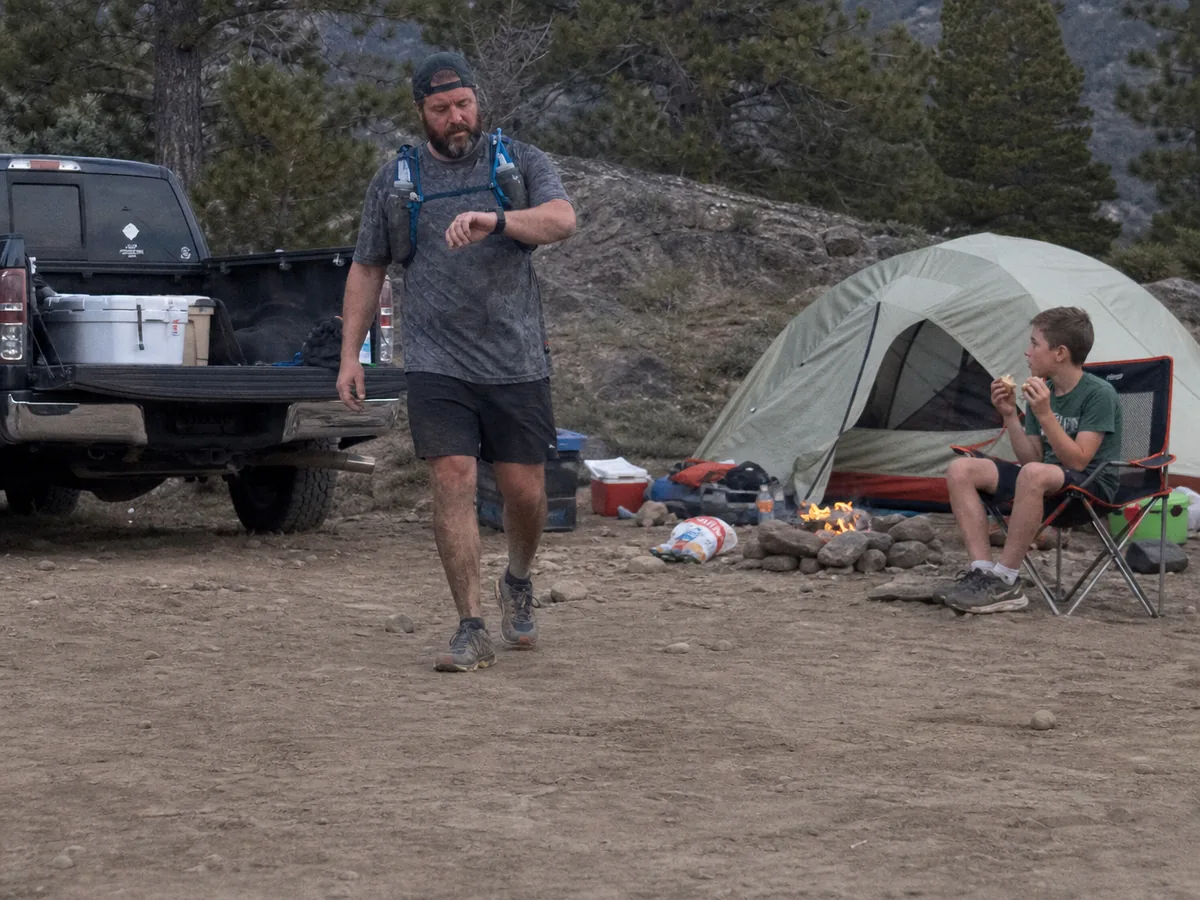
There are no maps on the 570. It can show you a breadcrumb line of a course you've loaded, and it can guide you back to your start point. It can't show you trails, roads or the name of the fire road you just passed. On my home trails, I never missed maps. On a new trail system in the mountains during a family trip, I took a wrong fork, added 1.8 miles to a 6-mile run and came back to a campsite where my son had already eaten my share of the s'mores.
There's also no flashlight, which Garmin puts on the 970 and which is honestly handy for early-morning runs and for finding the dog leash in a dark garage. And there's no ECG. The screen is Gorilla Glass 3, not sapphire. After 11 weeks, mine has one faint scratch from a tailgate latch.
If any of those matter to you, the next step up is where to look. If they don't, you're about to save $200.
Who should buy it, and who shouldn't
At $549.99 list price it's a lot for a mid-range watch. At $427 to $449, where we've seen it several times this year, it's a much easier call. Garmin prices move often, so it's worth watching for a week before you buy.
The alternatives we'd consider
- Garmin Forerunner 970 ($749.99). Maps, a flashlight, ECG, a sapphire lens and a longer battery. The one I'd pick for trail and mountain runners.
- Garmin Forerunner 265, if you find it discounted. No speaker, older sensor, and nearly the same training features for a lot less.
- Garmin Forerunner 170 ($299.99, new this May). AMOLED screen and most of Garmin's training scores, for newer runners who want to start right.
- Coros Pace Pro. Offline maps and a long battery for less money, with a simpler app and less polished coaching.
If you run in the summer heat like I do, the cooling tricks in my guide to staying cool outside in a heatwave work just as well after a run as they do in the yard. The gear we trust is collected in our reviews, and our how we test page explains how long we use everything before we score it. For the heart rate cross-check with Brenda's earbuds, see her AirPods Pro 3 review.
And that Fourth of July 10K? I've looked at the finish time on my wrist more times than I checked the watch in the car. My wife has stopped counting.
Questions readers asked us
Is the Garmin Forerunner 570 worth it over the 265?
If you're buying new, yes, especially on sale. You get a brighter screen, a newer heart rate sensor, a speaker and mic, and voice commands. If you already own a 265 that works, the upgrade is small.
Does the Forerunner 570 have maps?
No. It supports course breadcrumbs and back-to-start navigation, but not full maps. For maps, look at the Forerunner 970.
How long does the Forerunner 570 battery last?
In our test, the 47 mm lasted 8 days with the always-on screen off and about 5.5 hours of GPS per week, and 4.5 days with always-on turned on. GPS alone gave roughly 16 to 17 hours on SatIQ.
Should I get the 42 mm or 47 mm Forerunner 570?
Same features and price. The 47 mm has a bigger screen and slightly longer battery, the 42 mm is lighter at 42 grams and fits smaller wrists better. Pick by wrist size.