
Oura Ring 4 review: is it still worth buying now that Ring 5 is out?
143 days, one scratched ring and a cat that shows up in the sleep graph. What the Oura Ring 4 gets right, where it slips, and whether it still makes sense next to Ring 5.
 By Darlene Hufnagel, health and beauty editor
Tested in Milwaukee, Wisconsin · August 12, 2026 · 11 min read
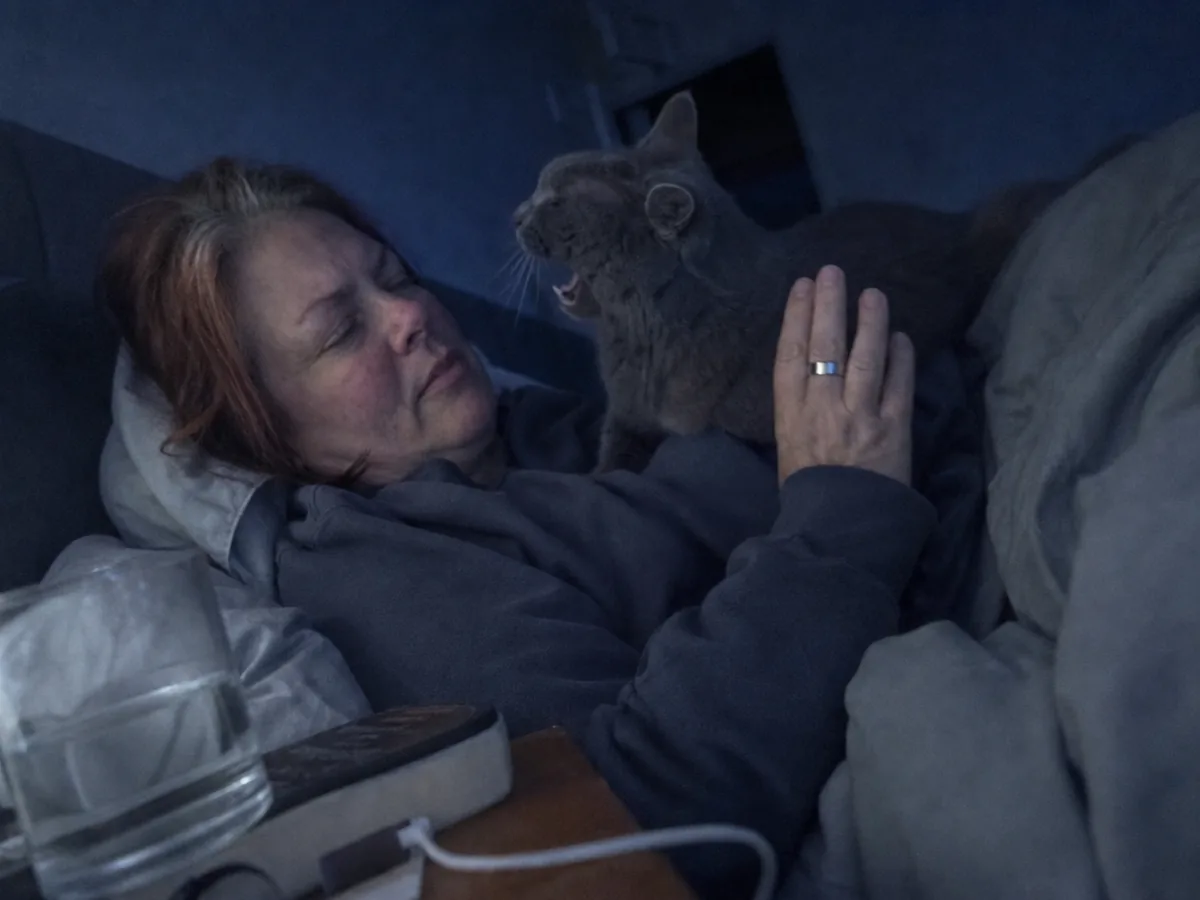
"I slept fine." I used to say that every morning, to my husband Tom, to my mother on the phone, to myself in the mirror. Then I put a titanium ring on my index finger in March, and it started politely disagreeing with me.
I'm the health and beauty editor here, which means a lot of wellness gadgets pass across my desk. Most of them last a week before they end up in the drawer with the jade roller. The Oura Ring 4 is still on my hand after 143 days. That alone doesn't make it worth $349, so this review is about the rest: what it measured well, what it got wrong, and the subscription nobody likes talking about.
And there's a new question on the table. Oura launched the Ring 5 on May 28, and since then the Ring 4 has been showing up at lower prices almost every week. So let's start with the short answer, then earn it.
- Resting heart rate within 1 to 2 bpm of a chest strap on 38 of 40 checks
- 6.4 days of real battery with every feature switched on
- You forget you're wearing it, even in bed
- Now often $300 or less since Ring 5 arrived
- $5.99 a month on top, or it's a pretty ring with three numbers
- Counts some slow walks and even a car ride as activity
- The silver finish picked up fine scratches in week two
Our verdict: the most comfortable way we've found to understand your sleep. At full price, the smaller Ring 5 is only $50 more. At $300 or less, the Ring 4 is the smarter buy for most people.
What the Oura Ring 4 actually is
It's a smart ring with no screen, no buttons and no vibration. Inside the band sit infrared and red LEDs, a temperature sensor and an accelerometer. They read the blood flow in your finger all day and all night, then send it to the app when you open it.
What you get back are three daily scores: Sleep, Readiness and Activity. Under them sit the details: sleep stages, resting heart rate, heart rate variability (HRV), skin temperature changes, breathing rate and blood oxygen at night. Ring 4 was the first Oura made entirely of titanium, inside and out, and it uses what Oura calls Smart Sensing, an algorithm that picks the cleanest of 18 signal paths depending on how the ring sits on your finger.
That last part matters more than it sounds. Your finger isn't a lab bench. Rings rotate, fingers swell in summer and shrink in cold weather. So the real question was never "does it have good sensors," but "does it still read well on a sweaty July night when the ring has spun halfway round?"
How we tested it
I bought the ring at retail, did the sizing kit (more on that in a minute) and wore it on my right index finger from March 22 to August 11. That's 143 days and 139 nights. The four missing nights were a trip where I forgot the charger, which tells you something about my packing and nothing about the ring.
For accuracy, I wore a Polar chest strap for 40 separate resting checks and 12 full nights, and I logged every morning how I felt on a 1 to 5 scale before opening the app. That second part was the honest test. If the scores just told me what I already knew, the ring would be an expensive mirror.
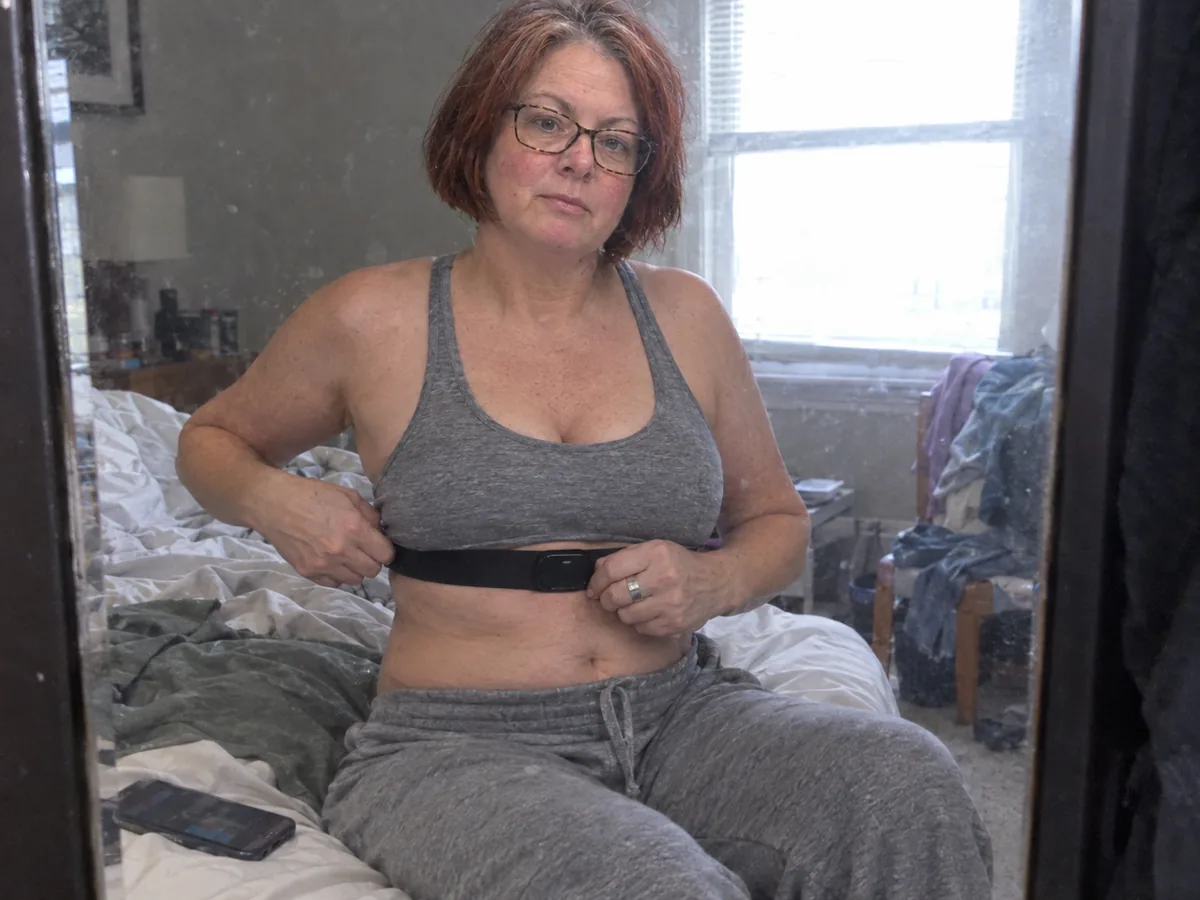
Our physiotherapist, Gary Szymanski, looked over my data every couple of weeks, mostly to stop me from over-reading it. The whole routine follows the same rules as every product on the site, which you can read in our how we test page.
Sizing: the step people rush and regret
Oura sends a plastic sizing kit before your real ring ships, sizes 4 to 15, and credits its small cost back when you order. Wear the dummy for a full 24 hours, and don't skip the night. My usual jewelry size is 6. The kit said 7 for my index finger, and I'm glad I trusted it.
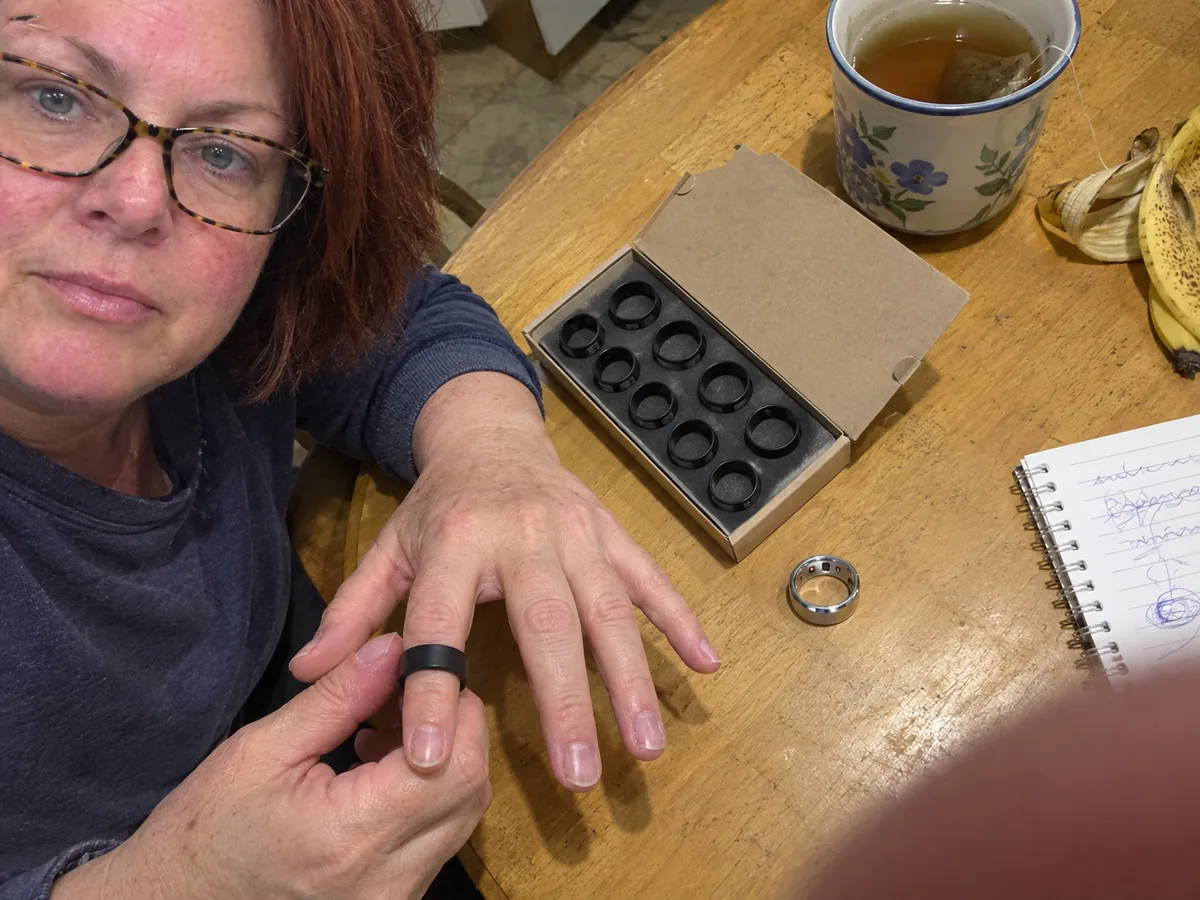
The ring should feel snug in the morning and still spin a little by evening. If it slides over the knuckle with no effort, it's too big, and a loose ring means worse readings and blank patches in the night.
Index finger gives Oura the best readings, according to the company, and it matched my experience. When I moved the ring to my ring finger for a week, the nightly data got patchier on four of seven nights. So once you've sized it right, the next question is whether the numbers it gives you are any good.
Sleep tracking: where Ring 4 earns its money
This is the part I care about most, and it's the ring's strongest skill. Resting heart rate matched the chest strap within 1 to 2 beats per minute on 38 of my 40 checks. The two misses both came on nights when the ring had turned so the sensor bumps were on the side of my finger.
Sleep stages are harder to judge at home, because the only real reference is a sleep lab. What I can say is this: the ring's timeline of when I fell asleep and woke up matched my own notes within 10 minutes on 121 of 139 nights. And it picked up things I didn't know about. My cat Pepper, who believes breakfast is at 5:40 a.m., shows up in the graph as a sharp wake-up spike on 61 nights. I thought she woke me "sometimes."
Then there's HRV, the number most people buy an Oura for. My average sat around 41 ms. After two glasses of wine at my sister's birthday, it dropped to 24 and my Readiness score to 61. After the week I finally stopped drinking coffee after 3 p.m., my average climbed to 46. Seeing that in black and white did more for my habits than any article I've written.
"Treat Readiness like a weather forecast. It tells you what kind of day it might be. It doesn't tell you to cancel your life." Gary Szymanski, physiotherapist
Gary's warning is worth repeating. A low score after a bad night doesn't mean you're sick. It means your body is working harder than usual, and a gentle day is probably smart. The ring is very good at nights. During the day, it's a different story.
Activity and daytime features: good, with asterisks
The ring counts steps and estimates calories, and on normal walking days it landed within 7% of my phone. The problem is everything that isn't normal walking. Kneading pizza dough counted as a light workout. A bumpy 40-minute car ride on a gravel road added 1,900 steps I did not take. Tom found this very funny.

Automatic workout detection caught my walks and bike rides, but my two strength sessions a week often didn't register unless I logged them by hand. If you lift, run intervals or want live heart rate on screen, a watch still does this better. Ring 4 has no display, so there's nothing to glance at during a run.
The newer daytime features are more useful than I expected. Daytime Stress showed me that my stress curve spiked every Monday between 10 and 11 a.m., which is exactly when our weekly planning call happens. Cardio Capacity, Oura's VO2 max estimate, needs a short walk test and gave me a number that roughly matched a treadmill estimate from my gym. And Symptom Radar flagged "major signs" two days before a summer cold knocked me flat. I'll take that.
Battery and charging in real life
Oura says up to 8 days. With every feature switched on, including daytime heart rate and blood oxygen at night, my average across 20 full cycles was 6.4 days. With blood oxygen off, I reached 7.3. The ring warns you when it's low and the app nudges you, so it never died on me without a warning.
Charging from 20% to full took 62 minutes on average on the small dock. My routine became simple: charge it on Sunday morning during breakfast and shower, done. The one mistake you'll make once is leaving it on the dock and walking out the door. I did it twice, which is how I learned the app shows a gap instead of guessing the missing hours.
Oura Ring 4 specs at a glance
| Spec | Oura Ring 4 |
|---|---|
| Price at the time of writing | $349 (Silver, Black), often $299 to $320 at big retailers, $499 for Ceramic and gold tones |
| Membership | $5.99 a month or $69.99 a year, first month included |
| Material | Titanium inside and out |
| Width and thickness | 7.9 mm wide, 2.88 mm thick |
| Weight | 3.3 to 5.2 g depending on size |
| Sizes | 4 to 15, sizing kit, cost credited back |
| Battery claimed / measured | Up to 8 days / 6.4 days all features on |
| Water resistance | Up to 100 m |
| Sensors | Red and infrared LEDs, temperature sensor, accelerometer, 18 signal paths |
The line that decides whether you'll be happy long term is the second one, so let's do that math properly.
The subscription math nobody puts on the box
Without a membership, the ring shows you three scores and very little else. No sleep stages, no HRV trends, no Symptom Radar. So in practice, the membership is part of the price. Here's what it adds up to, at the Silver price.
- Year one: $349 plus $69.99 on the yearly plan, about $419. On a $299 sale, about $369.
- Year two: another $69.99, so about $489 total at full price.
- Year three: roughly $559. Paying monthly instead adds about $2 a month over the yearly plan.
That's real money for a device with no screen. I'll be honest: in month two I almost cancelled. What kept me paying was one simple thing, I kept changing small habits because of what I saw. If you know you'll look at the app once and never again, save yourself the $419.
Oura Ring 4 or Ring 5?
Ring 5 is 40% smaller, 6.09 mm wide and 2.28 mm thick, it has stronger LEDs and comes with a charging case that holds about a month of battery. It starts at $399. Our tech tester Brenda Vukovich has worn one for five weeks and her first impression matches the spec sheet: noticeably slimmer, easier with other rings, same app and same scores.
So here's how I'd choose. If you have small fingers, wear stacked rings or hated how chunky smart rings look, the Ring 5 is worth the extra money. If you just want the best sleep data you can get without a watch, the Ring 4 reads the same things, runs the same app and, at $300 or below, saves you about $100. The software updates, including the new Health Radar features, also reach Ring 4.
The one thing to watch: sales on Ring 4 tend to hit certain colors first, and some sizes run out. If your size is on sale in a finish you like, that's the moment.
Who should buy it, and who shouldn't
If sleep is your main reason for looking at the ring, it's worth knowing what the bed itself can do too. Our sleep tester Rhonda slept on the Eight Sleep Pod 5 with her Oura on, and the two disagreed about her sleep in ways that were very instructive.
Alternatives worth a look
Samsung Galaxy Ring: no subscription, similar sleep focus, works best with Samsung phones. Good if you hate monthly fees and use Android.
RingConn Gen 2: cheaper, no subscription, strong battery and sleep apnea monitoring. The app is less polished and the insights feel thinner.
Whoop: more training-focused, strap on the wrist or arm, subscription-only. Better for athletes than for people who mainly want better nights.
For the full picture of what we tested this season, the reviews page collects every category with our current picks.
Questions people ask about the Oura Ring 4
Can you use the Oura Ring 4 without a subscription?
Yes, but only just. Without the membership you see your Sleep, Readiness and Activity scores and not much else. Sleep stages, HRV trends, Symptom Radar and most of what makes the ring useful are behind the $5.99 monthly fee.
Is the Oura Ring 4 accurate?
For resting heart rate and sleep timing, very. It matched a chest strap within 1 to 2 bpm on 38 of our 40 checks. Step counts and calories are rougher, especially during activities that aren't walking.
Does it scratch?
The Silver finish showed fine scratches after about two weeks of daily wear, mostly from grocery bags and a cast iron pan. They don't affect the sensors. The Black and Stealth finishes hide wear better.
Should I wait for a sale on the Ring 4?
Since Ring 5 launched, the Ring 4 has dropped to around $299 to $320 at big retailers several times. If you're not in a hurry and don't need the slimmer design, waiting a week or two for your size and color to go on sale is usually worth it.