
Petlibro Granary review: 60 days with the automatic feeder that ended our 5 a.m. wake-ups
One cat, 60 days, 300 weighed portions and a kitchen scale that got more use than ever. What the Petlibro Granary gets right, and the one habit that stops jams.
 By Sheila Tuttle, pet tester, two rescue dogs and a tabby
Tested in Knoxville, Tennessee · September 6, 2026 · 11 min read
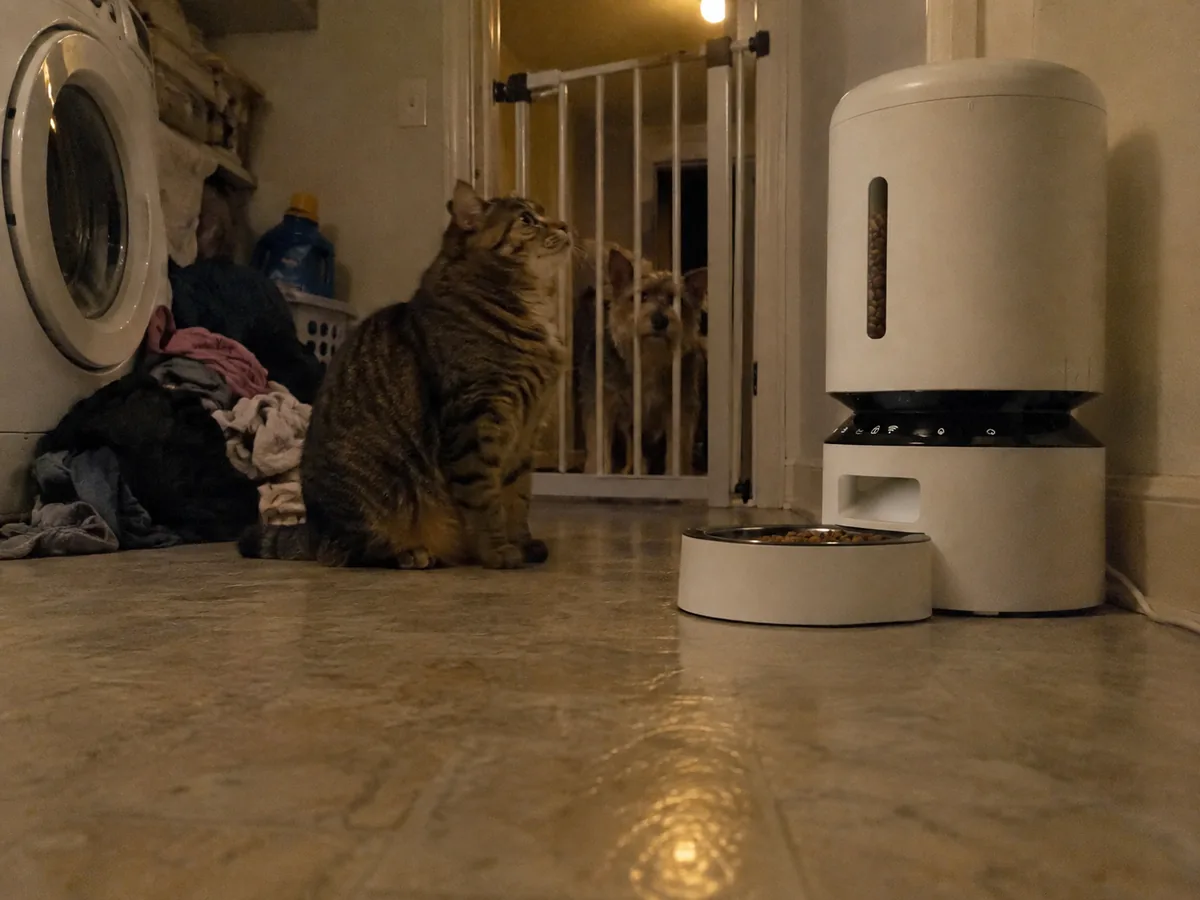
Petlibro Granary WiFi Automatic Feeder (5L)
About $90 list at the time of writing, often less on sale
- 300 scheduled meals, none missed (one ran 20 minutes late)
- Kept feeding for 72 hours on D batteries with the power off
- App set up in 7 minutes, works on 2.4 and 5 GHz Wi-Fi
- One fill of 5 liters lasted our cat about 5 weeks
- Portions vary with kibble shape (7.8 to 10.9 g in our test)
- Flat or star-shaped kibble can jam
- No Wi-Fi or alerts while on battery
- No scale, so no real record of what the cat ate
Our verdict: if you want your cat fed on time, every time, without paying for a camera or AI, this is the feeder to get. Weigh a few portions of your own kibble on day one, and change the desiccant every two weeks.
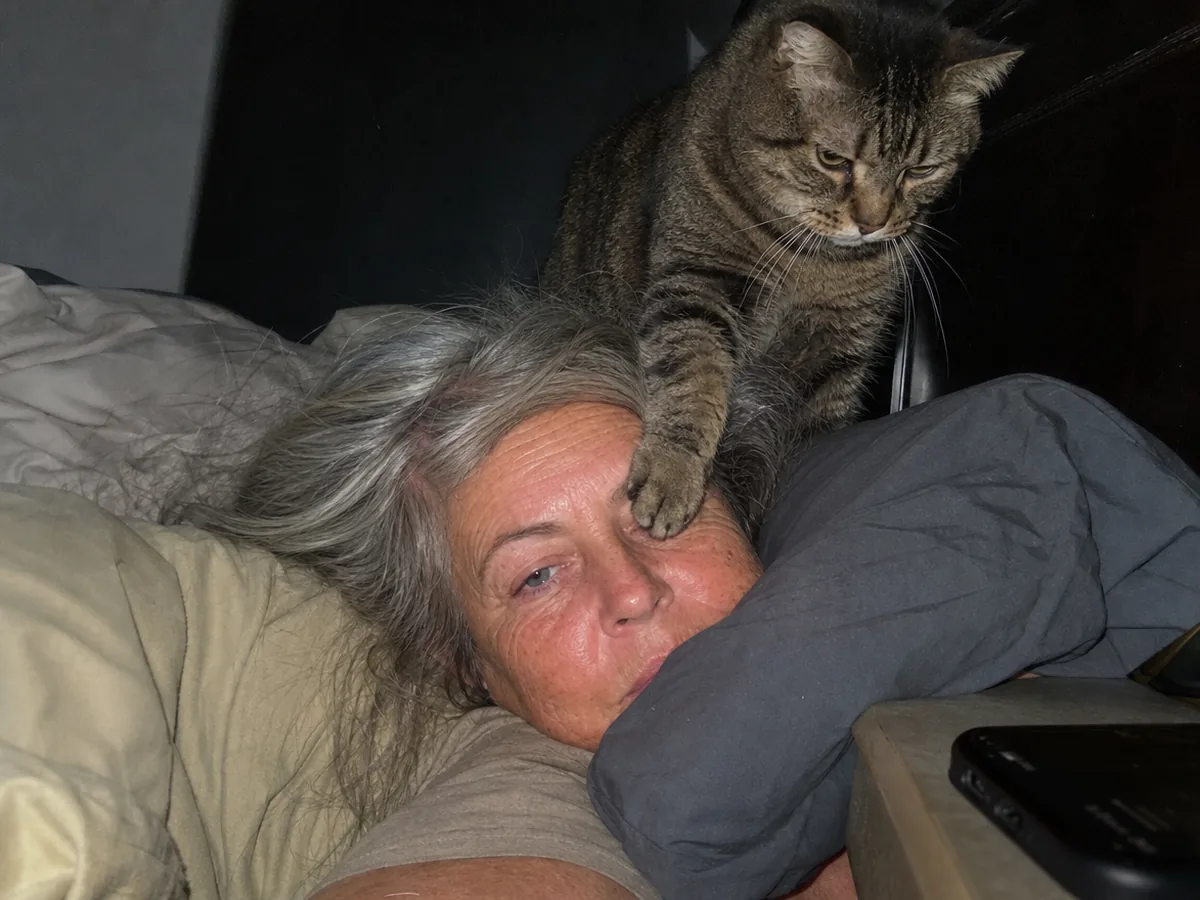
Our cat, Biscuit, has one alarm setting, and it goes off at 5 a.m.
First a soft meow from the hallway. Then a paw on my cheek. Then, if I still pretend to sleep, a careful push of my phone off the nightstand. She's an 11-pound tabby with a very clear view of who works for whom in this house, and a temper to match. For four years that person has been me.
I tried everything the internet suggests. Feeding her later at night. Ignoring her. A cheap timer bowl that she opened with one paw in about a week. What finally worked was the Petlibro Granary WiFi feeder, the model Petlibro calls its best seller. I tested it for 60 days this summer, weighed 300 of its portions on a kitchen scale and ran it through a power cut on purpose. Here's everything I found, starting with the part where Biscuit met her new staff.
Meet the alarm clock with whiskers
Most automatic feeder reviews focus on features. I'll get to those. But the first thing you want to know is simple: does the cat stop blaming you?
For Biscuit, it took six days. I scheduled her first meal for 5:15 a.m., a little after her usual alarm, and recorded a short voice message: "Biscuit, breakfast." On day one she still came to my bed first. On day three she stood in the kitchen staring at the feeder at 5:10. By day six she had fully transferred her loyalty to a white plastic tower on the kitchen floor. I've never been so happy to be replaced.
"She doesn't even look at you in the morning anymore. That's kind of sad." My husband Earl, who is still the dogs' alarm clock
Waffles, the younger of our two rescue dogs and the terrier from our Furbo 360 review, was the second test. He discovered the feeder on day two and tried to nose food out of the chute. We moved it into the laundry room behind a baby gate that Biscuit hops over and Waffles can't. Duke, our old beagle mix, never noticed the feeder at all. Problem solved, and a tip if you have dogs and a cat. Setting it up in that spot was the easy part. Choosing what to put in it took more thought.
Setup, and a lesson about kibble
Setup took 7 minutes. Plug it in, download the Petlibro app, add the feeder and connect to Wi-Fi. It works on both 2.4 GHz and 5 GHz networks, which is nicer than it sounds, because a lot of smart pet gadgets still choke on 5 GHz-only routers. Then you build a schedule: up to 10 meals a day, from 1 to 50 portions each.
I put three D batteries in the back as a backup, which Petlibro recommends and doesn't include. Buy them with the feeder, not after the first storm.
Then the lesson. Petlibro says the Granary works with dry food from 2 to 15 mm across, round to oval in shape. Biscuit's food is round, about 9 mm, which is perfect. But I wanted to see what happens with other shapes, so I borrowed two bags from friends and ran a side test on the counter.
| Kibble type | Portions on the counter | Jams |
|---|---|---|
| Round, about 9 mm (Biscuit's food) | 240 | 0 |
| Triangle, about 12 mm | 40 | 1 |
| Flat star shape, about 10 mm | 20 | 3 |
So before you buy, look at your cat's kibble. If it's round or oval and not huge, you're fine. If it's flat or spiky, consider switching food or a different feeder. With the food question answered, I grabbed the kitchen scale.
What the kitchen scale said
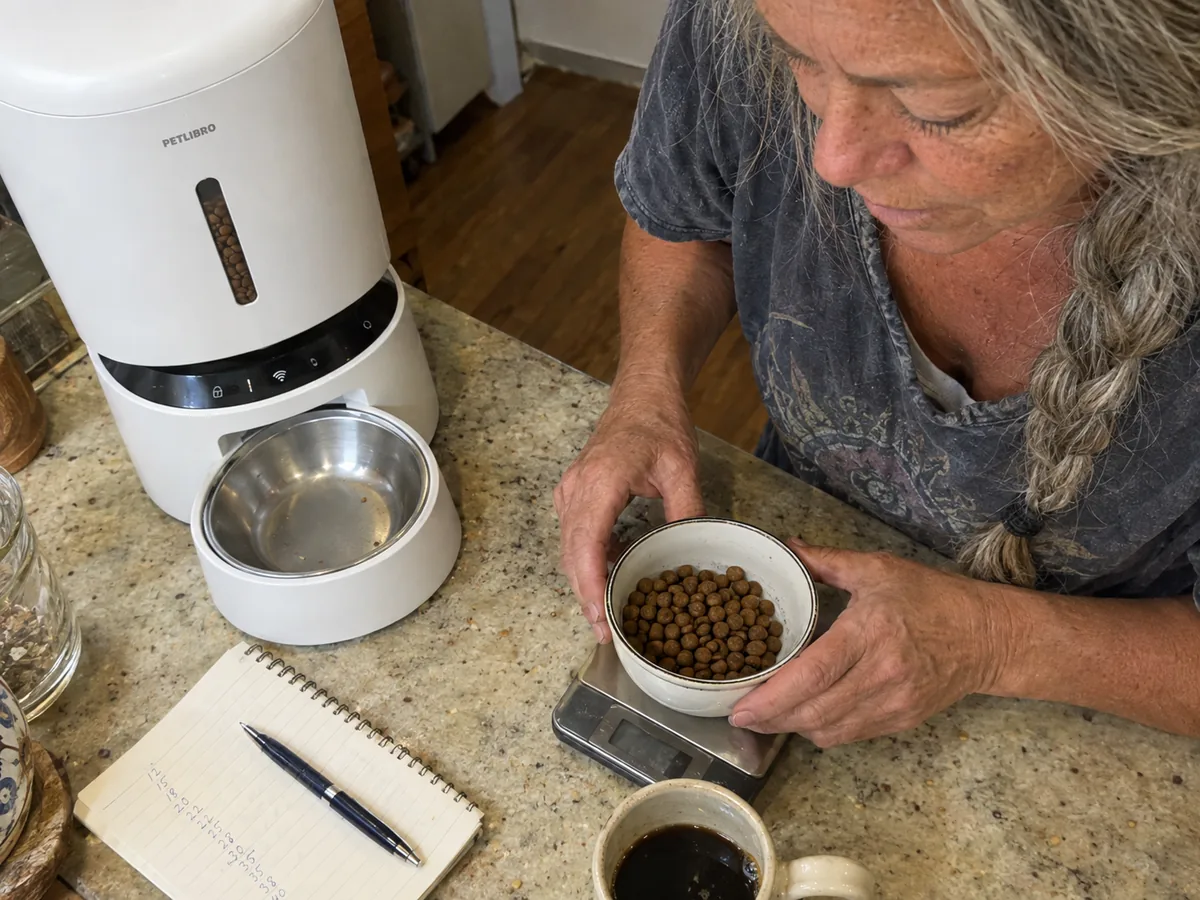
Petlibro rates one portion at about 20 ml, roughly 10 grams. Grams depend on the kibble, though, because some foods are denser than others. I dispensed 240 single portions of Biscuit's round kibble into a bowl on the scale, one at a time, plus the 60 portions from the side test.
| What we measured | Result |
|---|---|
| Average portion, Biscuit's round kibble | 9.2 g |
| Lightest and heaviest single portion | 7.8 g and 10.9 g |
| Average of a 4-portion meal | 36.8 g (range 34.1 to 39.5 g) |
| Food that fits in the 5 L hopper | about 4.2 lb (1.9 kg) of our kibble |
| Time one fill lasted, one cat at about 55 g a day | about 5 weeks |
| Noise while dispensing, 3 feet away | about 48 dB for 5 to 6 seconds |
Single portions swing a bit, but meals even out. Over a day, Biscuit's total stayed within about 5% of what I planned. For a healthy cat that's fine. For a cat on a strict weight plan it's close, but not perfect, and that's the one place the new Granary 2 with a built-in scale does better.
Biscuit's vet had suggested about 55 grams a day of her food to slowly lose half a pound. We landed on 5 meals: 2 portions at 5:15 a.m., 1 at 9, 1 at 1 p.m., 1 at 5 and 1 at 9:30 p.m. Six portions total, about 55 g. That's where the day-to-day life with the feeder started.
Sixty days of real life
In 60 days the Granary served 300 scheduled meals and missed none, though one ran 20 minutes late (more on that below). The app sent a note after each one, which I turned off after a week because my phone was starting to feel like a cat. I kept the low food alert on, and it warned me with about 3 days of food left.
Smaller meals spread through the day changed Biscuit more than I expected. She used to wolf her breakfast and throw up once or twice a week. With 1 or 2 portions at a time, that dropped to once in the whole 60 days. She lost 7 ounces by the end of the test. The vet was pleased. Biscuit was not consulted.
We went away for a long weekend in August, three nights. The dogs came with us. The feeder handled Biscuit's meals, and a neighbor only came by to change the water and scoop the litter. I checked the app from the beach twice. Both times it said "fed," and both times I felt like I'd gotten away with something.
The voice message turned into a small family comedy. Earl re-recorded it as himself meowing, mostly to make the grandkids laugh on a Sunday visit. It worked on them. Biscuit ignored him completely for three days. We switched back to my voice. I'm choosing to take that as a compliment.
Then I tested the scenario every feeder owner worries about. I unplugged the feeder on a Friday night with batteries in and left it for 72 hours. It kept to the schedule for all 3 days. The catch: on batteries the Wi-Fi turns off, so the app showed it offline and I got no alerts. The food still came, you just can't see it happen. Most power cuts last hours, not days, so this is a good safety net.
So far so good. There was one jam in the whole test with Biscuit's food, and it taught me the most useful habit of all.
Jams, and the habit that stops them
The jam came in week five, after a humid stretch in late July. The 9:30 p.m. meal didn't drop. The app flagged a problem, I opened the lid, and the kibble had clumped slightly above the dispensing wheel. A spoon broke it up in 20 seconds, I hit manual feed, and Biscuit ate 20 minutes late with a look of deep betrayal.
The cause was the desiccant pouch. The feeder comes with small moisture absorbers that sit in the lid, and Petlibro says to change them every two weeks. Mine was three and a half weeks old. After that I set a phone reminder every other Sunday, and we didn't get another jam in the last 25 days.
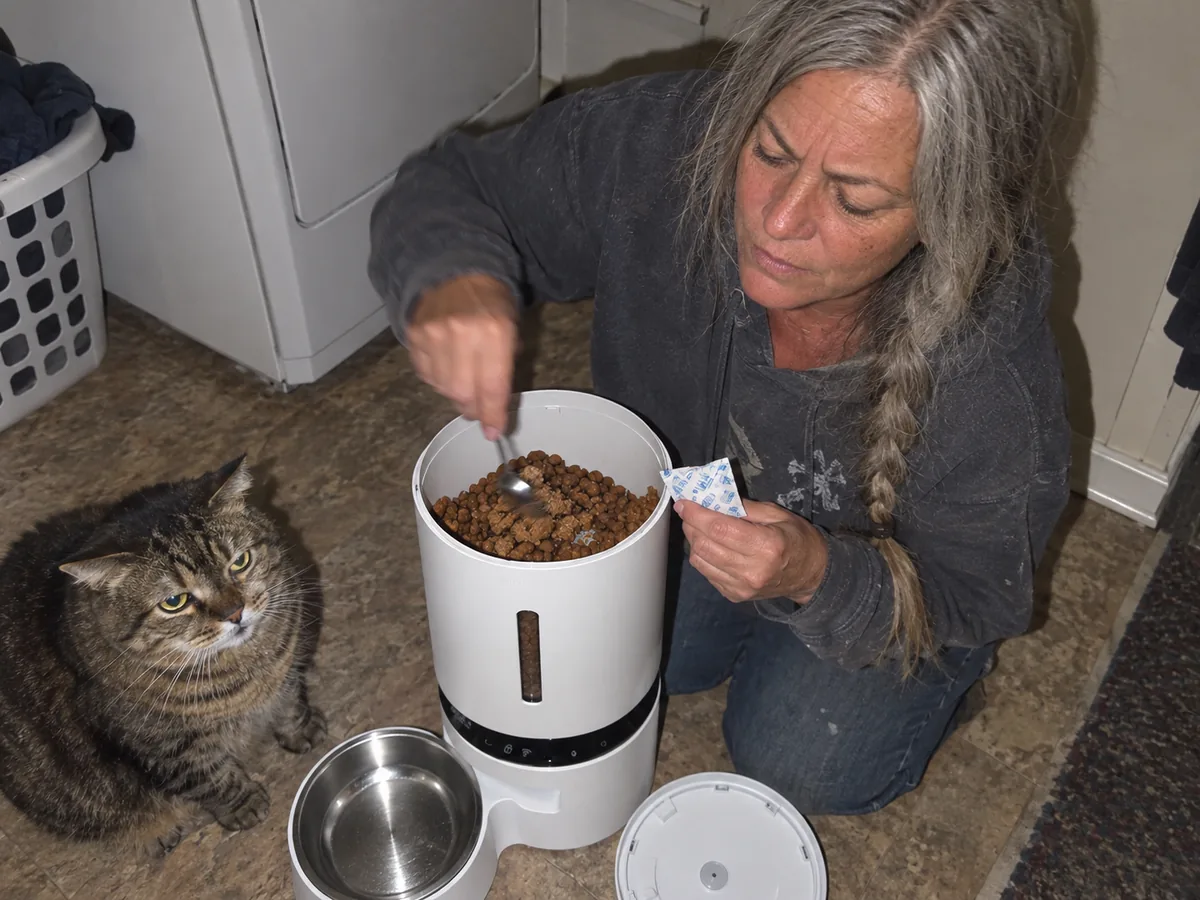
- Change the desiccant every 2 weeks, more often in humid summers.
- Don't top up old food with new. Let the hopper get low, then refill. Old kibble at the bottom dries out and gets dusty.
- Wash the hopper every refill. Kibble oils build up and slow the flow. Ours takes 5 minutes in warm soapy water, then a full air dry.
- Wash the stainless steel bowl daily or every other day. It's the part your cat's face touches.
Cleaning is okay, not great. The bowl pops off easily. The hopper lifts out, but the dispensing area has a few corners where crumbs collect, and I used an old toothbrush on it every couple of weeks. Keep that in mind as you read the specs.
Specs at a glance
| Spec | Petlibro Granary WiFi (5L) |
|---|---|
| Capacity | 5 liters of dry food |
| Portions | About 20 ml (roughly 10 g) each, 1 to 50 per meal |
| Meals per day | Up to 10 |
| Kibble size | 2 to 15 mm, round to oval |
| Bowl | Stainless steel, removable (single or dual bowl versions) |
| Wi-Fi | 2.4 GHz and 5 GHz |
| Power | USB adapter, backup from 3 D batteries (not included) |
| Extras | Low food alert, voice recording, desiccant bags |
| Warranty | 24 months |
| Price at the time of writing | About $90 list |
There's no camera and no scale on this model. For many homes that's the point: fewer things to break, no subscription, and a lower price. Who that suits is the next question.
Who it's for
If you have two cats, look at the dual-bowl Granary. It splits the same portion into two bowls, which cut the fights for friends of ours with two brothers. It doesn't stop one cat from eating both bowls, though. For that you need a feeder that recognizes each pet, and Petlibro just launched one.
Granary 2 and other options
- Petlibro Granary 2: the new generation, shipping since late July 2026. It adds a built-in scale that measures in grams and handles kibble up to about 18 mm. The Vision model uses a camera to tell pets apart and logs each meal to the right profile, for around $200. If you track weight closely or have several pets, it's worth the extra money.
- Petlibro Granary with camera: same feeder plus a camera to watch meals. Nice if you travel a lot. It costs more and you'll probably check it twice and then forget it exists.
- Dual-bowl Granary WiFi: same mechanism, two bowls. The simple fix for two cats who eat at the same pace.
We tested this feeder the way we test everything, in a real home, for weeks, with a scale and a notebook, as explained on our how we test page. Our current favorites for pets are in the reviews.
Sixty days later, I sleep until my actual alarm. Biscuit waits in the laundry room at 5:10 every morning, staring at a white tower with total devotion. I'm not jealous. Mostly.
Questions people ask
Does the Petlibro Granary work without Wi-Fi?
Yes. Once the schedule is saved, the feeder keeps it without Wi-Fi. You lose the app, alerts and manual feeding from your phone until the connection comes back.
How long do the backup batteries last?
In our test, three fresh D batteries kept the feeder on schedule for the full 72 hours we left it unplugged. Wi-Fi is off while it runs on batteries.
Why does my Petlibro feeder keep jamming?
Usually it's kibble shape or moisture. Flat or star-shaped food jams more, and old desiccant lets kibble clump in humid weather. Change the desiccant every two weeks and clean the hopper at each refill.
How much food is one portion?
About 20 ml, which is roughly 10 grams. With our round kibble it averaged 9.2 grams. Weigh 10 portions of your own food to know your exact number.