
Eight Sleep Pod 5 review: 97 hot nights, one couple, and what Pod 6 changes
One of us runs hot, the other sleeps in socks. After 97 summer nights on the Eight Sleep Pod 5, here's what a $3,000 bed cover fixed, what it didn't, and why Pod 6 changes the math.
 By Rhonda Mankowski, sleep tester, former night-shift nurse
Tested in Buffalo, New York · September 24, 2026 · 12 min read
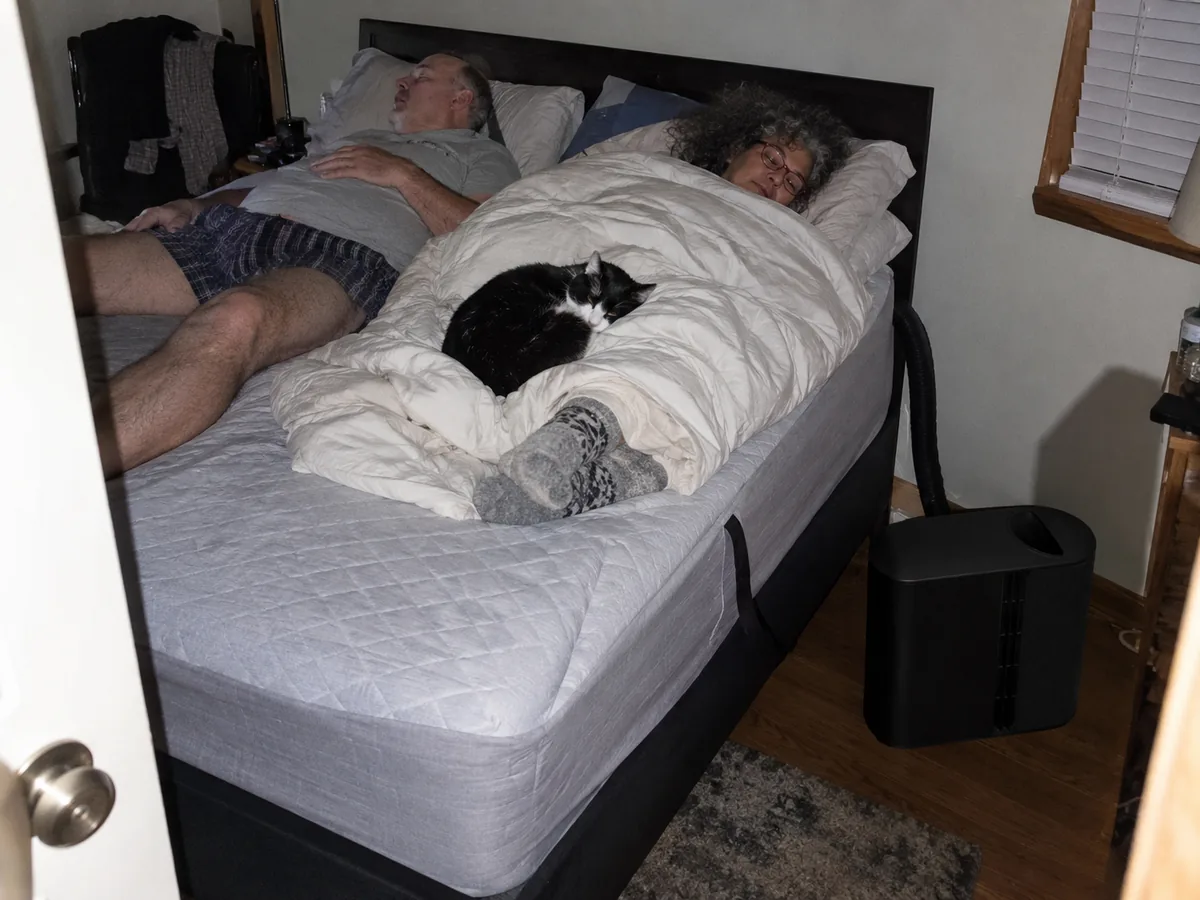
For 22 years I worked nights as a nurse in Buffalo, so my husband Sam and I barely shared a bed while it was dark. The thermostat war started the week I retired from night shifts, and it lasted four years. Sam wanted 66°F. I wanted 72. We compromised at 69, which meant he kicked the covers off at 2 a.m. and I slept in wool socks in July.
It ended on June 17 at 11:40 p.m., when we set his side of the bed to "cold" and mine to "a little warm" and both fell asleep without saying a word about it. That was night one on the Eight Sleep Pod 5. This review covers the 96 nights after it, including a heat wave, a Wi-Fi outage, and a cat who picked a side on day two.
One thing before we start. Eight Sleep announced the Pod 6 yesterday, on September 23, at lower prices than Pod 5. We haven't slept on it yet. So this is a full review of the Pod 5, plus a clear answer on whether you should buy one now, hunt for a discount, or wait.
- Sam's side read 68.4°F at the surface in a 78°F bedroom
- Two sides, two temperatures, no more thermostat war
- Heart rate within 2 bpm of an Oura ring on most nights
- Refilled the water tank only once in 97 nights
- Around $3,000 plus a required first year of Autopilot
- The hub takes floor space next to the bed and hums on max
- Pod 6 now costs less and does more
Our verdict: the best thing we've tested for couples who sleep at different temperatures and for anyone who wakes up hot. At Pod 5 list prices it's hard to recommend now that Pod 6 exists. On a real clearance discount, it's still a superb bed.
What the Pod 5 actually is
It isn't a mattress. The Pod is a thin smart cover that zips over the mattress you already own, a bit like a thick fitted sheet. Inside it run channels of water. A hub next to the bed heats or cools that water and pumps it through, separately for each side, anywhere from 55°F to 110°F.
Built into the cover are sensors that read heart rate, heart rate variability and breathing while you sleep, with nothing on your wrist. The subscription, called Autopilot, uses that data to nudge each side's temperature through the night: cooler to help you fall asleep and stay in deep sleep, a bit warmer toward morning. It can also wake you with a gentle vibration and a warm-up instead of an alarm.
Pod 5 came in bundles. The Core is the cover and hub, which is what we tested. Bigger bundles add a water-powered Blanket and the Base, an adjustable frame that lifts your head when it hears snoring. All of that sounds like a lot. In practice, the first thing you deal with is much simpler: where to put the box.
Setup: 26 minutes and one awkward corner
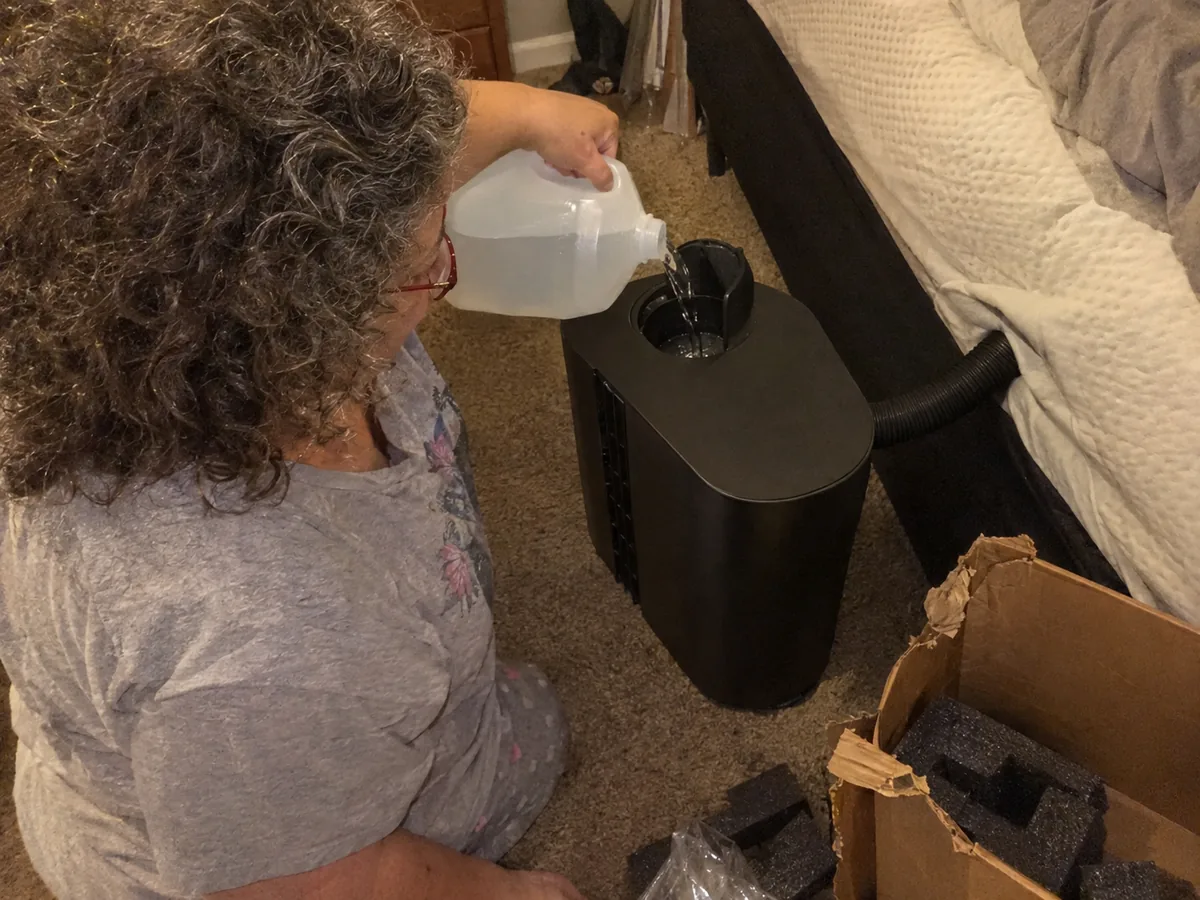
Setup took us 26 minutes from opening the box to the first cooling cycle. You fit the cover like a sheet, run the hose down the side of the bed, fill the hub's tank with distilled water, and pair it with the app. The instructions are clear and the app walks you through priming the water.
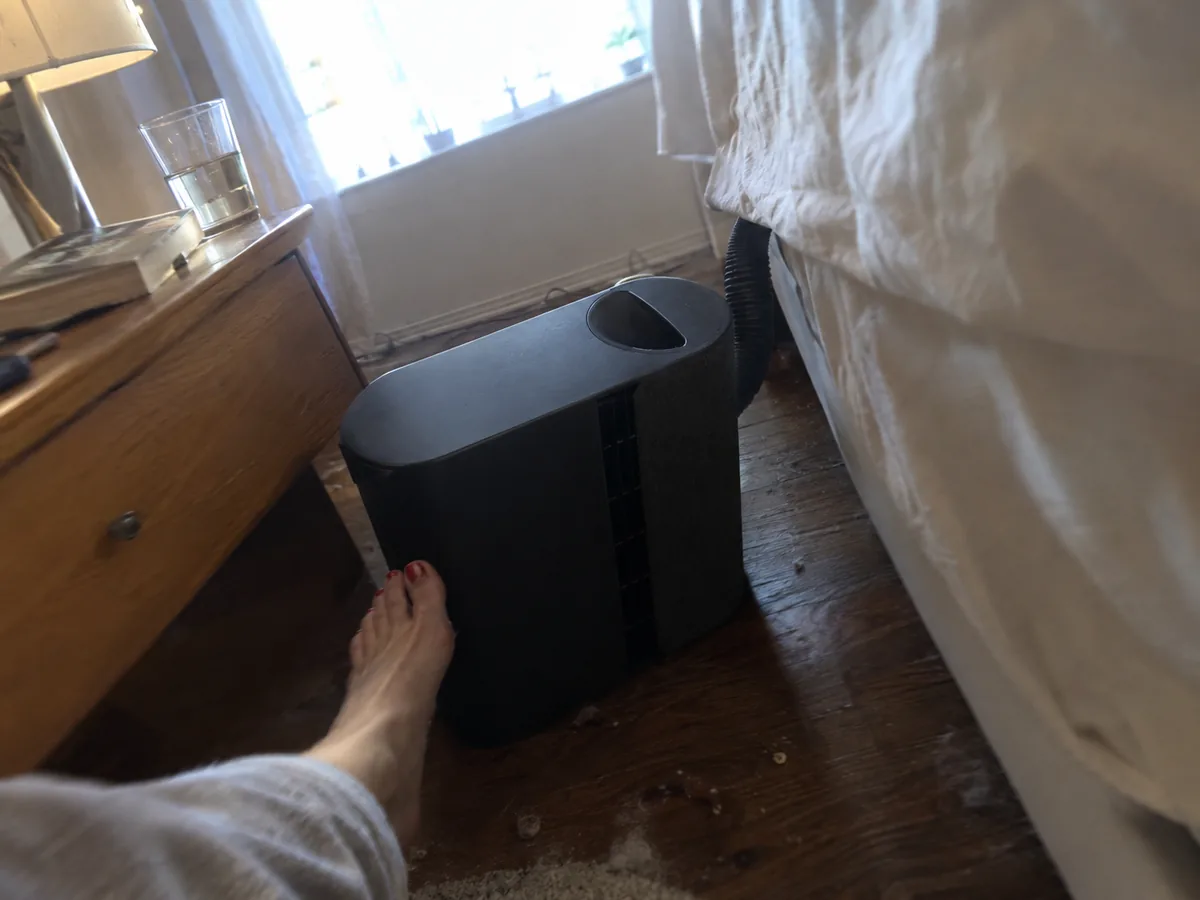
The awkward part is the hub. On Pod 5 it's a box with roughly the footprint of a small nightstand, it sits on the floor beside the bed, and it needs a few inches of air around it. In our bedroom, the only spot was where my nightstand used to be, so my nightstand moved six inches and I stubbed my toe on the hub three times in the first week. Sam counted.
How we tested it
We slept on the Pod from June 17 to September 21, which covers 97 nights and the worst heat of the summer. I kept wearing my Oura ring the whole time, so we had a second opinion on every night's data. Every morning we each wrote down how many times we remembered waking up, and a 1 to 5 score for how rested we felt, before opening any app.
For measurements, we used an infrared thermometer on the sheet surface at 30 minutes and 2 hours after bedtime, a sound meter at pillow height, and a plug-in power meter on the hub. The full method follows our usual rules, which you can read on our how we test page.
Cooling: the part that's worth the money
This is where the Pod leaves everything else we've tested behind. During the July heat wave our bedroom read 78°F at bedtime with the AC set as high as we could stand the bill. Sam's side, set to -6 on Eight Sleep's scale, read 68.4°F at the sheet surface after 30 minutes. My side, set to +2, read 81.1°F. Same bed, 12.7 degrees apart.
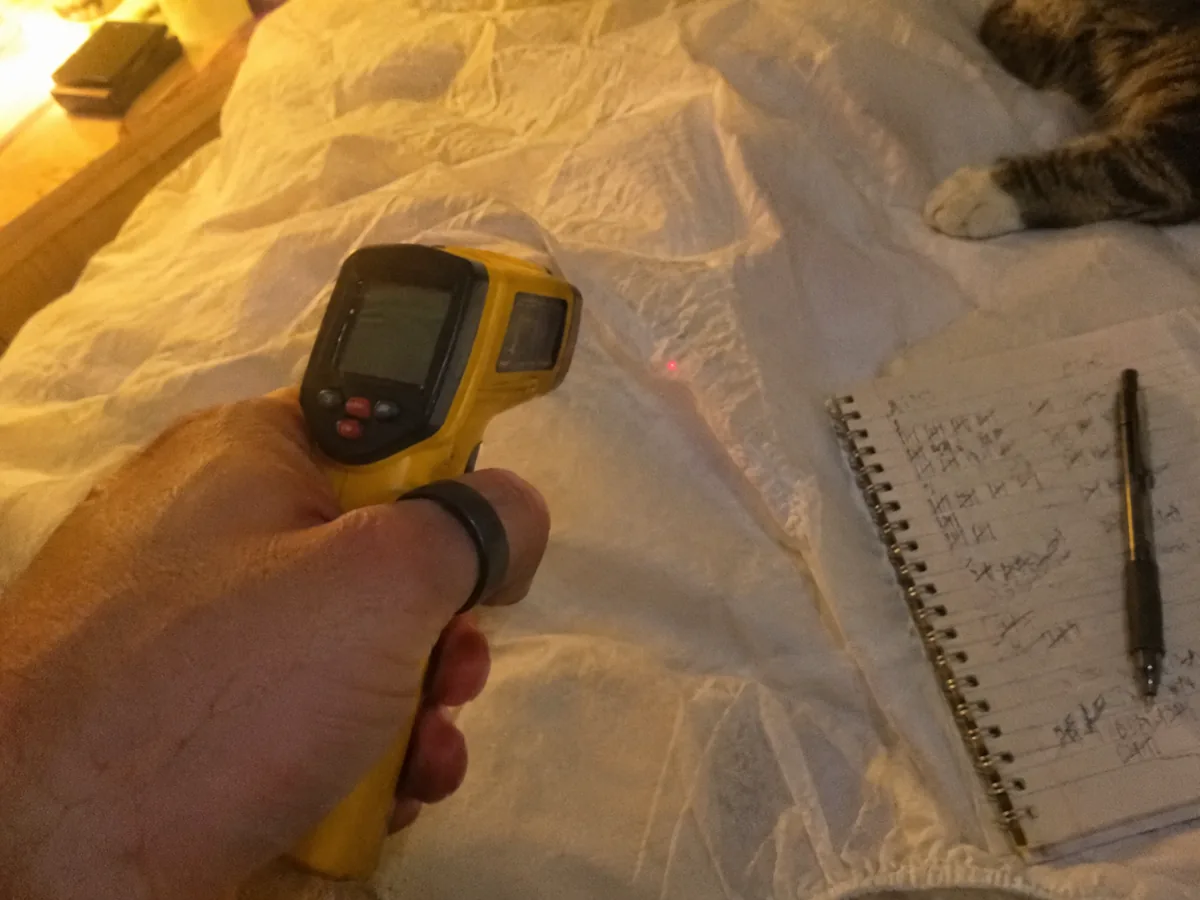
Sam's notebook tells the story better than the thermometer. In the two weeks before the Pod, he wrote down an average of 2.4 wake-ups a night. Across the 97 nights on the Pod, it was 0.9. He stopped kicking the covers off, which means I stopped waking up to a duvet landing on my face. That's two sleepers helped by one side of the bed.
If your hot nights follow the "fine at midnight, awake at 3 a.m." pattern, there's a reason for that. I logged 45 hot nights last summer to understand it, and you can read what I found in why heat wakes you at 3 a.m. The Pod attacks exactly that window. Autopilot cooled Sam's side by another 2 to 3 degrees between 1 and 4 a.m. on most nights without him touching anything.
"I didn't notice it working. I just noticed I wasn't awake." Sam, who is not a tester but now has opinions about water temperature
Tracking: good heart data, generous with sleep
Because I wore my Oura ring every night, we could compare. Overnight heart rate matched within 2 beats per minute on 84 of 97 nights. HRV followed the same ups and downs, even if the exact numbers differed by a few milliseconds. For a sensor you never have to charge or wear, that's impressive.
Sleep time was a different story. The Pod credited me with 38 more minutes of sleep per night on average than the ring did. It seems to count quiet time reading in bed as sleep more easily. So if you already use a ring or watch, don't expect the two to agree on your sleep score. Darlene put the ring through 139 nights in our Oura Ring 4 review, and for sleep staging I'd still trust the ring a bit more.
Our cat Muffin found the warm side on day two and has slept against my legs ever since. On Pod 5, that sometimes confused my data, with a couple of nights showing a heart rate that was clearly not mine. Pod 6 claims to filter out pets and kids, which tells you Eight Sleep heard that complaint a lot.
Noise, water and the daily stuff
On moderate cooling, the hub read 33 dB at pillow height, about the level of a whisper, and most nights we heard nothing. On the hottest evenings, when it worked hard for the first 20 minutes, it hit 41 dB with a soft fan whoosh. Twenty-two years of trying to sleep through lawnmowers and school buses at noon made me a light sleeper for life, so I noticed it for the first three nights, then never again. If you need total silence to sleep, it's worth knowing.
The app asked us to top up the water once, on night 71. It took two minutes. We also washed the cover once, following the instructions, which involves detaching the hose and is more fiddly than a normal sheet. You'll still use a regular fitted sheet on top, so the cover itself rarely needs it.
Two real-life hiccups. When our Wi-Fi died for a night in August, the bed held its last temperature but we couldn't change anything from the phone, and Autopilot didn't adjust. And the plug meter showed the hub averaging 0.58 kWh a night in July, about $3 a month at our electricity rate. Cheaper than running the AC three degrees colder, which is the comparison that actually matters.
What it really costs
Here's the part the ads make blurry. At the time of writing, the Pod 5 Core lists at $2,799 for a Full, $2,999 for a Queen and $3,199 for a King or Cal King, though Eight Sleep runs promotions often. On top, the Autopilot membership is required for the first year, and each plan covers both sleepers.
| Autopilot plan | Yearly | Monthly | What it adds |
|---|---|---|---|
| Standard | $199 | $17 | Autopilot, sleep tracking, vibration alarm, 2-year warranty |
| Enhanced | $299 | $25 | More health insights, 5-year warranty |
| Elite | $399 | $33 | Everything, plus priority support |
So a Queen with the Standard plan comes to about $3,200 in year one. Our honest advice is the Enhanced plan if you buy a Pod 5 at all, because the jump from a 2-year to a 5-year warranty is worth $100 a year on a device with a pump and water in it. After year one you can cancel and still set temperatures by hand, but you lose Autopilot and the tracking.
There's a 30-night trial with free returns, and the membership is refunded too if you send it back. Use those 30 nights properly: include at least one hot week. And then there's the news from yesterday.
Pod 5 or Pod 6: should you wait?
Pod 6 launched on September 23. On paper, it fixes the Pod 5's two biggest problems: the hub is about 50% smaller and fits under most bed frames, and the price starts lower. Here's what Eight Sleep has announced.
- Price: new Solo sizes from $1,999, for a twin or one side of a bigger bed. Standard sizes start at $2,699.
- Speed: about 20% faster temperature changes than Pod 5.
- Sensors: nine times more, which Eight Sleep says helps it read each sleeper and ignore pets or kids.
- Compatibility: works with the existing Blanket, pillow cover and Base.
We'll test a Pod 6 and update this page. Until then, my advice is simple. Don't pay Pod 5 list price today, because a Pod 6 Queen costs less. If you find a Pod 5 in clearance at $2,000 or under for a Queen, it's a great buy, since the cooling we measured is already more than most people need. And if you sleep alone, the Pod 6 Solo is the one to watch.
Who it's for, and who should skip it
Cheaper alternatives we'd try first
Sleepme Dock Pro: a water-cooled pad with a similar idea, less tracking, much lower price. Single-zone unless you buy two, and the unit is bulky.
BedJet 3: blows cooled or warmed air under your sheet. Not as strong as water cooling, but cheap by comparison and great for fast warm-ups in winter.
Cooling pillow, breathable sheets and a fan: the free and cheap fixes still work for many people. Start there, and if you're still waking at 3 a.m., the Pod is the next real step. You'll find our current picks for pillows and sleep gear on the reviews page.
Questions people ask about Eight Sleep
Is Eight Sleep worth the money?
For hot sleepers and couples who fight over temperature, yes, it's the most effective sleep product we've tested. For people who already sleep well, it's an expensive way to confirm that. And right now, don't pay Pod 5 list price with Pod 6 out at lower prices.
Does Eight Sleep work without a subscription?
The first year of Autopilot is required. After that, you can cancel and still set each side's temperature manually in the app. You lose automatic adjustments during the night, sleep tracking and the health insights.
Does the Pod change how your mattress feels?
A little. The cover is thin, but on our memory foam mattress we could feel faint lines from the water channels the first two nights. After that we stopped noticing, and a normal fitted sheet on top smooths it out.
Is the Eight Sleep hub loud?
On normal cooling we measured 33 dB at the pillow, quieter than a whisper. On maximum cooling during a heat wave it reached 41 dB for about 20 minutes. Light sleepers will notice it for a few nights.